Alabama’s High-Stakes Redistricting Battle: Will the Supreme Court Redraw the 2026 Map?

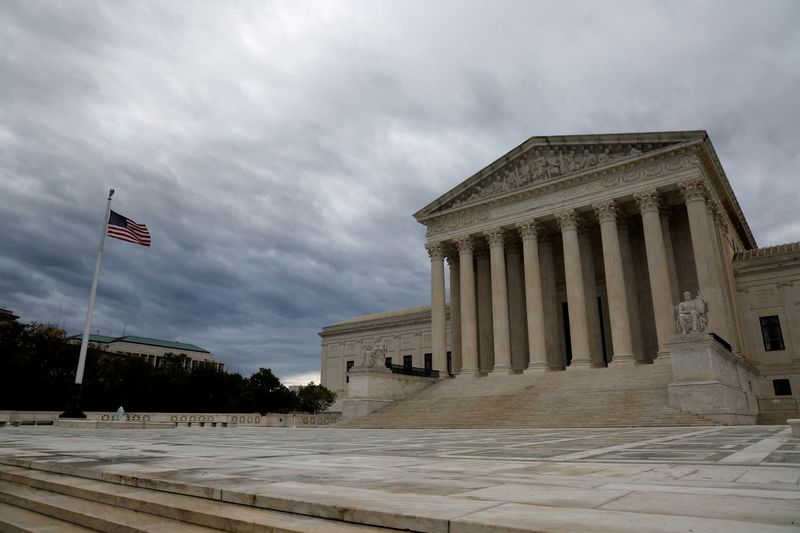
The political landscape of the American South is currently facing a seismic shift as Alabama Republicans have officially petitioned the U.S. Supreme Court to intervene in a contentious redistricting battle. This move, aimed at clearing the way for a new congressional voting map, marks a pivotal moment in the lead-up to the 2026 midterm elections.
As the nation watches, the legal arguments presented by Alabama officials could redefine the interpretation of the Voting Rights Act (VRA) for a generation. At the heart of the dispute is whether the state must maintain two majority-Black districts or if it can revert to a map more favorable to the Republican Party—a move that critics argue would dilute the minority vote.
The Catalyst: A Seismic Supreme Court Ruling
The current legal firestorm was ignited by a recent and profound decision from the Supreme Court. On April 29, the high court issued a ruling that significantly narrowed the scope of a key provision within the landmark Voting Rights Act of 1965. This decision, powered by the court’s 6-3 conservative majority, has emboldened Republican-led states to challenge existing maps that were previously mandated by lower courts to protect minority representation.
In a parallel case involving Louisiana, the Supreme Court struck down an electoral map that had granted the state a second Black-majority district. The majority opinion argued that the redrawn map relied too heavily on race, thereby violating the constitutional principle of equal protection. This precedent has now become the cornerstone of Alabama’s legal strategy.
Alabama’s Urgent Request to the High Court
On Friday, May 8, 2026, Alabama Attorney General Steve Marshall filed an emergency request asking the justices to lift a lower court’s order. This order currently requires Alabama to utilize a map featuring two majority-Black districts out of seven.
Currently, both of these districts are represented by Black Democrats. Alabama Republicans argue that the requirement to create a second majority-Black district is an overreach that prioritizes racial quotas over traditional redistricting principles like geographic compactness and community interest.
The Argument for “Race-Neutral” Districting
Attorney General Steve Marshall’s filing was direct. He stated that Alabama’s case mirrors the situation in Louisiana and should, therefore, yield the same result. “Alabama’s case mirrors Louisiana’s, and they should end the same way: with this year’s elections run with districts based on lawful policy goals, not race,” Marshall wrote.
The core of the Republican argument rests on the idea that the Equal Protection Clause of the 14th Amendment should prevent the government from using race as the predominant factor in drawing district lines, even when attempting to comply with the Voting Rights Act.
The Historical Context: The 2024 Milestone
To understand the gravity of this 2026 legal battle, one must look back at the historic 2024 elections. For the first time in Alabama’s 200-year history, voters elected two Black U.S. Representatives in the same election cycle. This was made possible by a court-ordered map drawn by a specially-appointed master after the state’s original Republican-drawn map was found to likely violate the VRA.
Why 2024 Changed the Game
Increased Representation: Black voters make up approximately 25% of Alabama’s electorate.
Political Shift: The second majority-Black district provided a rare pickup opportunity for Democrats in a deep-red state.
Legal Precedent: The 2024 map was seen as a victory for civil rights groups who had fought for decades to see the “Black Belt” region fairly represented.
Now, Alabama Republicans are seeking to reverse this progress, capitalizing on the Supreme Court’s shifting stance on voting rights.
The 2026 Midterm Strategy: Control of Congress
The timing of this legal challenge is no coincidence. As the 2026 midterm elections approach, the battle for control of the U.S. House of Representatives and the Senate is intensifying. President Donald Trump and his fellow Republicans are fighting to maintain and expand their slim majorities.
National Implications of the Alabama Map
If Alabama is successful in reverting to a map with only one majority-Black district, it almost guarantees a Republican pickup in the House. This strategy is being replicated across several Southern states, including:
- Louisiana: Already successful in challenging its second Black-majority district.
- Texas: Reinstating pro-Republican maps after the Supreme Court paused lower court orders.
- Georgia: Currently reviewing its own redistricting boundaries in light of the April 29 ruling.
By eliminating competitive or minority-heavy districts, the GOP aims to create a “firewall” in the South that could ensure their control of the House regardless of national voting trends.
Legal Analysis: The New Standard for Voting Rights
The Supreme Court’s recent actions suggest a fundamental shift in how racial discrimination is proven in court. Under previous interpretations of Section 2 of the VRA, plaintiffs only had to show that a map had a “disparate impact”—meaning it resulted in fewer opportunities for minorities to elect their preferred candidates.
The Move Toward “Racist Intent”
The current conservative majority appears to be moving toward a standard that requires direct evidence of racist intent. This is a much higher bar for plaintiffs to clear. Without a “smoking gun” email or statement proving that lawmakers intended to discriminate based on race, many maps that dilute minority voting power may now be considered constitutionally sound.
This shift strikes at the very heart of the tension between the Voting Rights Act, a product of the civil rights era, and a modern “colorblind” interpretation of the Constitution.
The Role of Governor Kay Ivey and the Alabama Legislature
In preparation for a favorable ruling from the Supreme Court, Governor Kay Ivey has been proactive. She recently called a special legislative session to address the redistricting issue. Alabama lawmakers quickly passed a measure that would set up special primary elections if the courts allow the implementation of the new, Republican-preferred maps.
This legislation, signed into law by Ivey, demonstrates the state’s readiness to pivot immediately should the Supreme Court grant their request. It also signals to the court that the state is prepared for the administrative challenges of a late-stage map change.
Democratic and Civil Rights Response
Democratic lawmakers and civil rights organizations have voiced sharp opposition to these moves. They argue that the Republican efforts are a blatant attempt to dilute the voting power of Black Alabamians.
Key Concerns from the Opposition:
Voter Confusion: Changing maps and primary dates so close to the midterm elections could lead to widespread confusion and lower turnout.
Erosion of Progress: Reverting to a single majority-Black district is seen as a “step backward” for a state with a long history of systemic disenfranchisement.
Constitutional Crisis: Some argue that the Supreme Court is effectively “gutting” the VRA without an act of Congress, creating a legislative vacuum.
What Happens Next? The Supreme Court’s Timeline
The Supreme Court is expected to act quickly on Alabama’s emergency request. Given that the 2026 midterms are fast approaching, a delay could result in “irreparable harm” to the state’s electoral process—an argument often used by the court to justify immediate intervention.
Potential Outcomes:
- Grant the Stay: The court could allow Alabama to use its preferred map for the 2026 election while the full legal merits are argued later.
- Uphold the Lower Court: The court could maintain the two-district map for 2026, citing the proximity of the election (the “Purcell Principle”).
- Full Review: The justices could set the case for an expedited full hearing, potentially issuing a definitive ruling by early summer.
The Broader Impact on American Democracy
The Alabama redistricting case is more than just a local political skirmish; it is a bellwether for the future of American democracy. If the Supreme Court continues to weaken the VRA, the responsibility for protecting voting rights will shift entirely to the states and the U.S. Congress.
In a polarized environment, the likelihood of Congress passing a new, strengthened Voting Rights Act is slim. This leaves the definition of “fair representation” in the hands of the judicial branch, which currently leans toward a philosophy that favors state sovereignty over federal oversight.
Conclusion: A Defining Moment for the 2026 Midterms
As Alabama Republicans wait for a word from Washington, the stakes could not be higher. The outcome of this case will determine whether Alabama continues its short-lived era of expanded Black representation or returns to a map that solidifies Republican dominance.
For voters in Alabama, the uncertainty is palpable. For the rest of the country, the case serves as a stark reminder that the rules of engagement in American politics are being rewritten in real-time. Whether these changes lead to a more “equal” system or one that excludes marginalized voices remains the most critical question of the 2026 election cycle.
Keep a close eye on the Supreme Court docket over the coming weeks, as their decision will likely set the tone for the most consequential midterm election in recent memory.