Trump’s 2026 Breakthrough: Russia and Ukraine Agree to Landmark Three-Day Ceasefire and Prisoner Swap

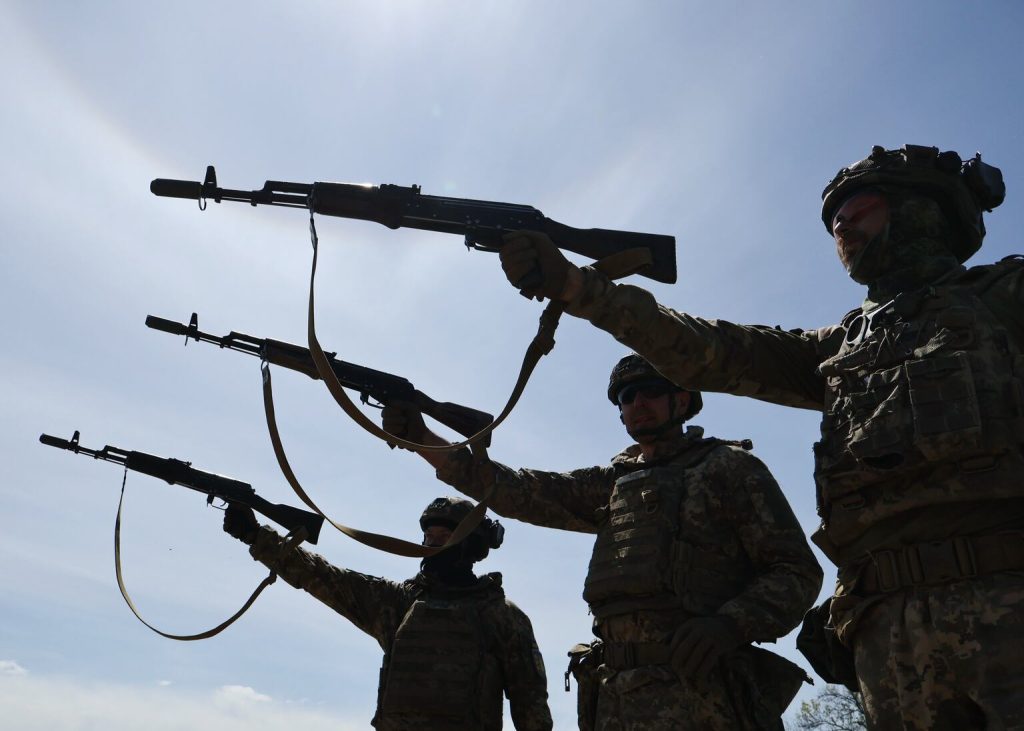
The geopolitical landscape of 2026 shifted on its axis this Friday as US President Donald Trump announced a monumental diplomatic breakthrough. In a move that has sent shockwaves through international capitals, the leaders of Russia and Ukraine have reportedly agreed to a three-day ceasefire, accompanied by a massive exchange of prisoners.
Trump, speaking with his characteristic optimism, framed the agreement as the potential “beginning of the end” of a conflict that has ravaged Eastern Europe since February 2022. As the war enters its fifth year, this temporary halt in hostilities offers a rare glimmer of hope for a diplomatic resolution to one of the deadliest wars of the 21st century.
The Mechanics of the “Trump Truce”: Dates and Details
According to the announcement made via social media, the ceasefire is scheduled to begin on Saturday, May 9, 2026, and run through Monday, May 11, 2026. This 72-hour window is not merely a pause in gunfire; it is a structured diplomatic exercise designed to build the “trust” that has been absent for years.
The core components of the agreement include:
A total suspension of all kinetic activity: This includes drone strikes, artillery barrages, and offensive maneuvers across the entire front line.
A 1,000-for-1,000 prisoner exchange: Each nation has committed to releasing 1,000 prisoners of war (POWs), a logistical feat that requires intense coordination.
Direct US Mediation: Trump emphasized that the deal was reached after he spoke “directly” with both Russian President Vladimir Putin and Ukrainian President Volodymyr Zelensky.
While the world watches with bated breath, the timing of this ceasefire is no coincidence. May 9 is Victory Day in Russia, a holiday of immense national significance marking the defeat of Nazi Germany in World War II.
The Significance of Victory Day 2026
By scheduling the ceasefire to coincide with May 9, Trump has tapped into a shared, albeit contested, historical narrative. “The Celebration in Russia is for Victory Day but, likewise, in Ukraine, because they were also a big part and factor of World War II,” Trump noted.
For Russia, Victory Day is usually a display of military might in Red Square. For Ukraine, the day is a reminder of their own sacrifices against fascism—sacrifices they argue are being echoed in their current fight for sovereignty.
A Strategic Silence from the Kremlin
While President Zelensky was quick to confirm the agreement, a notable silence has emanated from the Kremlin. As of Friday evening, neither Vladimir Putin nor his press office had issued a formal statement. This discrepancy has led some analysts to question the stability of the deal, especially given that a previous ceasefire attempt earlier in the week collapsed within hours.
Zelensky’s Strategic Masterstroke: The “Authorization” Decree
In a move that surprised many diplomatic observers, President Volodymyr Zelensky did more than just confirm the ceasefire. He issued a formal presidential decree that “authorized” Russia to hold its traditional military parade in Moscow.
By declaring Red Square “off-limits” for Ukrainian strikes during the event, Zelensky achieved two things:
- Asserting Reach: He subtly reminded the world (and the Russian public) that Ukraine now possesses the “effective targeting reach” to strike the Russian capital.
- Moral High Ground: He positioned Ukraine as the party most interested in the lives of its people, stating, “Red Square matters less to us than the lives of Ukrainian prisoners of war who can be brought home.”
For Kyiv, the return of 1,000 soldiers is a massive domestic win. Throughout the war, the return of POWs has been a central demand of the Ukrainian public, and Zelensky’s willingness to pause hostilities for this purpose is seen as a prioritize-the-soldier strategy.
The Fragility of Peace: Lessons from the Past
The optimism surrounding this three-day window is tempered by the grim reality of the past week. Just days ago, both Russia and Ukraine attempted unilateral ceasefires that disintegrated almost instantly.
In those instances, both sides traded accusations of “provocations” and “bad faith.” The front lines, particularly in regions like Zaporizhzhia and the Donbas, have seen some of the most intense “kinetic activity” of the year. The question remains: Can a 72-hour pause survive the deep-seated animosity and the “fog of war” that has characterized this four-year-old conflict?
Why This Time Might Be Different
Unlike previous attempts, this ceasefire is explicitly US-mediated. Zelensky thanked the American team for their “effective diplomatic engagement,” signaling that Washington is putting its full weight behind the enforcement of the terms.
“We are counting on the United States to ensure that Russia fulfills its commitments,” Zelensky said. This places the burden of accountability squarely on the Trump administration.
The Rubio Contrast: Realism vs. Optimism
Interestingly, the President’s announcement came shortly after Secretary of State Marco Rubio offered a much more cautious assessment of the situation. Speaking in Rome after a visit to the Vatican, Rubio told reporters that mediation efforts had “stagnated” and had not yet led to a “fruitful outcome.”
This “good cop, bad cop” dynamic—or perhaps a simple disconnect within the administration—highlights the difficulty of negotiating with two parties that have been locked in a deadly embrace for over 1,500 days. While Rubio focused on the stagnation of long-term peace talks, Trump focused on the immediate, tangible win of a prisoner swap.
The Frontline Reality: A Brief Respite for Soldiers
For the soldiers in the trenches, three days without the constant threat of FPV drones and glide bombs is an eternity.
Military analysts suggest that even if the ceasefire does not lead to a permanent peace, it allows for:
Casualty Recovery: Both sides can safely recover the bodies of the fallen.
Logistical Resupply: Non-kinetic movements can allow for the delivery of food and medical supplies.
Psychological Relief: The mental toll of four years of continuous combat cannot be overstated; a 72-hour break provides a much-needed “reset” for exhausted troops.
Analysis: Is This the “Beginning of the End”?
President Trump’s claim that we are getting “closer and closer every day” to ending the war is a bold one. Throughout 2025 and early 2026, his rhetoric has shifted between extreme optimism and a “let them fight” isolationism.
However, the 1,000-for-1,000 prisoner swap is a concrete metric of success. Large-scale exchanges are often the precursor to more substantive negotiations. If 2,000 families receive their loved ones back by Monday, the political momentum for a permanent ceasefire could become unstoppable.
The Challenges Ahead
- Verification: How will the US monitor “kinetic activity” in real-time across a 1,000-kilometer front?
- The “Spoiler” Effect: Radical factions on either side may attempt to break the ceasefire to prevent any perceived “capitulation.”
- The Day After: What happens on Tuesday, May 12? Without a follow-up framework, the fighting could resume with even greater intensity.
Conclusion: A Weekend of Uncertainty
As May 9, 2026, approaches, the eyes of the world are on Moscow and Kyiv. President Trump has staked a significant amount of political capital on this three-day window. For the families of 2,000 prisoners, it is a weekend of prayer and anticipation. For the soldiers on the front lines, it is a tentative silence.
Whether this is a historical footnote or the first chapter of a peace treaty remains to be seen. But for the first time in a long time, the word “ceasefire” isn’t just a hopeful wish—it’s a scheduled event.