Is the Russia-Ukraine Conflict Finally Reaching Its Conclusion? Insights from the Kremlin

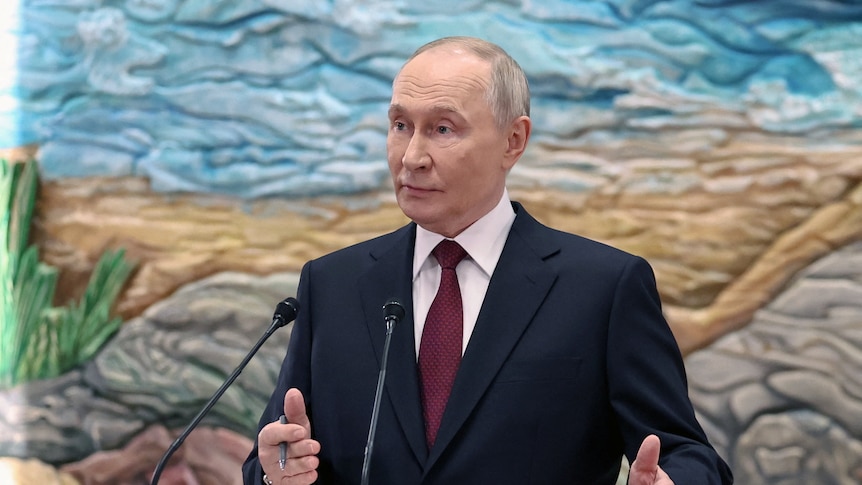
After four years of grueling, high-intensity conflict that has reshaped global geopolitics, Russian President Vladimir Putin has signaled a potential shift in the trajectory of the war. Following the 2026 Victory Day commemorations in Moscow, Putin remarked to reporters that he believes the Ukraine conflict is coming to an end.
This statement has sent ripples through international diplomatic circles, marking a rare moment of optimism in a crisis that has defined the 2020s. However, beneath the surface of this pronouncement lies a complex web of conditions, historical grievances, and the reality of a war that has fundamentally altered the European security landscape.
The State of the Conflict in 2026
Four years into the full-scale invasion, the situation on the ground remains a testament to the sheer scale of the tragedy. What was once described by some as a “special operation” has evolved into the most significant European conflict since World War II.
The human cost has been staggering, with hundreds of thousands of casualties and vast swathes of Ukrainian territory left in ruins. Despite Russia’s military efforts, the conflict has settled into a grinding stalemate, with the Donbas region remaining a primary focal point of strategic tension. Russian forces continue to face fortified defensive lines, and the economic strain on the Russian Federation—estimated in the trillions—is becoming increasingly difficult to ignore.
The Diplomatic Hurdle: Putin’s Conditions for Peace
While the Russian President’s words suggest an end is in sight, the path to a lasting peace remains fraught with obstacles. A critical component of any potential resolution is the prospect of direct negotiations between Moscow and Kyiv.
When pressed on the possibility of a summit with Ukrainian President Volodymyr Zelensky, Putin was clear: a meeting is only on the table once a lasting peace deal has been finalized. This suggests that the Kremlin views a presidential summit as the “final signature” rather than the starting point for negotiations.
The Role of International Mediators
The search for a neutral arbiter remains a significant point of contention. When asked about his preference for European engagement, Putin explicitly mentioned former German Chancellor Gerhard Schroeder as a preferred intermediary. This preference highlights the deep-seated distrust between Moscow and current European leadership, who severed significant ties with the Kremlin in 2022.
The “Agreement-First” Strategy: The Kremlin maintains that European governments must take the initiative to restore contact, as they were the ones who moved to isolate Russia at the onset of the conflict.
The Zelensky Dynamic: Kyiv continues to advocate for a ceasefire as a prerequisite for any meaningful dialogue, setting the stage for a standoff in negotiations.
Global Economic and Political Implications
The war has not only devastated Ukraine but has also served as a catalyst for a global economic realignment. The US$3 trillion Russian economy has been heavily impacted by sanctions and war-related expenditures, leading to a precarious situation for the Kremlin.
A Shift in Western Relations
Relations between Russia and the West are currently at their lowest point since the 1962 Cuban Missile Crisis. The potential for a de-escalation is not just a regional matter; it is a global necessity. As European Union leaders explore the possibility of potential talks, the world watches to see if the rhetoric of “coming to an end” can be translated into a functional ceasefire or a comprehensive treaty.
Analyzing the “Victory Day” Context
The timing of Putin’s remarks—delivered during a scaled-back Victory Day parade—is highly symbolic. Victory Day, which honors the Soviet triumph over Nazi Germany, is typically a display of raw military might. The fact that the 2026 parade was the most modest in recent years suggests that the Kremlin is mindful of the optics of the conflict.
The struggle to achieve a decisive victory in the Donbas has forced a shift in narrative. The focus has moved from rapid territorial gains to a narrative of endurance. Whether this “end” is a genuine pursuit of peace or a strategic pause remains the defining question for international observers.
Why This Matters in 2026
As we move further into 2026, the international community is fatigued by the protracted nature of the war. Energy security, agricultural supply chains, and inflation rates have all been influenced by the uncertainty of the conflict.
Key Takeaways for Global Observers:
- Diplomatic Flexibility: The willingness of both sides to eventually engage in talks is the only path toward a resolution.
- Strategic Stalemate: Neither side has achieved a total military victory, which is often a precursor to “frozen conflict” scenarios or negotiated settlements.
- Humanitarian Crisis: The displacement of millions and the destruction of infrastructure require a long-term reconstruction plan that can only begin once the fighting stops.
Conclusion: What Lies Ahead?
President Putin’s assessment that the conflict is “coming to an end” carries significant weight, yet it is not a guarantee of peace. The gap between the preconditions set by Moscow and the requirements for security demanded by Kyiv remains wide.
For the international community, the focus must now shift to facilitating a framework where both parties feel secure enough to lay down their arms. The world is watching, hoping that the rhetoric of 2026 will lead to a tangible reduction in violence and the beginning of a long, difficult process of reconciliation and rebuilding.