John Swinney Declares Emphatic SNP Victory in 2026 Scottish Parliament Election: A New Era for Holyrood

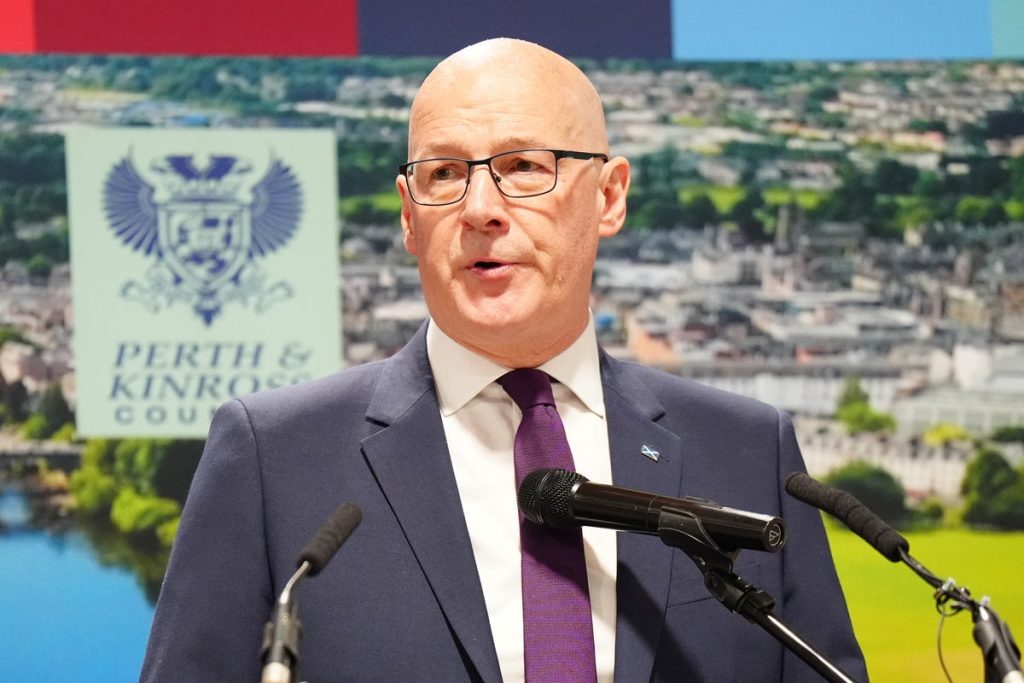
The political landscape of Scotland has been reshaped once again as First Minister John Swinney officially declared an “emphatic” victory for the Scottish National Party (SNP) in the 2026 Scottish Parliament elections. As the dust settles on one of the most high-stakes campaigns in recent memory, the results signal a historic fifth term for the Nationalists, defying critics who predicted a terminal decline for the party.
With 70 out of the 73 constituency results declared at the time of Swinney’s victory speech, the SNP had already secured 55 seats, a commanding lead that effectively cements their position as the dominant force in Scottish politics. While the final regional list seats for Holyrood are still being tallied, the trend is undeniable: the SNP has successfully navigated the turbulent waters of the mid-2020s to retain the trust of the Scottish electorate.
The “Emphatic” Win: Breaking Down the Numbers
John Swinney’s rhetoric was clear and uncompromising. Speaking to supporters and the media, he stated that the SNP had won “hands down.” The victory is particularly significant given the political climate leading up to the May 2026 vote. After years of internal debates over independence strategy and leadership transitions, the party’s ability to mobilize its base and capture 55 constituency seats is being viewed by analysts as a remarkable feat of political resilience.
A Collapse of the Labour Challenge
Perhaps the most striking aspect of the 2026 result is the collapse of the Labour Party in its former Scottish heartlands. Despite a surge in the 2024 UK General Election, the Labour Party failed to translate that momentum into Holyrood success. Swinney noted that the Labour Government in London had been “hammered” in Scotland, suggesting that the electorate was dissatisfied with the performance of the UK-wide administration.
The Surge in Glasgow and Beyond
Specific local results, such as those in Glasgow, showcased the SNP’s enduring appeal. In the nation’s largest city, the SNP secured an “emphatic” victory, mirroring the national trend. This regional dominance is crucial, as it provides the SNP with a solid foundation to govern, even as they await the final proportional representation (PR) seats from the regional lists.
A First Minister for All of Scotland
In his victory address, John Swinney adopted a tone of reconciliation and national unity. Recognizing the polarized nature of modern politics, he made a solemn promise to the people of Scotland:
“Once again the people of Scotland have put their trust in us. However you voted today, I promise that I will be a First Minister for all of Scotland.”
This commitment is seen as an attempt to bridge the divide between pro-independence supporters and those who prioritize stability and public service reform. Swinney’s leadership style, often described as pragmatic and steady, was a central pillar of the SNP’s 2026 campaign strategy. By positioning himself as a “safe pair of hands,” Swinney managed to reclaim the middle ground of Scottish politics.
Relations with Westminster: “A Lot of Listening to Do”
The 2026 election was not just a domestic affair; it was a referendum on the relationship between the Scottish Government and the UK Government at Downing Street. Throughout the campaign, relations between Edinburgh and London had reportedly “soured,” with Swinney accusing the UK Government of a lack of respect for Scottish devolution.
Calling for Mutual Respect
Following the declaration of victory, Swinney sent a direct message to the Labour-led administration in London. He argued that Downing Street has “a lot of listening to do” and called for a fundamental reset in how the two governments interact.
“I hope that lesson is learned in Downing Street that there’s now got to be respect for the Scottish Government exercised by the UK Government,” Swinney remarked. This call for respect is expected to be a recurring theme as the SNP embarks on its third decade in power, likely pushing for greater fiscal powers and a renewed discussion on Scotland’s constitutional future.
The Independence Strategy: A New Tactical Approach
One of the most debated topics during the 2026 election cycle was the SNP’s path toward Scottish independence. Before the election, Swinney had won a “fierce internal battle” regarding the party’s tactics. He dismissed criticisms of “begging for a referendum” from the UK Prime Minister, instead hinting at a more sophisticated and multi-layered approach.
“Nobody Knows My Tactics”
Swinney’s enigmatic statement—“nobody knows the tactics I will deploy”—has left political commentators speculating on the next steps for the independence movement. With a fresh mandate and a majority of MSPs likely to support self-determination, the SNP is in a strong position to challenge the Westminster veto. However, the focus in the immediate future appears to be on governance and demonstrating the “competence” of a Scottish administration as a precursor to statehood.
The 2026 Political Climate: Reform and Local Shifts
While the SNP celebrated in Scotland, the wider UK political map showed signs of significant volatility. In England, the Reform party saw a surge in local elections, while Labour suffered historic defeats in Wales. These shifts suggest a broader disillusionment with the status quo across the UK, a sentiment that Swinney and the SNP successfully tapped into by framing themselves as the defenders of Scottish interests against a “failing” Westminster system.
Why the SNP Won in 2026
Several factors contributed to the SNP’s 2026 success:
- Leadership Stability: John Swinney provided a sense of continuity and experience that resonated with voters during economic uncertainty.
- Focus on Public Services: The campaign pivoted toward the NHS and education, addressing local concerns alongside constitutional ones.
- Labour’s Stagnation: The failure of the Labour Party to offer a distinct and compelling vision for Scotland allowed the SNP to retain its “incumbency advantage.”
The Road Ahead: A Third Decade in Power
As the SNP embarks on its third decade of governance, the challenges remain formidable. The 2026 victory provides a mandate, but it also brings the weight of expectation. The Scottish Parliament will assemble next week to formally re-elect John Swinney as First Minister, marking the start of a new session where the SNP will need to balance its independence aspirations with the day-to-day realities of governing.
The Final Count and Coalition Possibilities
While the SNP is the largest party by a significant margin, the final regional list results will determine whether they can govern alone or if they will need to seek a formal or informal coalition—most likely with the Scottish Greens. The proportional representation system at Holyrood often makes outright majorities difficult, but Swinney’s “emphatic” constituency performance puts him in a powerful negotiating position.
Economic and Social Priorities
The next five years will be defined by how the Scottish Government handles:
The Cost of Living Crisis: Continued pressure on household budgets remains a top priority for voters.
Climate Targets: Scotland’s ambitious journey toward Net Zero will require bold legislative action.
Healthcare Reform: Reducing waiting times in the NHS remains the most significant domestic hurdle for the administration.
Conclusion: A Mandate for Change and Continuity
John Swinney’s declaration of an “emphatic” victory in the 2026 Scottish Parliament election marks a pivotal moment in British politics. By securing a fifth term, the SNP has proved that its message of Scottish self-governance still holds deep resonance. However, the message to Westminster is equally clear: the era of ignoring the Scottish Government’s mandate must come to an end.
As the final seats are confirmed, the focus shifts from the campaign trail to the halls of Holyrood. With a promise to be a “First Minister for all,” Swinney faces the task of leading a nation that is both optimistic about its future and demanding of its leaders. The 2026 election may be over, but the journey toward Scotland’s next chapter has only just begun.
Key Takeaways from the 2026 Scottish Election
SNP Dominance: 55 constituency seats won out of the first 70 declared.
Labour Defeat: A significant collapse for the Labour Party in Scotland compared to previous years.
Constitutional Tension: Swinney demands “respect” from Downing Street and hints at new independence tactics.
- Leadership: John Swinney cements his role as a unifying figure within the party and the country.