A New Era Begins: Suvendu Adhikari Sworn In as West Bengal’s First BJP Chief Minister

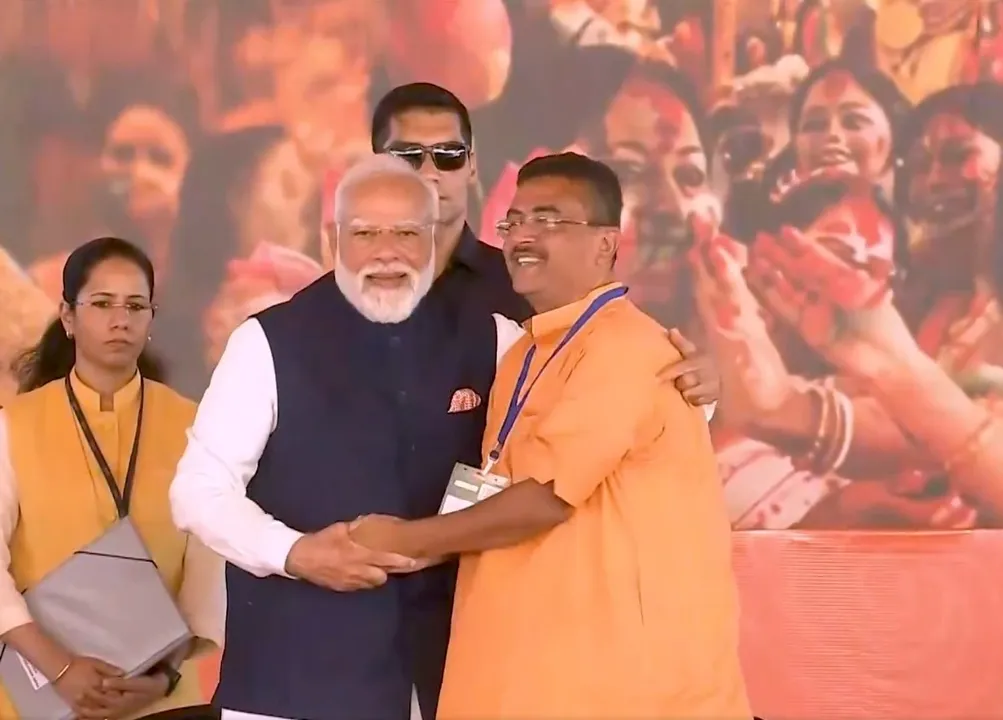
The political landscape of West Bengal underwent a seismic shift on Saturday, May 9, 2026. In a historic event that will be studied by political scientists for decades, Suvendu Adhikari took the oath of office as the first-ever Bharatiya Janata Party (BJP) Chief Minister of West Bengal. This swearing-in ceremony, held amidst massive public enthusiasm at Kolkata’s iconic Brigade Parade Ground, signals the end of a long-standing political status quo and the beginning of a transformative chapter for the eastern state.
The transition of power comes on the heels of a decisive electoral mandate, where the BJP secured 207 seats in the 2026 Assembly elections. By defeating the incumbent Trinamool Congress (TMC), the BJP has successfully breached what was once considered an impenetrable fortress of regional politics.
/sambad-english/media/mediafiles/2026/05/09/suvendu-adhikari-with-modi-2026-05-09-12-46-36.jpg)
A Historic Mandate: The 2026 Assembly Election Results
The 2026 West Bengal Assembly elections were characterized by high-octane campaigning and a clear desire for change among the electorate. The BJP’s strategy, centered on development, anti-corruption, and a “Sonar Bangla” vision, resonated deeply with voters across both rural and urban belts.
Securing 207 seats is no small feat in a state as politically complex as West Bengal. This victory was anchored by the party’s performance in key battlegrounds. Suvendu Adhikari’s own electoral journey was the crowning jewel of this success; he not only secured a commanding victory in the Nandigram constituency—a place synonymous with his political rise—but also claimed a high-profile win in Bhabanipur, the traditional bastion of former Chief Minister Mamata Banerjee.
The Swearing-In Ceremony: A Show of Strength
The swearing-in ceremony was more than just a constitutional formality; it was a grand display of the BJP’s national prominence and its commitment to the state. With Prime Minister Narendra Modi and Union Home Minister Amit Shah in attendance, the event underscored the importance of West Bengal in the party’s national roadmap.
The atmosphere at the Brigade Parade Ground was electric, filled with thousands of supporters cheering for the new leadership. The choice of May 9 for the oath-taking—coinciding with Rabindra Jayanti, the birth anniversary of Rabindranath Tagore—carried significant symbolic weight, positioning the BJP as a party that deeply respects and integrates the cultural heritage of Bengal into its governance model.
/odishatv/media/mediafiles/2026/05/09/suvendu-adhikari-takes-oath-2026-05-09-11-59-49.jpeg)
Suvendu Adhikari: From Key Aide to Chief Minister
The ascent of Suvendu Adhikari to the Chief Minister’s office is perhaps the most dramatic narrative in contemporary Indian politics. Having served as a close lieutenant to Mamata Banerjee during her 15-year tenure and the anti-land acquisition movements of the past, Adhikari’s transition to the BJP and subsequent rise to the top post is a testament to his grassroots influence.
The Political Evolution
The Early Years: Known as a firebrand leader in East Midnapore, Adhikari was once the backbone of the Trinamool Congress’s organizational strength.
The Breakaway: Disillusionment with the TMC’s governance and internal dynamics led him to join the BJP, where he quickly became the face of the opposition.
The Strategist: As the Leader of the Opposition from 2021 to 2026, he meticulously built the BJP’s organizational machinery, preparing the ground for the 2026 electoral landslide.
His intimate knowledge of the state’s political pulse allowed him to navigate the complexities of shifting voter allegiances, eventually leading the party to this historic breakthrough.
A New Council of Ministers
To govern a state with the scale and challenges of West Bengal, the new Chief Minister has assembled a diverse and experienced cabinet. The swearing-in included several key figures who have been instrumental in the BJP’s rise in the region:
- Dilip Ghosh: A seasoned organizational leader whose contribution to the party’s growth in the state has been immense.
- Agnimitra Paul: A prominent voice representing the party’s commitment to women’s leadership and youth engagement.
- Nishit Pramanik: Known for his influence in the northern districts, ensuring the government represents all corners of the state.
- Kshudiram Tudu and Ashok Kirtania: Representing the broader grassroots coalition that supported the BJP’s victory.
/odishatv/media/mediafiles/2026/05/09/suvendu-adhikari-takes-oath-as-cm-2026-05-09-11-56-47.jpeg)
Challenges and Opportunities Ahead
While the victory is historic, the road ahead for Suvendu Adhikari and his government is filled with both challenges and significant opportunities. The outgoing administration leaves behind a complex legacy, and the new government has promised a “White Paper” on the state’s financial health and administrative status.
Priority Areas for the New Government:
Economic Revitalization: Addressing the state’s debt burden and fostering an environment conducive to industrial investment.
Infrastructure Development: Accelerating projects that were stalled or delayed under previous administrations.
Transparency and Governance: Implementing a zero-tolerance policy toward corruption, a key campaign promise of the BJP.
- Social Welfare: Balancing the existing welfare schemes with new initiatives aimed at job creation for the youth.
The opposition, led by former CM Mamata Banerjee, remains a potent force, and the new government will need to navigate this by focusing on inclusive governance that touches the lives of the common citizen.
The Symbolic Significance of the Date
Choosing May 9 for the inauguration was a masterstroke of political symbolism. By aligning the start of his tenure with the birth anniversary of Rabindranath Tagore, Suvendu Adhikari signaled a desire to harmonize political change with the cultural pride of the Bengali people. It serves as a reminder that the new government intends to govern through the lens of “cultural nationalism,” blending development with the rich intellectual history of West Bengal.
Conclusion: A Turning Point for Bengal
The swearing-in of Suvendu Adhikari as the first BJP Chief Minister of West Bengal is arguably the most significant political event in the state since its inception. It marks the total erosion of the old political order and the arrival of a new, competitive political climate.
For the people of West Bengal, the expectations are high. They have voted for change, and the government’s performance in the next few months will be critical in defining the tone of the next five years. As Adhikari takes his seat in the secretariat, the eyes of the nation are fixed on Kolkata, watching to see how this “son of the soil” translates his electoral mandate into tangible, long-term progress for the state.
The transformation is complete, but the real work of governance has only just begun. With a clear majority and the full backing of the central leadership, the new administration has the tools to reshape the state’s destiny. Whether this leads to the promised “Sonar Bangla” remains to be seen, but one thing is certain: West Bengal will never be the same again.