High Stakes in the Persian Gulf: Iran’s Warning to the U.S. Amidst a Fragile 2026 Ceasefire

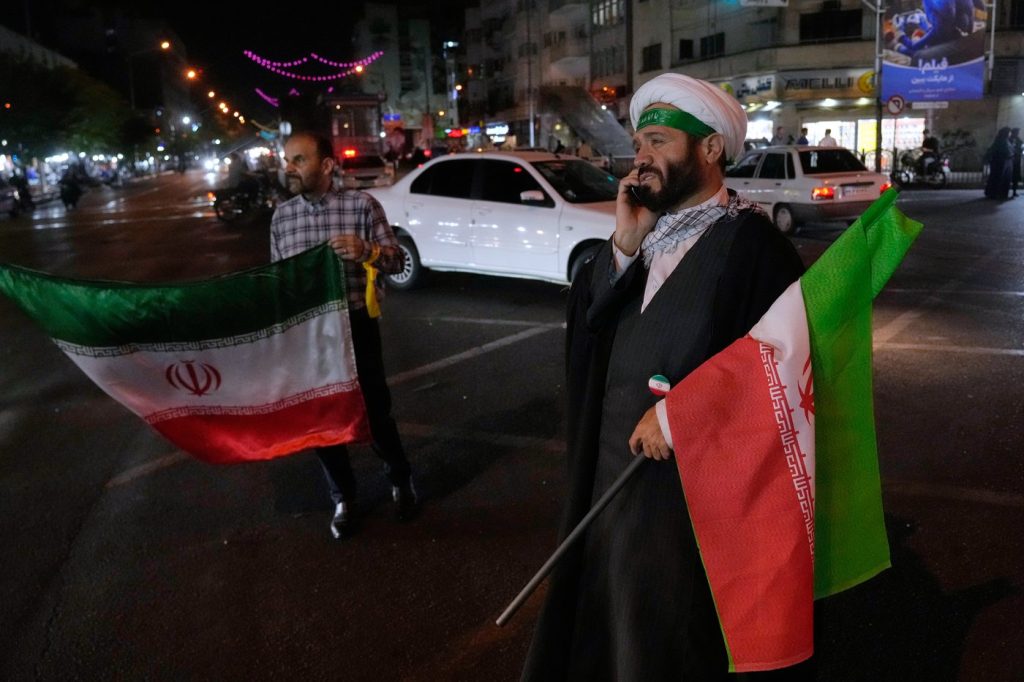
The geopolitical landscape of the Middle East remains on a knife’s edge as of mid-2026. Despite a month-old ceasefire intended to de-escalate the ongoing conflict between the United States and Iran, tensions in the Persian Gulf have flared up once again. The Revolutionary Guard navy recently issued a stern ultimatum, warning that any further U.S. strikes on Iranian oil tankers or commercial vessels would trigger a “heavy assault” against American regional bases and naval assets.
This development comes in the wake of U.S. military operations targeting two Iranian tankers allegedly attempting to breach the naval blockade currently strangling Iran’s ports. As global energy markets continue to react to the volatility in the Strait of Hormuz, the international community watches with bated breath to see if this tenuous peace can hold, or if the region is sliding back into full-scale kinetic warfare.
The Fragility of the 2026 Ceasefire
The ceasefire, which has been in place for roughly four weeks, is being tested daily. While Washington insists that the agreement remains the primary framework for peace, the reality on the ground—or rather, on the water—suggests a different story. The U.S. military’s decision to disable Iranian tankers that were testing the blockade has fundamentally challenged the status quo.
For the United States, the blockade is a strategic necessity designed to pressure Tehran into returning to the negotiating table. For Iran, the freedom of its commercial shipping is a matter of national sovereignty and economic survival. The conflicting definitions of “compliance” under the ceasefire have created a dangerous feedback loop where both sides feel justified in their aggressive posturing.
The Strait of Hormuz: A Global Economic Chokepoint
The Strait of Hormuz serves as the world’s most critical energy artery. Since the start of the conflict in late February 2026, the effective closure of this waterway has caused a dramatic spike in fuel prices and rattled global markets. The U.S. strategy of “maximum pressure” via naval interdiction has successfully hindered Iran’s oil revenue, but it has also placed the global supply chain at constant risk of total collapse.
Iran’s Hardline Stance and Internal Pressures
The Revolutionary Guard’s recent warning is not merely rhetorical. By explicitly threatening U.S. bases in the region, Tehran is signaling that it is willing to broaden the conflict geographically if its economic lifelines are severed. This marks a significant escalation in the rhetoric coming out of the Iranian defense establishment.
The Mystery of the Supreme Leader
Adding to the uncertainty in Tehran is the continued absence of the new Supreme Leader, Mojtaba Khamenei. Since the war began, his public silence has fueled intense speculation regarding his health and the stability of the current regime. While officials maintain that he is in “complete health” and recovering from injuries sustained during the opening phase of the conflict, the lack of a strong, visible leader complicates the diplomatic process. Without a clear signal from the very top, the Iranian government’s mixed messaging—alternating between threats and a willingness to negotiate—remains a major hurdle for international mediators.
The Regional Domino Effect: Bahrain and Beyond
The conflict is not contained to the high seas. Bahrain, which hosts the U.S. Navy’s Fifth Fleet, recently announced the arrest of 41 individuals allegedly linked to the Iranian Revolutionary Guard. The Bahraini interior ministry claims these individuals were collecting funds to support “terrorist operations” in Iran.
This crackdown highlights the sectarian and political tensions that the current war has exacerbated. With a Sunni monarchy governing a majority-Shiite population, Bahrain is particularly vulnerable to the fallout of the U.S.-Iran standoff. Tehran has already issued a warning to the Bahraini government, cautioning that “siding with the U.S.-backed resolution will bring severe consequences.”
Diplomatic Maneuvers: Is Peace Still Possible?
Despite the military friction, diplomatic channels remain open, albeit strained. Leaders from Pakistan, Saudi Arabia, and Russia are actively engaging in “day and night” negotiations to prevent the ceasefire from dissolving entirely.
The Russian Proposal
Russian President Vladimir Putin has remained a key player in the background. His proposal to take enriched uranium from Iran under the supervision of the International Atomic Energy Agency (IAEA) remains on the table. This move is designed to provide a “face-saving” exit for Tehran regarding its nuclear program, which is a central demand of the U.S. government.
Britain and France’s Role
European powers are also preparing for a post-conflict scenario. The deployment of the HMS Dragon by Britain and the movement of a French aircraft carrier strike group into the Red Sea signal that the West is serious about re-establishing freedom of navigation. However, London and Paris have been careful to state that these forces will only be utilized once a “sustainable” ceasefire is solidified and the maritime industry is confident in the safety of the routes.
Analysis: The Path Forward
The situation in the Persian Gulf at the midpoint of 2026 can be characterized as a “war of attrition by proxy.” The U.S. is betting that the economic pain caused by the blockade will force a surrender of the nuclear program, while Iran is banking on the global economic pressure caused by the closed Strait of Hormuz to force a U.S. withdrawal or a softening of terms.
- Economic Impact: As long as the Strait of Hormuz remains restricted, inflation and energy scarcity will remain a primary concern for the global economy.
- Military Escalation: Any miscalculation by a naval commander on either side could easily spiral into a full-scale regional war that neither side can afford.
- Diplomatic Resolution: The key to a long-term deal lies in Iran’s willingness to accept international oversight of its nuclear assets in exchange for the lifting of the blockade.
The coming weeks will be critical. If the current ceasefire holds, it will likely be due to the exhaustion of both sides rather than a sudden breakthrough in trust. The international community, led by mediators in the Middle East and supported by European security guarantees, must act quickly to ensure that the current “tenuous” peace does not descend into total chaos.
Conclusion
The warning from the Iranian Revolutionary Guard is a stark reminder that the current ceasefire is a fragile construct, held together by thin threads of mutual interest and intense diplomatic back-channeling. With the U.S. military enforcing a strict blockade and Iran threatening the security of the entire region, the situation remains highly volatile.
As we move deeper into 2026, the question is not just about the security of oil tankers or the status of Iran’s nuclear program—it is about the stability of the global order. Whether the parties involved can move beyond the current deadlock will depend on their ability to prioritize long-term economic and regional security over short-term tactical advantages. Until then, the world remains on high alert, watching the waters of the Persian Gulf for any sign of a shift in the balance of power.