Strategic Shift: Trump Pauses “Project Freedom” Amidst Diplomatic Breakthroughs in Hormuz

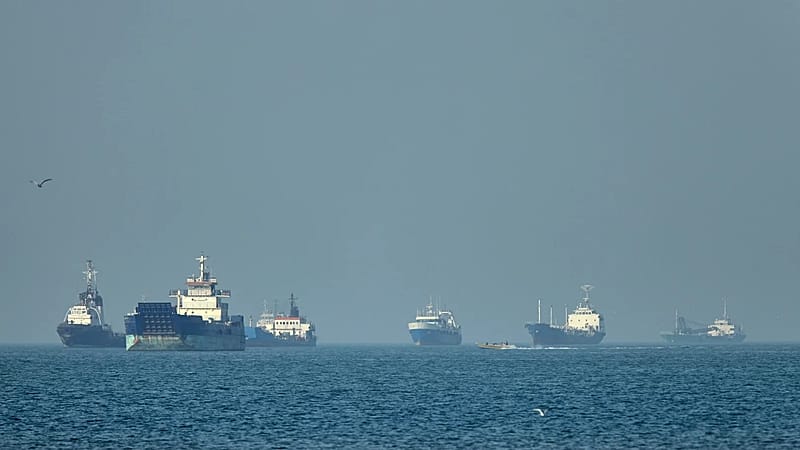
The geopolitical landscape of the Middle East underwent a sudden, high-stakes shift this week as United States President Donald Trump announced a temporary suspension of “Project Freedom.” This naval escort mission, which was designed to safeguard commercial shipping vessels transiting the volatile Strait of Hormuz, was halted just one day after its inception. The move comes as the global community watches with bated breath, hoping that a fragile ceasefire—now entering its second month—might evolve into a permanent peace agreement between Washington and Tehran.
President Trump’s decision, communicated via social media and official White House briefings, highlights a pivot from overt military muscle-flexing to intensive back-channel diplomacy. While the naval escorts have been paused, the administration was quick to clarify that the blockade of Iranian ports remains in full force, signaling that the policy of “maximum pressure” is far from abandoned.
The Logic Behind the Pause: Why Now?
The decision to pause the escort mission is multifaceted. According to the White House, the move is a direct response to a request from several international partners, including Pakistan. By stepping back, the U.S. is creating a “diplomatic window” to determine if a final, binding agreement with Iranian representatives is within reach.
Key Drivers for the Strategic Pivot:
- Diplomatic Progress: President Trump noted that “great progress” has been made in negotiations, suggesting that both sides are feeling the economic and military exhaustion of the two-month conflict.
- International Pressure: Allies and neutral nations have been lobbying for a de-escalation to prevent a total collapse of the global supply chain.
- Military Positioning: Secretary of State Marco Rubio emphasized that while offensive operations have concluded, the U.S. military retains the capability to deliver a “devastating” response should Iranian forces resume attacks on commercial shipping.
The Reality on the Ground: A Fragile Ceasefire
Despite the optimistic tone from the White House, the situation in the Strait of Hormuz remains inherently dangerous. The region has been a hotbed of tension since the conflict erupted in late February. Just this week, the Maltese-flagged vessel CMA CGM San Antonio was targeted in an attack that left several crew members injured, serving as a grim reminder that the waters remain a “gray zone” of conflict.
The U.S. military, under the direction of Pentagon chief Pete Hegseth, maintains a posture of “defensive readiness.” While Washington is not actively seeking a fight, the threat of force remains the primary deterrent against further Iranian aggression. Israel’s military leadership has echoed this sentiment, confirming that their air force is prepared to deploy eastward if the security situation deteriorates further.
The Global Dimension: China’s Role and Araghchi’s Mission
As the U.S. recalibrates its strategy, Iran is looking eastward for support. Iranian Foreign Minister Abbas Araghchi has been conducting high-level talks in Beijing, meeting with his Chinese counterpart, Wang Yi. China, a major consumer of Iranian oil and a key economic lifeline for Tehran, has called for an immediate and complete cessation of hostilities.
Wang Yi’s message to both Washington and Tehran was clear: the Strait of Hormuz must be reopened to international traffic as quickly as possible. This diplomatic push comes just days before President Trump’s anticipated visit to China to meet with President Xi Jinping. The meeting, which was previously delayed by the outbreak of the war, is now viewed by analysts as the potential “final summit” that could cement a regional peace deal.
The Economic Impact: A Market on Edge
The volatility surrounding the Strait of Hormuz has sent shockwaves through global markets. The announcement of the pause in naval escorts caused an immediate reaction in energy markets, with Brent crude prices jumping by over $3.00 per barrel. For the global economy, the stakes could not be higher. The Strait is the world’s most important oil chokepoint, and any disruption to the flow of tankers threatens to trigger widespread inflationary pressure.
While the U.S. blockade of Iranian ports continues to squeeze Tehran’s revenue streams, it also complicates the narrative of a “free-flowing” waterway. President Pezeshkian of Iran has publicly rejected the U.S. “maximum pressure” demands as “impossible,” yet Tehran’s willingness to engage in dialogue suggests that the domestic economic strain of the war is becoming unsustainable.
Looking Ahead: Can a Deal Be Finalized?
The coming days are critical. With the U.S. pausing its direct escort operations, the burden of proof shifts to Tehran. Will Iran seize this opportunity to finalize an agreement and normalize maritime trade, or will the pause be viewed as a sign of weakness that invites further provocations?
The international community is watching for three key indicators:
The Cessation of Drone and Missile Activity: A period of total silence from Iranian forces in the Gulf.
The Outcome of the Trump-Xi Summit: China’s influence will likely be the deciding factor in whether Iran feels emboldened or pressured to sign a deal.
- The Status of the Port Blockades: If the U.S. begins to ease the blockade in tandem with an Iranian agreement, it will signal the beginning of a genuine de-escalation phase.
In conclusion, the pause of “Project Freedom” is a calculated risk. It is a transition from the “iron fist” of military escorting to the “velvet glove” of diplomacy. Whether this leads to a lasting peace or merely a brief reprieve in a long-standing struggle remains to be seen. However, one thing is certain: the eyes of the world are fixed on the Strait of Hormuz, waiting to see if the promise of 2026 will be one of conflict or resolution.