The Demolition of the Crown Jewel: How the Roberts Court Used a “Wrecking Ball” on the Voting Rights Act

The Voting Rights Act of 1965 (VRA) has long been hailed as the crown jewel of the American civil rights movement. Born from the blood and sacrifice of activists on the Edmund Pettus Bridge in Selma, Alabama, the law was designed to ensure that no American would be denied the right to vote based on the color of their skin. However, as we stand in 2026, legal scholars and civil rights advocates agree that the jewel has lost its luster.
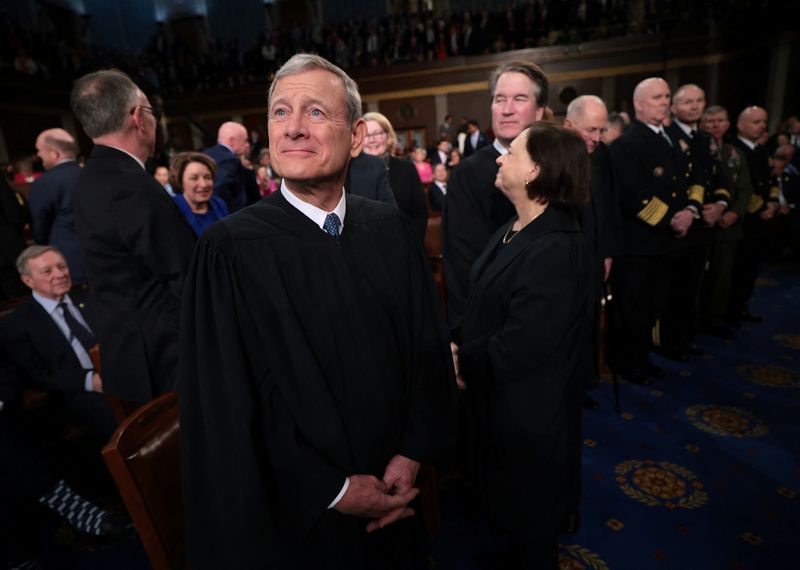
Under the leadership of Chief Justice John Roberts, who has presided over the nation’s highest court for two decades, the Supreme Court has systematically dismantled the VRA. What was once a robust shield against racial discrimination in elections has been reduced to what experts call a “dead letter.” The transformation of the court into a 6-3 conservative powerhouse has accelerated this process, culminating in recent rulings that have effectively finished the job started over a decade ago.
The “Wrecking Ball” Philosophy of the Roberts Court
The metaphor of a “wrecking ball” was famously coined by Rick Hasen, an election law expert at UCLA, to describe the court’s surgical strikes against the VRA. This approach hasn’t been a single, explosive event but rather a series of calculated blows that have targeted the two main pillars of the law: Section 5 and Section 2.
By 2026, the cumulative effect of these decisions has fundamentally altered the landscape of American democracy. The court’s conservative majority argues that these changes are necessary to uphold a “color-blind Constitution.” Conversely, dissenting justices and civil rights groups argue that the court is ignoring the persistent reality of racial polarization in the United States.

The First Blow: The Death of Preclearance (Section 5)
The demolition began in earnest in 2013 with the landmark case Shelby County v. Holder. In this 5-4 decision, authored by Chief Justice Roberts, the court struck down the formula used to determine which jurisdictions—mostly in the South—were required to obtain federal approval (preclearance) before changing their voting laws.
- The Logic: Roberts argued that the “extraordinary measures” of the VRA were no longer justified by current conditions.
- The Result: States with histories of discrimination were immediately free to implement restrictive voting laws, such as strict ID requirements and the closing of polling places in minority neighborhoods, without federal oversight.
- The Legacy: Congress was invited to create a new formula, but in the hyper-polarized environment of the last decade, no such legislation has passed.
Section 2: From “Results” to “Intent”
With Section 5 neutralized, Section 2 became the last remaining pillar of the VRA. This provision allowed plaintiffs to challenge electoral maps and voting practices that resulted in the dilution of minority voting power. For over forty years, the “results test” was the standard: if a map resulted in less opportunity for minority voters, it was illegal.
However, recent rulings leading into 2026 have effectively killed the results test. The court has shifted the burden of proof, turning Section 2 into an “intent test.”
The Louisiana Redistricting Crisis
In a pivotal ruling that sent shockwaves through the 2024 and 2025 election cycles, the Supreme Court blocked an electoral map in Louisiana that would have created a second Black-majority U.S. House district. Despite Black residents making up nearly one-third of the state’s population, the conservative majority ruled that forcing the state to create a second minority-majority district would overstep the Constitution’s bounds.
Justice Samuel Alito, writing for the majority, stated that Section 2 cannot be used to “outlaw a map solely because it fails to provide a sufficient number of majority-minority districts.” This interpretation ties Section 2 directly to the 15th Amendment, which prohibits intentional discrimination, rather than the “discriminatory effects” standard that Congress intended when it amended the VRA in 1982.
The “Impossible” Standard for Plaintiffs
Harvard Law Professor Nicholas Stephanopoulos has noted that while Section 2 exists “in theory,” it is now “impossible to satisfy in fact.” To win a case today, plaintiffs must essentially find a “smoking gun”—direct evidence that lawmakers acted with explicit racist intent. In the modern era, where redistricting is handled with sophisticated software and carefully worded legislative “neutrality,” proving intent is a Herculean task.
The Dissent: A “Completed Demolition”
The ideological rift on the court has never been more apparent than in the stinging dissents from the liberal wing. Justice Elena Kagan has been particularly vocal, describing the court’s trajectory as a “now-completed demolition of the Voting Rights Act.”
In her dissents, Kagan has highlighted a disturbing pattern:
- The 2021 Brnovich Decision: The court endorsed Republican-backed measures in Arizona that disproportionately burdened Black, Latino, and Native American voters.
- The Louisiana Blockage: The court prevented the expansion of minority representation just as critical elections loomed.
- The Systematic Erasure: Kagan argues that the court has had its “sights set” on the VRA for over a decade, systematically stripping away protections until nothing but a shell remains.

The Impact on the 2026 Electoral Landscape
As we move through the 2026 midterms, the consequences of the Roberts Court’s “wrecking ball” are visible in every corner of the country. The shift in legal standards has emboldened state legislatures to redraw maps with surgical precision, often to the detriment of minority communities.
The Disappearance of Minority Representation
Activists like Press Robinson have warned that the current legal environment could lead to the disappearance of elected Black officials. Without the protection of Section 2, states are no longer incentivized to create districts where minority voters can elect their candidates of choice.
- Reduced Clout: Minority voters find their influence “packed” into a single district or “cracked” across multiple districts to dilute their power.
- Incumbency Protection: New maps often prioritize protecting current Republican-held seats, making it nearly impossible for challengers from minority communities to gain a foothold.
Political Polarization and the “Color-Blind” Defense
Supporters of the court’s direction, including former Justice Department lawyers like John Yoo, argue that the court is simply returning to a color-blind Constitution. They contend that using race as a primary factor in redistricting is itself a form of discrimination. This philosophical divide—between those who believe the law should ignore race and those who believe the law must account for historical and systemic racism—is the defining conflict of the 2026 judicial era.
The Future of Civil Rights Litigation
With the VRA effectively gutted, where do civil rights advocates go from here? The legal strategy is shifting toward state-level protections and alternative federal statutes, though these are often less potent than the original VRA.
- State Constitutions: In states like New York and California, advocates are pushing for “State Voting Rights Acts” to fill the void left by the federal court.
- The 14th Amendment: Some are attempting to use the Equal Protection Clause, though the current Supreme Court’s interpretation of the 14th Amendment is similarly restrictive.
- Legislative Reform: There is a renewed push for the John Lewis Voting Rights Advancement Act, though its prospects remain dim without a significant shift in congressional control.
Conclusion: A Legacy of Retrenchment
The era of the Roberts Court will likely be remembered as a period of significant judicial retrenchment. By dismantling the Voting Rights Act, the court has signaled a move away from the proactive civil rights enforcement of the mid-20th century.
For the millions of Americans whose ancestors fought for the right to a fair and equal vote, the “wrecking ball” approach to the VRA represents more than just a legal shift—it represents a retreat from the promise of Selma. As the 2026 elections proceed under these new rules, the true cost of a “color-blind” judiciary in a racially polarized nation is becoming clearer than ever.