High Seas Standoff: Israel Intercepts Global Sumud Flotilla Near Crete in 2026 Escalation

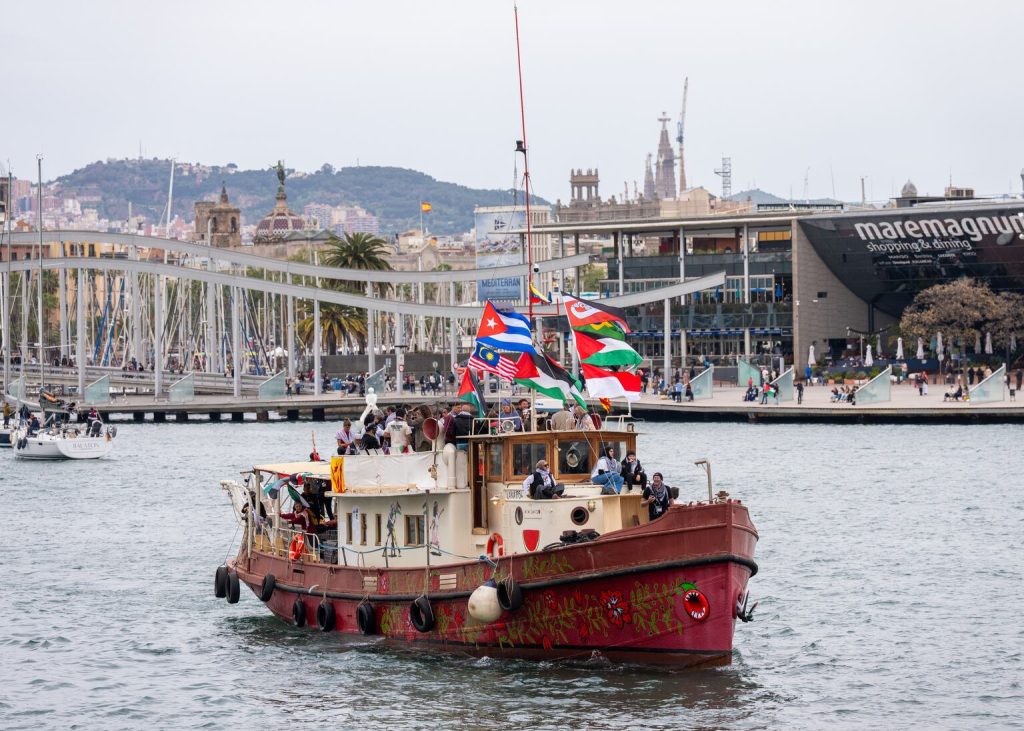
In a dramatic escalation that has sent ripples across the Mediterranean, the year 2026 continues to see the high seas become a battleground for humanitarian aid and political sovereignty. Overnight, Israeli naval forces intercepted the Global Sumud Flotilla, a massive convoy of civilian vessels attempting to breach the long-standing maritime blockade of the Gaza Strip.
The interception occurred hundreds of miles away from the Palestinian enclave, near the Greek island of Crete, sparking a firestorm of international debate regarding maritime law, humanitarian principles, and the fragile peace currently holding in the Middle East.
The Midnight Raid: Interception Near Crete
The Global Sumud Flotilla, which set sail earlier this month from Barcelona, was designed to be one of the largest civilian-led aid missions in history. Organizers reported that more than 70 boats and 1,000 participants from around the globe joined the effort. However, the journey was cut short for many on Thursday when Israeli forces moved in.
According to ship trackers and activist reports, 22 vessels were intercepted in international waters west of Crete. Israeli authorities confirmed they had taken control of these boats and were transporting approximately 175 activists to Israel for processing and eventual deportation.

Allegations of Sabotage and Danger at Sea
The activist group has leveled serious accusations against the Israeli military. In a statement released on Telegram, the Sumud Flotilla described the operation as a “violent raid” conducted in the dead of night.
Key allegations from the activists include:
- Engine Sabotage: Activists claim Israeli commandos smashed engines and destroyed navigation arrays on several vessels.
- Stranded in a Storm: The group alleges that the military retreated after the raid, leaving hundreds of civilians on “powerless, broken vessels” directly in the path of a significant Mediterranean storm.
- Communication Jamming: Reports suggest that electronic jamming was used to prevent the ships from signaling for help or broadcasting the incident in real-time.
While the Israeli military has declined to comment on the specific tactics used, the Israeli Foreign Ministry maintained that the operation was carried out “peacefully and without any casualties.”
Israel’s Justification: Security and the “Trump Peace Plan”
From the perspective of Jerusalem, the interception was a necessary security measure. Israel has enforced a naval blockade on Gaza since 2007, following Hamas’s rise to power. The official stance remains that the blockade is vital to prevent the smuggling of advanced weaponry and dual-use materials into the hands of militant groups.

The Political Dimension
In 2026, the political landscape is particularly sensitive. Israeli Foreign Ministry Spokesman Oren Marmorstein accused the Global Sumud Flotilla of being a “PR stunt” orchestrated by Hamas.
Marmorstein further alleged that the flotilla’s primary goal was to sabotage the transition of U.S. President Donald Trump’s peace plan into its second phase. According to the Israeli government, the mission was intended to divert global attention from regional disarmament negotiations and create a maritime crisis that would force a diplomatic retreat.
A Fragile Ceasefire Amidst Humanitarian Ruin
The interception comes at a time when Gaza is ostensibly under a six-month-old ceasefire. While the intense fighting that characterized the previous years has largely subsided, the humanitarian situation remains catastrophic.
According to the Gaza Health Ministry, the total death toll since the war began on October 7, 2023, has reached a staggering 72,300 Palestinians. Despite the current lull in major combat operations, over 790 people have been killed in localized skirmishes and airstrikes even during the ceasefire period.
Life in the Ruins
For the two million residents of Gaza, the “peace” of 2026 is one of survival.
- Infrastructure: Much of the territory remains in ruins, with reconstruction efforts stalled by the blockade.
- Aid Access: Food and medicine shortages are chronic, with aid restricted to a single, Israeli-controlled border crossing.
- Health Crisis: UN agencies continue to warn of a collapse in the healthcare system, as medical supplies are often caught in the bureaucratic web of “dual-use” restrictions.

International Reaction: Piracy or Policy?
The detention of crews in international waters, particularly so far from the actual blockade zone, has reignited the debate over the legality of enforcing blockades on the high seas.
Turkey and Greece Respond
Turkey’s Foreign Ministry was swift to condemn the action, labeling it an “act of piracy.” Turkish Foreign Minister Hakan Fidan reportedly held urgent talks with his Spanish counterpart to coordinate a diplomatic response. Turkey has long been a vocal critic of the blockade, especially following the 2010 Mavi Marmara incident, where ten activists were killed during a similar raid.
In Greece, the situation has created domestic political pressure. Activists in Athens organized a protest outside the Greek Foreign Ministry, arguing that the interception occurred within the Greek search and rescue (SAR) zone. Protesters have criticized the Greek Coast Guard for its perceived inaction while foreign military forces operated within their area of responsibility.
Historical Context of the Flotilla Movement
This 2026 attempt is not an isolated event. It follows a 2025 effort that saw high-profile figures like Greta Thunberg and Mandla Mandela join a 50-vessel convoy. That mission was also foiled, with participants alleging abuse during their subsequent detention in Israel—claims that Israeli authorities have consistently denied.
The last time a flotilla boat successfully reached Gaza was in 2008. Since then, the naval blockade has remained an impenetrable barrier, despite repeated attempts by international coalitions to challenge it.
The Legal and Ethical Debate: A Summary
The interception of the Global Sumud Flotilla raises three primary questions that the international community must address in 2026:
- Jurisdiction in International Waters: Does a nation have the legal right to intercept civilian vessels 600 miles from its coast to enforce a blockade?
- Collective Punishment vs. Security: At what point does a security measure become “collective punishment” for a civilian population, as critics of the blockade argue?
- The Role of Neutral States: How should nations like Greece and Spain respond when their citizens and maritime zones are involved in the enforcement of a foreign blockade?
Conclusion: An Uncertain Horizon
As the 36 remaining vessels of the Global Sumud Flotilla continue their journey eastward, the world watches with bated breath. The detention of 175 activists and the alleged disabling of ships near Crete have added a new layer of tension to an already volatile region.
While Israel remains steadfast in its security protocols and its commitment to the current peace plan transition, the humanitarian outcry continues to grow. For the people of Gaza, the arrival of aid remains a distant hope, while for the international activists, the struggle for “Sumud”—steadfastness—continues on the open sea.