Diplomacy in the Crosshairs: Why Julie Davis’s Resignation Signals a Seismic Shift in US-Ukraine Relations

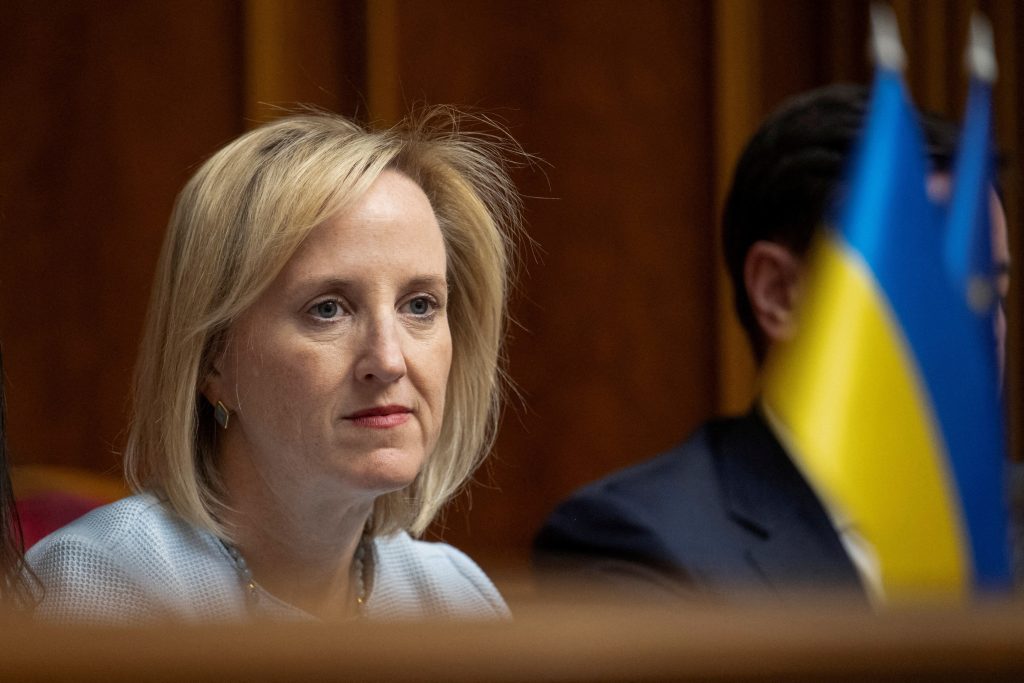
The geopolitical landscape of 2026 has been rocked by a series of high-profile departures from the U.S. State Department, but none have sent shockwaves through the international community quite like the resignation of Julie Davis. As the U.S. Deputy Chief of Mission and acting Chargé d’Affaires to Ukraine, Davis was widely seen as the last remaining bridge of professional diplomacy between Washington and Kyiv.
Her decision to step down, reported in late February 2026, marks more than just the end of a distinguished 30-year career; it signals a profound and potentially dangerous diplomatic vacuum at a time when the stakes for global security have never been higher.
The Breaking Point: Why Julie Davis Walked Away
According to reports initially surfaced by the Financial Times, Julie Davis plans to officially submit her resignation within weeks. While the State Department has attempted to frame her departure as a routine retirement, sources close to the veteran diplomat describe a different reality. The decision was the culmination of months of policy alienation and deep-seated disagreements with the Donald Trump administration’s approach to Eastern Europe.

The “Cyprus Incident” and Professional Humiliation
One of the most jarring details surrounding her exit involves a perceived lack of professional courtesy that borders on humiliation. Davis, who concurrently held the post of Ambassador to Cyprus while serving in Kyiv, reportedly learned through media reports—rather than official channels—that John Breslow, a prominent Republican donor, had been appointed to her Cyprus post.
For a career diplomat of Davis’s caliber, being blindsided by the appointment of a political donor to her own position was the final straw. This incident highlighted a broader trend within the current administration: the systematic replacement of seasoned experts with political loyalists and non-expert allies.
A Pattern of “Purges” within the State Department
The resignation of Julie Davis is not an isolated event. It is part of a broader “purge” of Ukraine-focused diplomats that has intensified since the start of Trump’s second term in January 2025.
The Departure of Bridget Brink
In April 2025, the previous U.S. Ambassador to Ukraine, Bridget Brink, resigned in a move that stunned the diplomatic world. Brink’s departure was a direct protest against what she described as “untenable conditions,” including verbal abuse directed at Ukrainian President Volodymyr Zelenskyy by the White House and the unilateral suspension of vital military aid.
Retaliation Against “Non-Official Diplomacy” Critics
The administration has also taken aim at those who testified during previous investigations into Trump’s dealings with Ukraine.
- George Kent: The former Ambassador to Estonia, who was a key witness in the 2019 impeachment hearings regarding the “Ukraine scandal,” was dismissed on January 20, 2026—coinciding with the one-year anniversary of the second inauguration.
- David Holmes: The former deputy ambassador to Hungary, who revealed details of improper pressure calls, was reportedly forced into retirement just days later.
These actions have created an atmosphere of fear within Foggy Bottom. As one official noted to the Financial Times, there is a growing consensus that advocating for Ukraine’s sovereignty automatically places a target on a diplomat’s back.
The “America First” Impact on Kyiv
The policy disputes leading to Davis’s resignation are rooted in a fundamental shift in how the U.S. views its role in the Russia-Ukraine conflict. Throughout 2025 and into 2026, the Trump administration has pursued a policy of marginalizing Ukraine, moving away from the robust military and intelligence support that characterized previous years.
Suspension of Intelligence Sharing
In a move that many military analysts deemed “catastrophic,” the administration recently suspended weeks of real-time military and intelligence sharing with Ukrainian forces. This retaliation followed a tense Oval Office meeting in February where Trump publicly reprimanded Zelenskyy, abruptly ending peace talks.
The Rise of Shadow Diplomacy
Perhaps most concerning to professional diplomats is the exclusion of the State Department from high-level negotiations. Instead of utilizing experts like Davis, the administration has empowered a “shadow team” of non-experts, including:
- Jared Kushner: The President’s son-in-law, tasked with back-channel negotiations.
- Steve Witkoff: A real estate developer turned special envoy.
This team has reportedly pressured Ukraine to accept unfavorable terms in peace negotiations with Russia. However, even this non-traditional diplomacy has stalled. Following the outbreak of the Iran War in late 2025, the Kushner-Witkoff team was redeployed to the Middle East, leaving Ukraine’s peace process in a state of total paralysis.
The Looming Crisis: A Summer Offensive and a Diplomatic Void
The timing of Julie Davis’s resignation could not be worse for regional stability. As Russia prepares for a massive summer offensive in 2026, the U.S. embassy in Kyiv is facing a leadership crisis.
Why the Diplomatic Vacuum Matters
Diplomacy is not just about high-level meetings; it is about the daily coordination of logistics, security assistance, and humanitarian aid. Without a senior, respected figure like Davis to navigate the complexities of the U.S.-Ukraine relationship:
- Communication Gaps: Misunderstandings between Washington and Kyiv are more likely to escalate into full-blown crises.
- Allied Anxiety: European allies, who look to the U.S. for leadership on the Ukrainian front, are becoming increasingly wary of Washington’s reliability.
- Russian Opportunism: The Kremlin is likely to view the internal chaos within the U.S. State Department as an invitation to escalate military operations without fear of a coordinated Western response.
Analysis: The Future of U.S. Foreign Policy in Eastern Europe
The exodus of career professionals from the State Department suggests a permanent shift in U.S. foreign policy. The “America First” doctrine of 2026 is no longer just a slogan; it is a bureaucratic reality that prioritizes personal loyalty over institutional expertise.
By sidelining individuals like Julie Davis, the administration is effectively dismantling the institutional memory required to manage complex international conflicts. The reliance on political donors and real estate moguls to handle delicate peace negotiations in a war zone is a gamble that many fear will have long-term consequences for the global order.
What’s Next for Ukraine?
With Davis gone and no clear successor in sight who possesses her level of experience, Ukraine finds itself in an increasingly isolated position. The “appeasement” policies Davis warned about are becoming the standard operating procedure. As the 2026 summer offensive approaches, the lack of a strong U.S. diplomatic presence in Kyiv may prove to be the most significant turning point in the war since it began.
Conclusion
The resignation of Julie Davis is the canary in the coal mine for U.S. diplomacy. It highlights a fractured State Department, a volatile White House, and a world where long-standing alliances are being traded for transactional politics. As Davis concludes her 30-year career, she leaves behind an embassy in turmoil and a nation—Ukraine—that is increasingly forced to navigate its survival alone.
For those watching from the sidelines, the message is clear: the era of professional, expert-led American diplomacy in Eastern Europe is over, replaced by a new, unpredictable chapter of “non-official” foreign policy.