Chilling Evidence: The Pre-Attack Selfie and Calculated Planning of Cole Allen

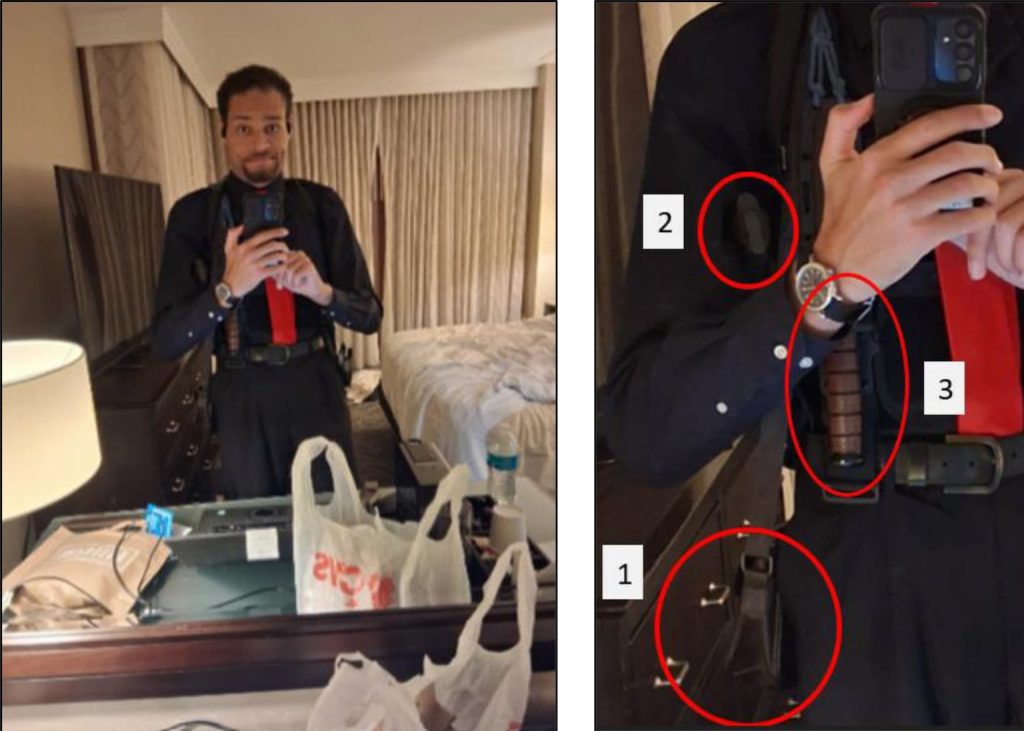
The 2026 attempt on the life of President Donald Trump at the White House Correspondents’ Association (WHCD) dinner remains a stark reminder of the volatile nature of political security. As federal investigators piece together the timeline of the attack, new evidence has surfaced, painting a disturbing portrait of a calculated, weeks-long effort by 31-year-old Cole Allen. Among the most haunting pieces of evidence is a self-portrait taken by the suspect just minutes before he attempted to breach the high-security gala.
The Haunting Selfie: A Glimpse into a Planned Attack
Federal prosecutors have released a series of images recovered from the suspect’s devices, including a chilling selfie taken inside his room at the Washington Hilton. In the photograph, Allen is seen dressed in black trousers, a dark shirt, and a red tie, posing with an ammunition bag, a shoulder gun holster, and a sheathed knife.

This image, captured roughly 30 minutes before the confrontation, suggests a disturbing level of premeditation. Investigators allege that Allen did not act on a sudden impulse; rather, he was meticulously prepared to carry out an act of extreme violence against the President and other high-ranking government officials attending the event.
Weeks of Tactical Preparation
The investigation into Cole Allen, a resident of Torrance, California, reveals a long-term plan. According to court filings, Allen reserved his room at the Washington Hilton on April 6, weeks before the event took place. He then traveled cross-country by train, arriving in Washington, D.C., just one day before the gala.
Throughout this period, Allen allegedly monitored the President’s movements. Digital forensic evidence shows him repeatedly checking live coverage of Mr. Trump’s itinerary to ensure he would be in the right place at the right time. By the night of the dinner, he had everything in place, including a pre-written “Apology and Explanation” email, which was set to be dispatched at 8:30 p.m.
The Night of the Incident: A Security Breach at the Hilton
The Washington Hilton, known for its rigorous security protocols during the WHCD dinner, became a scene of chaos when Allen attempted to bypass a security barricade near the ballroom. Secret Service agents, who were vigilant in their protection of the President, identified the threat immediately.

The confrontation escalated into an exchange of gunfire. During the scuffle, a Secret Service officer—equipped with a bullet-resistant vest—was struck. Remarkably, the officer survived the shot, and the protective gear performed its duty as intended. President Trump was swiftly moved off the stage by his security detail, ensuring his safety while the situation was neutralized.
President Trump’s Response
Hours after the incident, President Trump appeared at the White House, still wearing his tuxedo. He addressed the public with a defiant tone, suggesting that high-profile figures often face such threats due to their “impactful” presence in politics.

The President’s survival and the rapid response of the Secret Service have sparked nationwide debates regarding the security of public figures in an era of increasing political polarization. While authorities have initially characterized Allen as a “lone wolf,” the precision of his planning has prompted a deeper look into how individuals can bypass security checkpoints at major national events.
The Legal Battle: Premeditation vs. Presumption of Innocence
Cole Allen appeared in court on Monday to face charges of attempted assassination of the President. The prosecution, led by Assistant US Attorney Charles Jones, has argued strongly for Allen to remain in custody, citing the “uncommonly serious danger” he poses to the community.

Allen’s defense attorney, Tezira Abe, has maintained that her client is presumed innocent. She highlighted the fact that Allen has no prior criminal history—a point that the prosecution acknowledges but dismisses as irrelevant given the severity of the alleged offense and the clear evidence of planning.
Why the Evidence Matters
The discovery of the ammunition, the tactical gear, and the pre-written manifesto (the “Apology and Explanation” email) provides the prosecution with a strong case regarding the suspect’s state of mind. In federal court, the distinction between a spontaneous act and a premeditated attack is crucial for sentencing.
- Premeditation: The cross-country travel and hotel reservation indicate intent.
- Digital Footprint: The online monitoring of the President’s status serves as evidence of target acquisition.
- Physical Evidence: The recovered selfie and tactical equipment link the suspect directly to the scene and his preparedness.
Analyzing the “Lone Wolf” Narrative
The term “lone wolf” is often used in investigative reporting to describe perpetrators who operate without direct support from a larger terrorist organization. While this label helps distinguish Allen from organized groups, it does little to alleviate the concerns of the public.
The ease with which Allen was able to secure a room at the same venue hosting the President, and his ability to approach the ballroom barricades with a shotgun, raises significant questions for the Secret Service. Moving forward, it is likely that security protocols for high-profile events will undergo a major overhaul, incorporating more advanced surveillance and stricter perimeter controls to prevent similar incidents.
Conclusion: Lessons for the Future
The attempted assassination of President Trump in 2026 serves as a sobering reminder of the threats facing political leaders. The chilling image of Cole Allen—smirking in his hotel room while armed for an attack—has become a symbol of the dangers posed by individuals who radicalize in isolation.
As the legal proceedings continue, the focus will remain on how such an individual could operate undetected for so long. For now, the successful intervention by the Secret Service is the only reason the night did not end in a national tragedy. The case of Cole Allen will undoubtedly influence security policies for years to come, emphasizing the need for constant vigilance, even in the most secure environments.