Cross-Border Gun Smuggling Crisis: 2 Canadians Charged in Major U.S. Firearms Bust

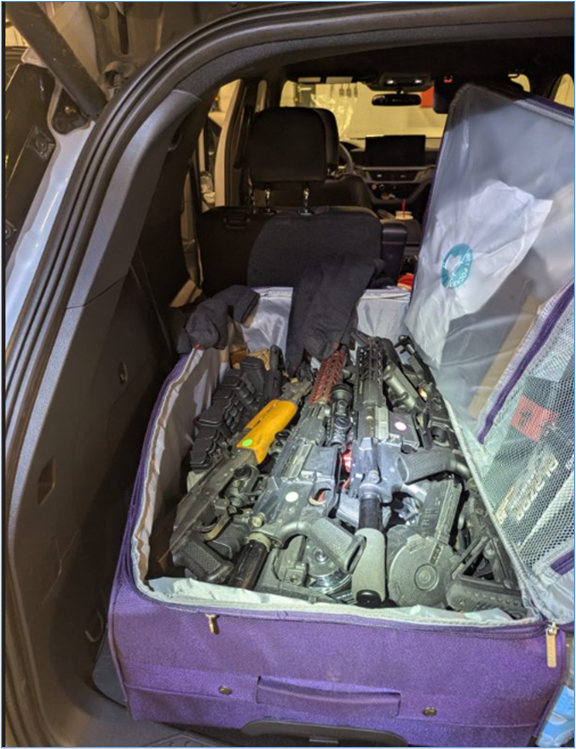
The flow of illicit weapons across the longest undefended border in the world has reached a critical boiling point in 2026. U.S. federal authorities recently announced a major breakthrough in the fight against international arms trafficking, revealing that three men—including two Canadian citizens—have been taken into custody in New York state. This high-stakes operation underscores the ongoing battle to prevent American-sourced firearms from fueling violent crime on Canadian soil.
As the investigation unfolds, the details of the arrest have shocked both nations. Caught in a traffic stop in the Finger Lakes region, these suspects were allegedly transporting an entire arsenal destined for the black market north of the border. This article explores the details of the case, the implications for border security, and the broader context of the Canada-U.S. arms smuggling corridor.
The Arrest: A Finger Lakes Interception
The operation, characterized by a collaborative effort between the FBI, the Bureau of Alcohol, Tobacco, Firearms and Explosives (ATF), and the U.S. Attorney’s Office for the Southern District of New York, serves as a stark reminder of the risks associated with cross-border illicit trade.
The Traffic Stop That Uncovered 89 Firearms
On a routine patrol on State Route 90 in New York, law enforcement officers stopped a vehicle that would eventually lead to one of the most significant gun-running busts of the year. The suspects, all in their 20s, were found to be in possession of 89 firearms.
The sheer volume of weapons seized is alarming. Among the cache, investigators discovered that at least 17 of the guns had been reported stolen. This suggests a sophisticated network intended to move “hot” merchandise across international lines, potentially arming criminal organizations in Canadian urban centers.
Breaking Down the Charges
The legal ramifications for the three men are severe. The U.S. justice system, known for its strict stance on interstate and international arms trafficking, has laid out multiple serious counts, including:
Smuggling and Unlicensed Dealing: Charges related to the illegal export and distribution of firearms.
Transporting Stolen Firearms: Specifically addressing the items confirmed to be stolen property.
Unlawful Possession: Violations of federal statutes regarding the handling of weaponry.
If convicted on all counts, the suspects face a cumulative maximum sentence of 35 years in federal prison. Furthermore, one of the Canadian citizens faces an additional charge of unlawful possession of a firearm by an alien, which carries a potential 15-year penalty, reflecting the gravity with which U.S. authorities view foreigners exploiting domestic laws to fuel international violence.
The Broader Context: Why Canada Struggles with U.S. Guns
The 2026 smuggling attempt is not an isolated incident; it is a symptom of a systemic issue. Statistics consistently show that a significant majority of the firearms used in violent crimes in Canada are sourced from the United States.
The “Iron Pipeline” and Border Vulnerabilities
The “Iron Pipeline” refers to the well-worn path of illegal weapons moving from states with more permissive gun laws to regions with stricter regulations. While Canada maintains some of the most rigorous firearm control laws in the world, the proximity to the U.S. creates a unique challenge.
Smugglers utilize various methods to bypass border security, including:
- Land Border Crossings: Utilizing personal vehicles to hide weapons in concealed compartments.
- Waterways: As seen in recent cases involving Jet Skis and small watercraft traversing the St. Clair River.
- Postal/Courier Services: Attempting to ship components or disassembled firearms through international mail.
Impact on Canadian Public Safety
The influx of illegal handguns has been linked to a rise in gang-related violence in major Canadian cities. When high-capacity, stolen, or untraceable firearms enter the Canadian market, they provide the tools necessary for criminal groups to escalate conflicts. Law enforcement agencies in both countries are now under increased pressure to synchronize their intelligence-sharing efforts to shut down these supply chains before the weapons reach their destinations.
Analyzing the 2026 Security Landscape
This year, the focus on border security has intensified. With the rise of sophisticated criminal syndicates, the tactics used by smugglers are evolving, necessitating a more proactive response from federal agencies.
Enhanced Intelligence Sharing
The success of the Finger Lakes operation demonstrates the effectiveness of inter-agency cooperation. By integrating data from the FBI and ATF with local state police, authorities were able to intercept the shipment before it reached the Canadian border. Experts argue that this model of “pre-emptive interdiction” is the only viable way to curb the flow of illegal arms.
Legislative Challenges
While the U.S. continues to manage its own complex debate regarding the Second Amendment, the international impact of its domestic gun market remains a point of contention in diplomatic relations. Canada frequently calls for stricter oversight of firearm sales in border states, while U.S. officials emphasize the need for better enforcement of existing statutes.
The Human Element: Who Are the Suspects?
The details regarding the suspects highlight the global nature of modern smuggling networks.
Suspect One (22): A citizen of Canada.
Suspect Two (22): A dual citizen of Canada, the U.S., and Jordan.
Suspect Three (25): A citizen of Pakistan.
The diversity of the suspects’ backgrounds suggests that smuggling operations are often handled by transnational groups that exploit legal loopholes and jurisdictional gaps. The presence of multiple citizenships adds layers of complexity to the legal proceedings, particularly regarding extradition and consular access.
Future Outlook: Steps Toward a Safer Border
What does this mean for the future of North American security? Authorities are likely to implement several key measures moving forward:
Increased Surveillance: Utilizing advanced scanning technology and AI-driven pattern recognition at border crossings to identify suspicious vehicle movements.
Stricter Tracking: Improving the tracing of stolen firearms to identify the “source point” of the smuggling operations more quickly.
- Diplomatic Pressure: Ongoing bilateral talks between Ottawa and Washington to harmonize efforts against cross-border trafficking.
The arrest of these three men is a victory for law enforcement, but it is also a sober reminder that the fight against gun violence is a borderless challenge. As investigators dig deeper into the origins of the 89 seized firearms, the hope is that this bust will lead to the dismantling of a larger, more dangerous network.
Conclusion
The attempted smuggling of 89 firearms into Canada is a significant event that highlights the ongoing tension between the two nations regarding firearm proliferation. With the suspects facing decades in prison, the message from the U.S. Attorney’s Office is clear: cross-border arms trafficking will be met with the full force of the law.
As we progress through 2026, the focus will remain on how both countries adapt to these evolving threats. Public safety depends on the ability of law enforcement to stay one step ahead of those who profit from the illicit trade of weapons. By prioritizing intelligence, cooperation, and robust legal action, authorities hope to stem the tide of the “Iron Pipeline” and ensure that communities on both sides of the border remain secure.