The 2029 Mandate: Why John Swinney is Racing to ‘Farage-Proof’ Scotland

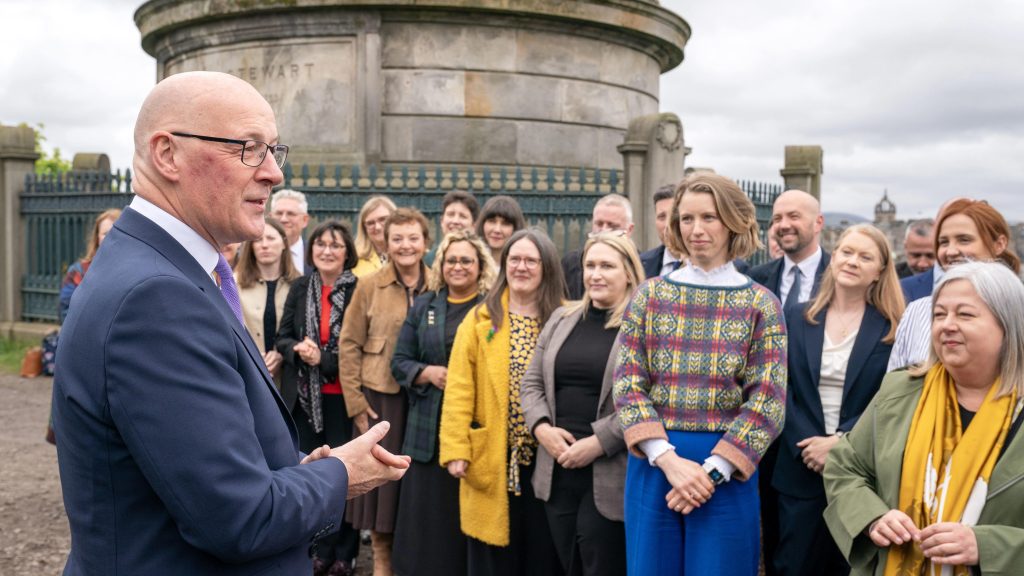
In a political landscape defined by volatility and shifting tides, Scottish First Minister John Swinney has set an ambitious, if not controversial, deadline for the future of the nation. Following a historic fifth consecutive election victory for the Scottish National Party (SNP), Swinney has pivoted from the campaign trail to a singular, urgent mission: ensuring Scotland is “fully Farage-proofed” by 2029.
As the political dust settles on the 2026 Holyrood elections, the implications of this strategy are reverberating across the United Kingdom. With Reform UK securing its first seats in the Scottish Parliament and Nigel Farage’s influence growing across the border, Swinney is framing Scottish independence not merely as a constitutional preference, but as a defensive necessity against a potential Reform-led government in London.
The 2026 Election: A New Parliamentary Reality
The 2026 Scottish election was a study in contrasts. While the SNP maintained its position as the dominant force in Scottish politics by securing 58 seats, the party fell short of the coveted overall majority. This result has created a complex legislative environment where the SNP must navigate a more fractured, multi-party landscape.
The most striking development was the performance of Reform UK, which tied for second place with Scottish Labour. This breakthrough represents a significant shift in the Scottish electorate’s behavior. For Swinney, the presence of Reform MSPs at Holyrood is not just a legislative hurdle; it is a harbinger of a “catastrophic” political future that he believes only sovereignty can prevent.
The “Celtic Fringe” at the Center Stage
Swinney’s rhetoric has been sharply focused on the concept of the “Celtic fringe.” Historically used by London-based observers to describe the political peripheries of the UK, Swinney is working to flip the narrative. He argues that with pro-independence or constitutional-change-oriented leaders now active in Scotland, Wales, and Northern Ireland, the periphery is effectively becoming the center of the UK’s constitutional crisis.
“If Westminster has not yet grasped the significance of this moment, then it certainly will come to appreciate it in the weeks and months ahead,” Swinney declared to supporters in Edinburgh. He believes the momentum is shifting, and that the UK’s current structure is proving incapable of accommodating the distinct democratic will of the Scottish people.
Defining “Farage-Proofing”: The Strategic Goal
What does it actually mean to “Farage-proof” a country? For the First Minister, the term is shorthand for securing the legal and political autonomy required to bypass the influence of a potential Reform UK government in Downing Street.
Swinney has been vocal about his concerns regarding Nigel Farage, specifically citing:
The threat to minority groups: Swinney has expressed deep alarm at the rhetoric emerging from Reform UK, fearing a hostile environment for marginalized communities.
Privatization of the NHS: The SNP leader views the potential dismantling of the National Health Service as a red line that Scotland must be empowered to defend.
- The Abolition of Holyrood: Swinney has explicitly warned that a Farage-led government might seek to curtail or eliminate the devolved powers of the Scottish Parliament, viewing it as a threat to the integrity of the Union.
By 2029, the next UK general election cycle will be well underway, and Swinney is determined to ensure that Scotland has already solidified its constitutional future before such a scenario can unfold. His call for the power to hold a referendum is, in his view, a preemptive strike against a political trajectory he finds profoundly dangerous.
The Battle of Mandates: Opposition Perspectives
Predictably, Swinney’s strategy has met with fierce resistance from opposition parties, who argue that he is misinterpreting the 2026 election results.
Scottish Labour, led by figures like Jackie Baillie, has been quick to point out that the election was fought on local issues—cost of living, NHS waiting times, and community infrastructure—rather than a singular mandate for independence. “John Swinney and the SNP should focus on fixing the basics,” Baillie noted, dismissing the independence push as an “obsession” that ignores the immediate needs of the Scottish public.
Similarly, the Scottish Conservatives have accused Swinney of “moving the goalposts.” Leader Russell Findlay remarked that the SNP’s failure to secure a majority proves there is no clear public appetite for a second referendum. The opposition consensus is clear: the SNP has won the right to govern, but they have not won the right to rewrite the UK constitution.
The Diplomatic Wall: Why Swinney is Ignoring Reform
One of the most controversial aspects of Swinney’s post-election strategy is his refusal to engage with Reform UK. While he is inviting other party leaders to discuss legislative priorities for the next five years, he has explicitly excluded Reform.
Swinney’s stance is a deliberate “setting of boundaries.” He views Reform UK as an existential threat to the values of the Scottish government and refuses to grant them the legitimacy of a seat at the table. Lord Malcolm Offord, the Scottish leader of Reform UK, has labeled this approach “arrogant” and “undemocratic,” arguing that the SNP is attempting to silence the thousands of Scots who voted for his party.
Can the SNP Succeed?
The challenge for the SNP is that they are operating as a minority government. To pass legislation, they will need the support of other parties, most notably the Scottish Greens, with whom they share a strong pro-independence alignment. Together, these two groups represent the largest block of pro-independence MSPs in history, yet they remain just shy of the absolute control needed to force Westminster’s hand.
The path to 2029 will likely be defined by:
- Legislative Compromise: Balancing the need for “Farage-proofing” with the practical necessity of delivering on public services.
- Westminster Relations: Navigating the tension with a UK government that remains adamantly opposed to a new independence referendum.
- Public Sentiment: Whether the “Farage-proof” narrative resonates with voters who are more concerned with economic stability than constitutional reform.
Conclusion: A High-Stakes Gamble
John Swinney’s push for a “Farage-proofed” Scotland is a high-stakes gamble that will define his premiership. By framing independence as a protective shield against the rise of populist right-wing politics in the UK, he is attempting to broaden the appeal of the nationalist cause.
Whether this strategy succeeds depends on his ability to convince the Scottish electorate that the dangers posed by the UK’s shifting political climate outweigh the risks of independence. As we look toward 2029, one thing is certain: the debate over Scotland’s place in the world is far from over. The coming years will be a period of intense constitutional maneuvering, where every policy decision, every legislative debate, and every press conference will be viewed through the lens of the looming deadline.