The New Political Map: Why Three Nationalist First Ministers Signal a Fundamental UK Shift

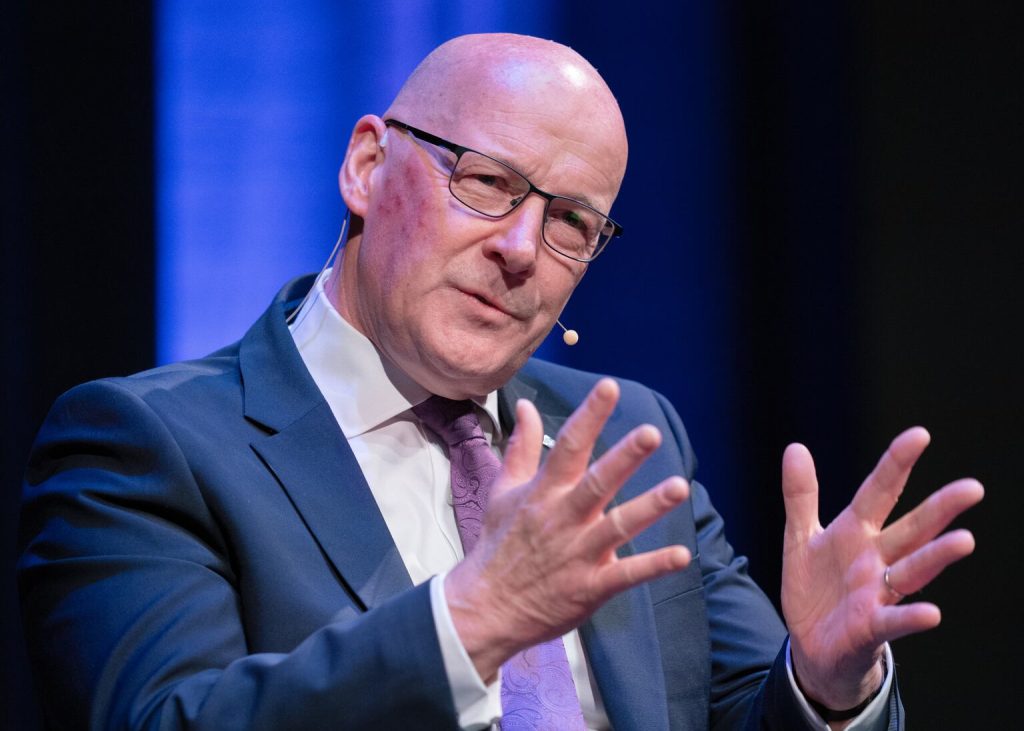
The political landscape of the United Kingdom has entered a period of unprecedented transformation. As of 2026, the traditional power dynamics between Westminster and the devolved administrations have been upended. Scottish First Minister John Swinney has declared that the emergence of nationalist-led governments in Scotland, Wales, and Northern Ireland represents a “fundamental” shift in the nature of the British union.
For decades, London has viewed the devolved nations as a peripheral “Celtic fringe.” However, with the SNP maintaining its dominance in Holyrood, Plaid Cymru rising to power in the Senedd, and Sinn Féin holding the First Ministership in Stormont, that narrative is rapidly evaporating. This article explores why this alignment of nationalist leadership is not just a statistical anomaly, but a structural turning point for the UK.
The End of “Business as Usual” in Whitehall
For the UK government, the era of treating devolution as a secondary administrative convenience is effectively over. John Swinney has been explicit: the days of “business as usual” are gone. The coordination between Edinburgh, Cardiff, and Belfast is no longer a theoretical possibility—it is an emerging reality that Westminster must now navigate.
The significance of this shift lies in the collective intent of these administrations. While Swinney notes that each nation has its own unique “constitutional journey,” the common denominator is a shared commitment to challenging the status quo of the United Kingdom. This creates a powerful, if multifaceted, bloc that can pressure Westminster on everything from fiscal autonomy to legislative sovereignty.
The Rise of Plaid Cymru in Wales
In Wales, the political trajectory has seen a significant shift toward Plaid Cymru. Rhun ap Iorwerth’s path to the First Ministership marks a historic moment for Welsh nationalism. Unlike the traditional dominance of Labour in the region, the rise of a nationalist-led administration suggests that voters are increasingly looking for a distinct Welsh voice that prioritizes national interests over party-line loyalty to London-based leadership.
The Stormont Dynamic
Northern Ireland presents a unique challenge to the UK’s constitutional integrity. Michelle O’Neill’s historic appointment as the first nationalist First Minister, while operating within a power-sharing executive alongside the DUP, signifies that the political center of gravity in Belfast has moved. The cooperation between O’Neill and Swinney is indicative of a new, cross-border political strategy that seeks to amplify nationalist voices across the Irish Sea.
The “Celtic Fringe” at the Centre Stage
The derogatory term “Celtic fringe” has long been a staple of London-centric political discourse. By reclaiming this space, nationalist leaders are signaling that they are no longer content to be spectators in their own governance. They are now the primary actors in a drama that will decide the future of the British state.
Why 2026 is a Watershed Moment
The 2026 election cycle has acted as a stress test for the UK’s constitutional framework. With nationalist administrations in all three devolved regions, the legislative agenda in London will face constant scrutiny. Every policy decision made by the Prime Minister will now be filtered through the lens of how it impacts the interests of the devolved nations.
This is not merely about independence movements; it is about the renegotiation of power. Whether through increased fiscal powers, greater control over energy resources, or the right to pursue independent international relationships, these three nationalist First Ministers are creating a “three-front” diplomatic challenge for Whitehall.
The Strategy of Cooperation: A Path Toward Constitutional Change?
While John Swinney has downplayed the idea of a formal “tri-partite alliance” to break up the UK, he has emphasized the desire for greater cooperation. This is a subtle but vital distinction. By working together on shared interests, these governments can create a “dynamic of change” that Whitehall will find increasingly difficult to ignore.
The Role of Whitehall’s “Cultural Lag”
A recurring theme in Swinney’s rhetoric is the “cultural appreciation” deficit in London. He argues that those in the corridors of power in Whitehall have yet to grasp the depth of the change that has occurred. This disconnect creates a dangerous environment for the union. If Westminster remains rigid while the nations it governs are moving toward more autonomous or nationalist governance, the friction between the center and the periphery will likely reach a breaking point.
Building a Collective Agenda
The potential for cooperation includes:
- Economic Policy: Challenging the fiscal constraints imposed by the UK Treasury.
- Devolution Reform: Demanding a permanent, legally binding framework that protects devolved powers from central interference.
- Diplomatic Outreach: Using their status as First Ministers to build international alliances that bypass traditional UK-only channels.
Analyzing the Political Stakes: A Fragile Union
The United Kingdom in 2026 is fundamentally different from the one that existed a decade ago. The unpopularity of the current Westminster government has certainly accelerated these trends, but the underlying issue is structural. For the SNP, Plaid Cymru, and Sinn Féin, the goal is to demonstrate that their nations can be governed effectively—and differently—than they would be under a Westminster-only model.
The challenge for the Prime Minister is to manage this “awkward squad” of nationalist leaders without alienating the populations they represent. If the response from London is dismissive or overly aggressive, it may only serve to fuel the very movements they seek to contain. Conversely, if Westminster engages in a genuine, respectful dialogue, it might preserve the union in a form that is unrecognizable from the highly centralized model of the past.
Conclusion: The Path Forward
John Swinney’s assessment of the current political climate is a warning to those who believe the union is immutable. The presence of nationalist-led administrations in Edinburgh, Cardiff, and Belfast is a reflection of a deep-seated desire for change across the UK’s constituent nations.
As the months progress, the tension between these regional governments and Whitehall will likely become the defining feature of British politics. Whether this leads to a new, federalized version of the UK or acts as a catalyst for the eventual breakup of the union remains to be seen. One thing is certain: the era of the “Celtic fringe” being an afterthought is officially over. The center of the political stage is now shared, and the performance is just beginning.