Democracy in Flux: The Battle Over Louisiana’s Congressional Districts and the Future of Representation

The political landscape in Louisiana has descended into chaos as of May 2026. Following a pivotal and controversial U.S. Supreme Court ruling that effectively hollowed out landmark civil rights protections, particularly those enshrined in the Voting Rights Act, the state is now the epicenter of a high-stakes redistricting war. Republican lawmakers are moving rapidly to redraw congressional maps that threaten to eliminate one or both of the state’s majority-Black U.S. House districts, sparking widespread outrage, protests, and legal uncertainty.
For many, this is not merely a bureaucratic exercise in map-making, but a clear instance of racial gerrymandering. It represents a systematic attempt to dilute the political influence of Black voters and undermine their minority representation, who comprise one-third of the state’s electorate. As the state capitol in Baton Rouge becomes a flashpoint for national democratic tensions, the question remains: whose voices will count in the halls of Congress?
The Spark: A Supreme Court Ruling and Immediate Fallout
The current crisis was ignited by a recent U.S. Supreme Court decision that deemed Louisiana’s existing congressional district boundaries unconstitutional. Rather than seeking a measured adjustment, Republican leadership, spearheaded by Governor Jeff Landry, moved with unprecedented speed to overhaul the electoral landscape.
In a move that has sent shockwaves through the state and the nation, Governor Landry postponed the U.S. House primary elections—which were scheduled for May 16—despite the fact that tens of thousands of ballots had already been cast. This abrupt suspension of an active democratic process, viewed by many as a direct voter suppression tactic, has left voters in a state of confusion, with many arriving at polling stations only to find notices declaring the elections canceled.
Disenfranchisement Concerns
The ACLU of Louisiana has already filed suit, arguing that such a move fundamentally undermines the electoral integrity of the entire system. When an active election is halted, the question of what happens to valid, already-cast ballots remains a legal minefield. Critics argue that this maneuver is a direct assault on voter confidence, specifically targeting the communities that rely on these majority-Black districts to ensure their interests are represented in Washington.
Inside the Capitol: A Tumultuous Hearing
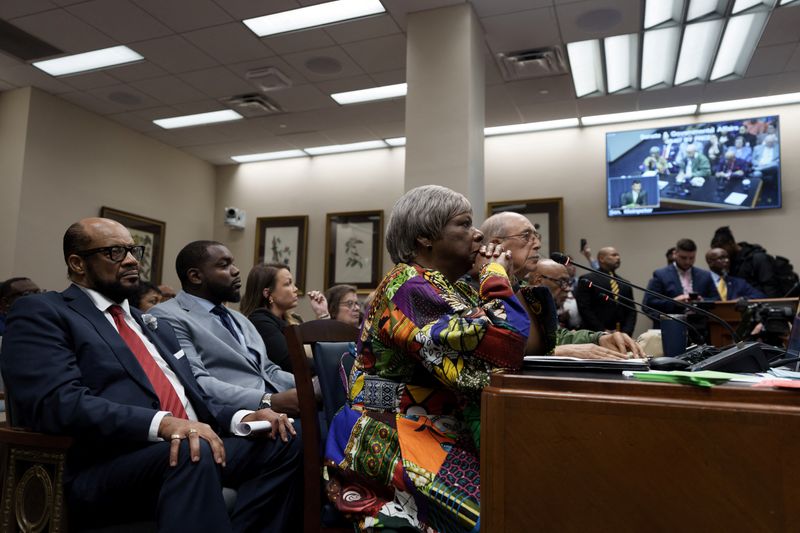
The tension reached a boiling point on Friday during a Senate committee hearing. The scene was one of raw emotion, with Black leaders, pastors, activists, and voters testifying against the proposed maps. The atmosphere was so charged that security forces reportedly blocked the president of the state’s NAACP chapter from entering the room, further fueling claims of exclusionary governance.
Echoes of the Past
Leona Tate, a member of the “New Orleans Four” who courageously helped desegregate public schools in the South during the 1960s, provided chilling testimony. She drew a direct parallel between the mob she faced as a child and the “parliamentary procedures” being used by lawmakers today to strip away representation. Her testimony served as a somber reminder that the struggle for civil rights is a continuous, generational battle.
The GOP Strategy: Consolidating Power
Republican state Senator Jay Morris has introduced multiple plans that would effectively redraw the lines to secure a significant partisan advantage and favor a Republican sweep of the state’s six U.S. House seats. While Morris claims that “neither race nor party affiliation nor voting patterns were considered” in the drafting of these maps, which are typically informed by recent census data, the math tells a different story.
The National Context
Louisiana is not an isolated case. This redistricting war, often challenged in the federal judiciary, is playing out across the South, with states like Tennessee, Alabama, and South Carolina also seeing aggressive attempts by Republicans to eliminate majority-Black districts. The primary goal is clear: to secure a firm Republican majority in the U.S. House ahead of the pivotal November midterm elections.
Why This Matters: The Erosion of Democratic Norms
The implications of these actions extend far beyond Louisiana’s borders. When state legislatures utilize emergency powers to suspend elections or redraw maps in a way that minimizes the political power of a specific demographic, it threatens the foundational principle of equal representation.
A Slippery Slope
As Democratic U.S. Representative Cleo Fields noted, if the current maps are allowed to stand, it sets a dangerous precedent. Today it is the congressional districts; tomorrow, it could be the state legislatures, city councils, and local school boards. The systematic reduction of Black political power in the South is not just a policy disagreement—it is a fundamental challenge to the health of American democracy.
The Path Forward: Legal and Civic Battles
With the U.S. Supreme Court having cleared the way for this redistricting, the battleground has shifted to the courts and the public square. Voting rights advocates are working tirelessly to challenge the constitutionality of the map-drawing process, while voters are being urged to stay engaged despite the uncertainty.
The Role of the Voter
Despite the chaos, the message from community leaders is consistent: the vote remains the most powerful tool for change. Activists are encouraging residents to continue participating in the electoral process, even as the rules of the game are being rewritten in real-time. The fight is as much about the sacredness of democracy as it is about the specific lines on a map.
Conclusion: A Turning Point for Louisiana
The events of May 2026 in Louisiana represent a watershed moment in American politics. Whether these Republican-led efforts succeed in erasing majority-Black districts or are checked by judicial intervention remains to be seen. However, one thing is certain: the citizens of Louisiana are watching, and the nation is paying attention.
The debate over these maps is a reflection of a deeper, ongoing struggle to define the future of the American electorate. As the state moves toward the midterm elections, the tension between partisan ambition and democratic integrity will continue to dictate the headlines. For now, the fight for fair representation is far from over—it is only intensifying.