A Shift in Tradition: Russia’s Scaled-Down Victory Day Parade Amidst US-Brokered Ceasefire

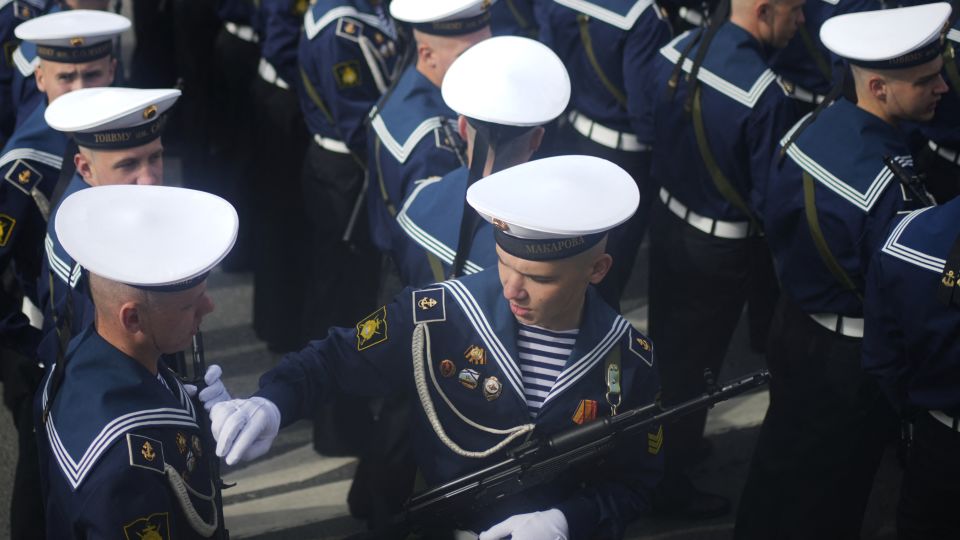
The annual Victory Day parade on Moscow’s Red Square has long served as the ultimate stage for the Kremlin to project military might, technological prowess, and geopolitical defiance. However, the 2026 commemoration of the Soviet victory over Nazi Germany looked markedly different. In a historic departure from tradition, the event was significantly pared back, reflecting the mounting pressures of a grinding conflict in Ukraine and heightened security concerns.
For the first time in nearly two decades, the streets of Moscow were devoid of the heavy military hardware that usually defines the spectacle. As a three-day ceasefire—brokered by U.S. President Donald Trump—took effect, the atmosphere in the Russian capital was one of cautious containment rather than unbridled displays of force.
The New Face of Victory Day: Security Over Spectacle
For years, the May 9 parade has been the centerpiece of Russian national identity under President Vladimir Putin. Traditionally, the event features a thundering procession of intercontinental ballistic missiles, heavy tanks, and armored vehicles. This year, however, the metallic roar of heavy armor was replaced by a somber focus on personnel and digital projections.
Why the Hardware Was Absent
The decision to exclude heavy military hardware was not merely aesthetic; it was a strategic necessity. Following a series of intensified Ukrainian drone and missile strikes targeting critical infrastructure, including oil refineries deep within Russian territory, the Kremlin opted for a “security-first” posture. By moving the focus away from physical equipment, authorities minimized the risk of potential sabotage and reduced the target profile for potential long-range strikes.
Instead of rolling steel, the Red Square featured:
Digital Displays: Large screens broadcasted pre-recorded, slickly produced segments showcasing Russia’s drone capabilities and air defense systems.
Aerial Flyovers: Fighter planes maintained the tradition of a flyover, providing a symbolic show of air power without the logistical vulnerability of a ground-based military convoy.
Personnel Focus: More than 1,000 soldiers fresh from the “special military operation” marched, emphasizing the human element of the ongoing conflict over the mechanical.
The Geopolitical Context: A Fragile Ceasefire
The 2026 parade occurred under the shadow of a temporary truce. Following intense diplomatic back-channel negotiations, President Donald Trump announced a three-day ceasefire spanning from May 9 to May 11. Both the Kremlin and the office of Ukrainian President Volodymyr Zelensky confirmed the agreement, which notably includes a massive prisoner exchange.
The 1,000 for 1,000 Exchange
The ceasefire is not merely a pause in kinetic activity; it serves as a humanitarian window. President Zelensky confirmed that the exchange would involve 1,000 Ukrainian prisoners for 1,000 Russian counterparts. While this offers a rare moment of relief for families on both sides, analysts suggest the truce is fragile, necessitated by the exhaustion of resources and the need for a tactical reset.
Putin’s Narrative: Linking 1945 to 2026
President Putin’s address on Red Square remained consistent with the rhetoric he has employed since the onset of the invasion. By drawing a direct parallel between the Soviet struggle against Nazi Germany and the current “special military operation,” Putin seeks to legitimize the conflict in the eyes of the Russian public.
“The great feat of the victorious generation inspires the soldiers carrying out tasks of the special military operation today,” Putin stated, positioning the Russian military as a bulwark against what he termed an “aggressive force” backed by the NATO bloc. This framing serves a crucial domestic purpose: it elevates the war from a territorial or political dispute to a moral, existential struggle for the survival of the state.
Global Attendance: A Changing Diplomatic Landscape
The guest list for the 2026 parade highlights Russia’s shifting international standing. Last year, the presence of Chinese leader Xi Jinping and a host of international dignitaries signaled a robust alliance of non-Western powers. This year, the turnout was notably smaller.
Key Attendees: The parade was attended by Belarusian President Alexander Lukashenko, the King of Malaysia Sultan Ibrahim Iskandar, and the presidents of Kazakhstan and Uzbekistan.
- Slovakian Diplomacy: Notably, Slovak Prime Minister Robert Fico visited Moscow for bilateral talks. Despite his country’s status as a NATO and EU member, Fico emphasized the need for dialogue, reflecting the internal pressures within Europe regarding energy dependence and the desire to see an end to the “prolonged, grinding war.”
Domestic Challenges: Security and Economic Strain
Beyond the parade itself, the event highlighted the growing tension within Russia. The government’s decision to impose restrictions on mobile internet and text messaging in Moscow was a stark reminder of the security paranoia gripping the capital.
The Economic Reality
The “clipped” nature of the parade also mirrors the broader economic slowdown within the country. Increased internet restrictions and the prioritization of security measures over public festivities suggest that the Kremlin is bracing for a long-term period of instability. While the state continues to project an image of unity, the absence of the typical “lavish” celebration speaks volumes about the current state of Russia’s domestic and military resources.
Conclusion: A Turning Point?
The 2026 Victory Day parade will likely be remembered as a turning point in how Russia communicates its military objectives. By stripping back the pageantry and focusing on a narrative of endurance, the Kremlin is attempting to adapt to a reality where the war in Ukraine is no longer a short-term campaign, but a protracted struggle.
As the three-day ceasefire holds, the world watches to see if this diplomatic opening can evolve into a broader peace process. For now, the parade remains a symbol of a nation caught between its past glory and a precarious, uncertain future.