Shadow War Escalation: Hezbollah Downs Israeli Drone as Strikes Ravage South Lebanon in 2026

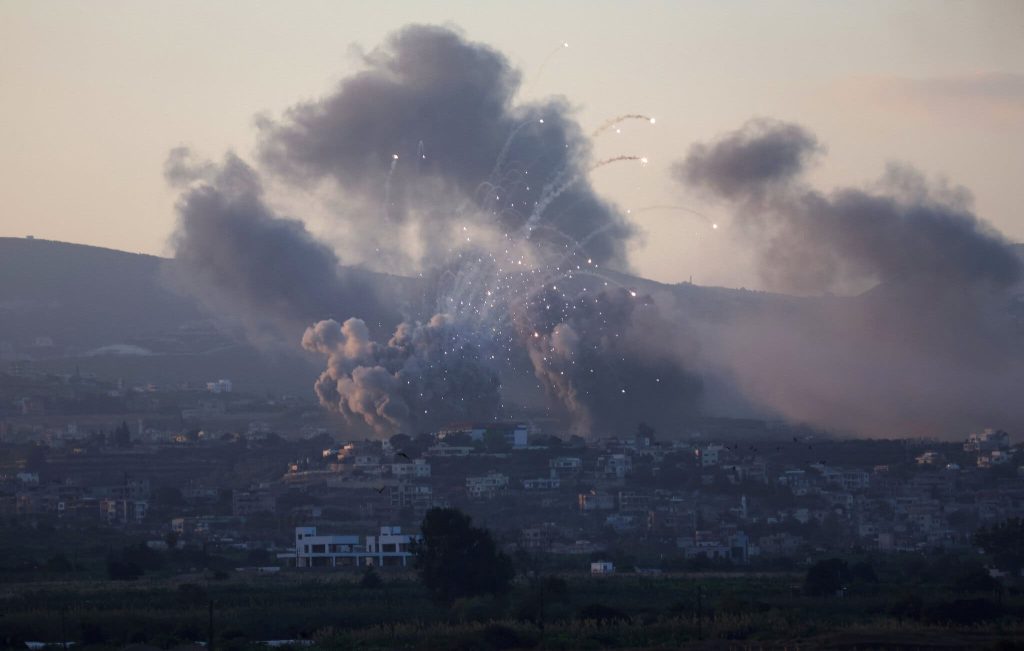
The fragile peace that many hoped would define 2026 is currently hanging by a thread. In a significant escalation that has sent shockwaves through the Middle East, Hezbollah successfully downed an Israeli Hermes drone over Nabatieh, while the Israeli Defense Forces (IDF) launched a massive wave of airstrikes across southern Lebanon. Despite a recently extended ceasefire agreement, the reality on the ground suggests a return to high-intensity conflict, with both sides accusing the other of terminal violations.
The skies over southern Lebanon have become a graveyard for high-tech surveillance equipment, and the ground in border towns like Khiam is once again scorched by incendiary munitions. As the international community watches with bated breath, the question remains: is the 2026 ceasefire a bridge to peace, or merely a tactical pause for a much larger confrontation?
The Nabatieh Interception: Hezbollah’s Anti-Air Capabilities in 2026
In the early hours of Thursday, the silence over the city of Nabatieh was shattered by the roar of a surface-to-air missile. Hezbollah’s media wing quickly claimed responsibility, stating that their air defense units had intercepted and destroyed an Israeli Hermes 450 drone. This particular model, a “workhorse” for Israeli intelligence, surveillance, and reconnaissance (ISR) missions, was reportedly targeted while conducting “hostile activities” over the Nabatieh district.
<img alt="Israel strikes deeper into Lebanon as Hezbollah downs drone – France 24" src="https://s.france24.com/media/display/5948fc1a-d4a5-11ee-846f-005056a90284/w:1280/p:16×9/EN20240226120403120718CS.jpg” style=”max-width:100%; height:auto; border-radius:8px; margin: 1rem 0;” />
The downing of the Hermes drone is more than just a tactical loss for Israel; it is a strategic message from Hezbollah. By successfully engaging Israeli UAVs in 2026, the group is signaling that Israel’s traditional air superiority is no longer absolute. The use of advanced surface-to-air missiles (SAMs) indicates a sophisticated supply chain and training regimen that has persisted despite years of targeted strikes.
Technical Prowess and Tactical Shifts
Hezbollah’s ability to down drones over Nabatieh highlights a shift in their defensive doctrine. Rather than simply absorbing Israeli air raids, the group is now actively contesting the airspace. This shift forces the Israeli Air Force (IAF) to fly higher or use more expensive, stealthier assets, thereby complicating their mission to monitor Hezbollah’s movements south of the Litani River.
Israel’s Retaliatory Wave: Strikes Across South Lebanon
Following the loss of the drone, the Israeli military response was swift and devastating. The IDF announced a “series of strikes” aimed at dismantling Hezbollah’s infrastructure and preventing the group from rebuilding its offensive capabilities. The geographical scope of these strikes was extensive, covering nearly a dozen towns and villages.
The Israeli army struck the following locations:
- Harouf, Jebshit, and Toul
- Al-Henniyeh and Zebqine
- Kawnine and Adshit
- Qalaway and Nabatieh-Mayfadoun
- Beit Yahoun, Jmayjmeh, Harees, and Baraashit
These strikes were not limited to military outposts. Local reports indicate that the Israeli army dropped white phosphorus bombs on the strategic border town of Khiam. White phosphorus, while used for screening and signaling, is highly controversial when used in populated areas due to its incendiary nature and the horrific burns it causes.

Demolitions and the “Buffer Zone” Strategy
In the town of Shamaa, the IDF reportedly detonated several buildings. This tactic aligns with what many analysts believe is a 2026 strategy to create a “sterile zone” or a buffer zone along the Blue Line. By destroying structures that could provide cover for Hezbollah fighters, Israel aims to ensure that the events of previous years—where cross-border incursions were a constant threat—cannot be repeated.
Mass Evacuations: A Region on the Move
The intensity of the strikes has led to a new wave of displacement. The Israeli military issued urgent evacuation orders for the residents of several southern villages, including:
- Samaiyeh and Henniyyeh
- Qlayleh and Wadi Jilo
- Knisseh and Kafra
- Siddiqine and Majdalzoun
These orders often precede heavy bombardment, leaving civilians with only minutes to gather their belongings and flee. The humanitarian situation in southern Lebanon is reaching a breaking point, as thousands of families are forced into makeshift shelters in the north, further straining Lebanon’s already fragile infrastructure.
<img alt="Israeli strike kills at least 10 in southern Lebanon in one of the …" src="https://media.cnn.com/api/v1/images/stellar/videothumbnails/16731683-89980651-generated-thumbnail.jpg?c=16×9&q=w1280,cfill” style=”max-width:100%; height:auto; border-radius:8px; margin: 1rem 0;” />
The civilian death toll continues to rise. Recent reports confirm that Israeli attacks killed two people and wounded seven others in a single day of strikes. Among the casualties were reportedly a senior Hezbollah commander, though these claims are often met with conflicting reports from the ground.
The Zamir Doctrine: Striking “Anywhere, Anytime”
A pivotal moment in this recent escalation came from Israel’s military chief, Eyal Zamir. During a visit to troops positioned in southern Lebanon, Zamir made a stern vow that has redefined the rules of engagement for 2026. He stated that the IDF would continue to attack “any threat, anywhere, against our communities or our forces—including beyond the Yellow Line and north of the Litani.“
This statement is a direct challenge to the UN Resolution 1701 framework, which historically sought to keep Hezbollah forces north of the Litani River. By asserting the right to strike north of this boundary, Israel is signaling that it no longer views the river as a red line for its own operations, but rather as a minimum distance for Hezbollah’s presence.
The “Required to Remain” Clause
Zamir also added a chilling detail for those hoping for a quick withdrawal: Israeli troops may be “required to remain” in certain positions within Lebanese territory. This suggests a long-term military presence that looks less like a temporary incursion and more like a semi-permanent occupation of strategic high ground.
Lebanon’s Stance: Demand for Full Implementation
On the Lebanese side, the rhetoric is equally firm but focused on international law. President Joseph Aoun addressed the nation on Wednesday, emphasizing that the burden of peace lies with the aggressor. “Israel must first fully implement the ceasefire in order to move on to negotiations,” Aoun stated.
The Lebanese government views the continued strikes and the use of white phosphorus as blatant violations of the truce. For Lebanon, the path to stability in 2026 requires:
- A total cessation of Israeli overflights (which led to the drone downing).
- The withdrawal of IDF troops from southern villages.
- An end to the “scorched earth” policy in border towns.

The Strategic Importance of Khiam and Nabatieh
Why are these specific locations the focus of such intense violence? Khiam is a strategic border town that overlooks large swathes of northern Israel. Its elevation makes it a prized location for surveillance and rocket launches. For Israel, neutralizing Khiam is essential for the safety of its northern communities.
Nabatieh, on the other hand, serves as a major urban hub and a logistical center for Hezbollah. The city’s proximity to the front lines makes it a frequent target for Israeli intelligence. The fact that Hezbollah can down a drone directly over this city suggests that their “inner sanctum” is heavily fortified with the latest electronic warfare and kinetic interception technology available in 2026.
Analyzing the 2026 Ceasefire: A Failed Experiment?
The “extended ceasefire” mentioned in recent reports seems to be a ceasefire in name only. Both parties are engaged in what military analysts call “Active Defense”—a state where both sides continue to strike under the guise of preventing an imminent attack.
- Israeli Perspective: Every strike is a “preemptive” move against a Hezbollah unit preparing to fire.
- Hezbollah Perspective: Every drone downed and every artillery unit targeted is a “response” to Israeli violations of Lebanese sovereignty.
This cycle of “retaliatory escalation” makes the ceasefire almost impossible to monitor. When Hezbollah targeted a self-propelled artillery unit south of Yarin with an attack drone, they claimed it was a response to Israeli shelling. Israel, in turn, used that drone attack to justify the subsequent bombardment of Harouf and Jebshit.
Conclusion: The Road Ahead for Southern Lebanon
As we move further into 2026, the situation in southern Lebanon remains the most volatile flashpoint in the Middle East. The downing of the Israeli drone over Nabatieh and the subsequent IDF strikes represent a breakdown in diplomatic efforts. While the international community calls for restraint, the military realities—Eyal Zamir’s “anywhere” doctrine and Hezbollah’s improved SAM capabilities—point toward a prolonged conflict.
The humanitarian cost is undeniable. With families fleeing Majdalzoun and buildings crumbling in Shamaa, the residents of south Lebanon are paying the price for a geopolitical struggle that shows no signs of waning. For a true peace to take hold, a mechanism beyond a “fragile truce” must be established—one that addresses the core security concerns of Israel and the sovereign rights of Lebanon. Until then, the skies over Nabatieh will likely remain a theater of war.