Strengthening the Atlantic Bridge: Why Mark Carney Tapped Jonathan Wilkinson for the EU Ambassadorship

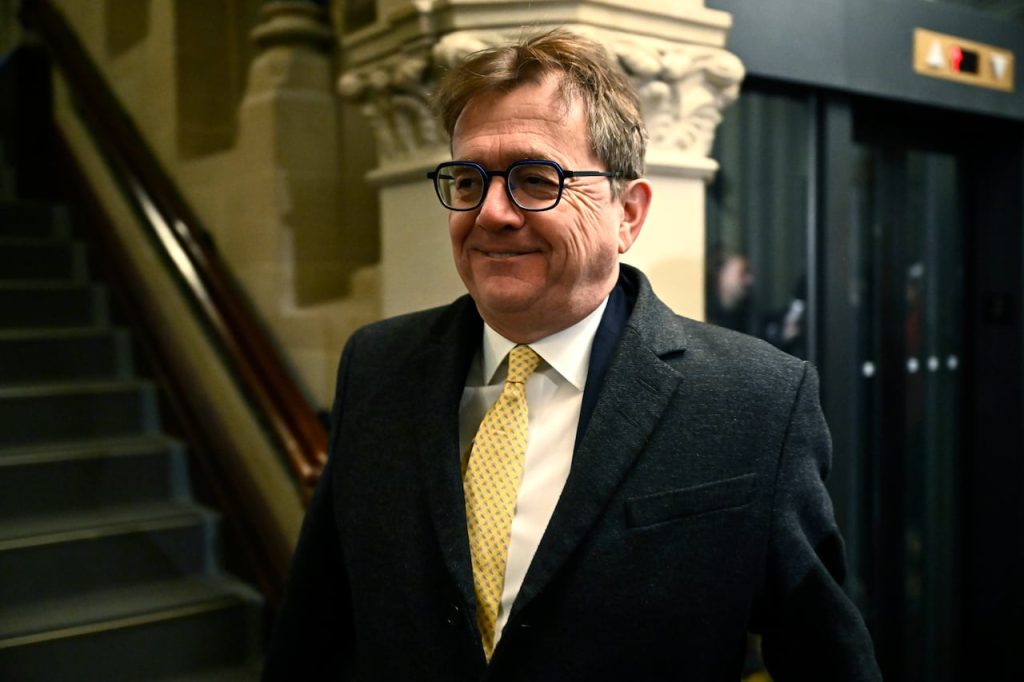
In a move that signals a significant sharpening of Canada’s foreign policy and economic diplomacy, Prime Minister Mark Carney has officially named former cabinet heavyweight Jonathan Wilkinson as Canada’s next Ambassador to the European Union. Announced on a pivotal Thursday in Ottawa, the appointment marks a strategic transition for the Carney administration as it seeks to fortify ties with Brussels amidst a complex global landscape in 2026.
Wilkinson, a seasoned politician and former business executive, will take up his post in Brussels this summer. This appointment fills a high-profile vacancy that has persisted since the fall, ending months of speculation within diplomatic circles. As Canada navigates the challenges of the mid-2020s—ranging from energy security to the accelerating green transition—Wilkinson’s arrival in the “Capital of Europe” is expected to catalyze a new era of transatlantic cooperation.
A Strategic Choice for a New Era of Diplomacy
Prime Minister Mark Carney’s selection of Jonathan Wilkinson is far from accidental. In a formal statement, Carney emphasized that Wilkinson’s “vast experience as a minister, entrepreneur, and businessperson” makes him the ideal candidate to drive a mission centered on security, prosperity, and sustainability.
For a government that has prioritized economic stability and climate leadership, Wilkinson represents a “triple threat” in the diplomatic world:
- Policy Expertise: Having served as both Minister of Environment and Climate Change and Minister of Natural Resources, he understands the technicalities of the Canada-EU Comprehensive Economic and Trade Agreement (CETA).
- Business Acumen: His pre-political career in the clean-tech sector allows him to speak the language of European investors.
- Political Weight: As a long-standing MP, he carries the personal confidence of the Prime Minister, ensuring that Brussels has a direct line to the PMO.
The Transition from Stéphane Dion to Jonathan Wilkinson
Wilkinson succeeds Stéphane Dion, the former Liberal leader and veteran diplomat who has served as Canada’s envoy to the EU and Germany. Prime Minister Carney was quick to offer his gratitude to Dion, thanking him for his “distinguished service and contributions” to Canadian diplomacy.
While Dion was often viewed as a philosophical and academic diplomat, Wilkinson is perceived as a pragmatic “doer.” His appointment suggests that the Carney government is shifting away from traditional statecraft toward a more economically-driven foreign policy. In the context of 2026, where trade barriers and energy dependencies are at the forefront of European concerns, Wilkinson’s background in natural resources will be his greatest asset.

The Domestic Ripple Effect: A Thinning Majority
The move to send Wilkinson to Brussels is not without domestic political risk. First elected in 2015, Wilkinson has been a stalwart for the Liberal Party in British Columbia. He has comfortably held his riding—recently renamed North Vancouver-Capilano—through four consecutive elections.
His departure will trigger a high-stakes by-election in a region that has become a battleground for urban-suburban voters. More importantly, Wilkinson’s absence will tighten the Liberal government’s grip on power.
The House of Commons Math (2026)
Following the last election, the Carney government has operated with a thin majority. With Wilkinson heading to Europe:
- Liberals: 172 seats (excluding the Speaker).
- Combined Opposition: 169 seats.
This three-seat margin leaves very little room for error. Every vote in the House of Commons will now require absolute caucus discipline. Critics suggest that Carney’s willingness to sacrifice a reliable seat in the House underscores just how vital he considers the EU mission to be for Canada’s long-term economic interests.
Wilkinson’s Mandate: Energy, Tech, and the Green Transition
What exactly will Jonathan Wilkinson be doing in Brussels? According to insiders, his mandate is three-fold:
1. Securing the Green Energy Corridor
Europe is currently in a race to decouple its economy from volatile energy markets. Canada, with its vast reserves of critical minerals and burgeoning green hydrogen industry, is the EU’s natural partner. Wilkinson’s deep knowledge of the Canadian resource sector will be instrumental in finalizing supply chain agreements that ensure Canadian minerals power European electric vehicles.
2. Modernizing CETA
While CETA has been in place for years, several regulatory hurdles remain. Wilkinson is expected to work on the “fine print” of trade, specifically regarding agricultural exports and professional certifications. His goal is to make the Atlantic Ocean feel “smaller” for small and medium-sized Canadian enterprises.
3. Transatlantic Security and Tech Governance
With the rise of Artificial Intelligence and the need for robust cybersecurity, the EU and Canada are looking to harmonize their digital regulations. Wilkinson’s experience at the intersection of technology and public policy will be crucial as both jurisdictions look to create a “digital alliance” that counters authoritarian tech influences.
From Trudeau’s Cabinet to Carney’s Envoy
It is worth noting that while Wilkinson held senior roles under Justin Trudeau, he was not named to Mark Carney’s initial cabinet following the 2025 election. At the time, political analysts wondered if Wilkinson was being phased out.
However, it now appears that Carney was “saving” Wilkinson for a role that requires a specific blend of domestic authority and international credibility. By moving a former senior minister into an ambassadorial role, Carney is signaling to the EU that Canada views the relationship as a top-tier priority. This follows a trend of “political” appointments to key posts, similar to how Washington often sends former governors or senators to major European capitals.
Why Brussels Matters More Than Ever in 2026
The geopolitical landscape of 2026 is vastly different from the previous decade. The European Union has emerged as a more unified regulatory superpower. For Canada, the EU is not just a trading partner; it is a strategic ally in maintaining a rules-based international order.
As the United States continues to navigate its own internal political shifts, Canada’s “pivot to Europe” acts as a hedge against North American volatility. By placing a heavy hitter like Wilkinson in Brussels, Prime Minister Carney is ensuring that Canada remains a “preferred partner” for the EU’s ambitious Global Gateway initiatives.
What to Expect This Summer
Jonathan Wilkinson is expected to officially present his credentials to the President of the European Council and the President of the European Commission in the coming months. His arrival will likely coincide with a high-level Canada-EU Summit, where he will be expected to deliver immediate results on energy cooperation.
In North Vancouver-Capilano, the focus will shift to who can fill the shoes of a man who has represented the community for over a decade. For the Liberals, defending this seat will be a test of the “Carney effect” in Western Canada.
Final Thoughts: A Calculated Diplomatic Masterstroke?
The appointment of Jonathan Wilkinson as Canada’s Ambassador to the EU is a calculated move that balances domestic politics with international ambition. While it narrows the government’s majority in Ottawa, it significantly strengthens Canada’s hand in Brussels.
In Jonathan Wilkinson, the EU gets a diplomat who doesn’t just understand the files—he helped write them. For Prime Minister Mark Carney, it is a clear message to the world: Canada is ready to lead on the global stage, and it is sending its best to do the job.