The Silent Gavel: How the Supreme Court Hollowed Out 60 Years of Voting Rights Protections

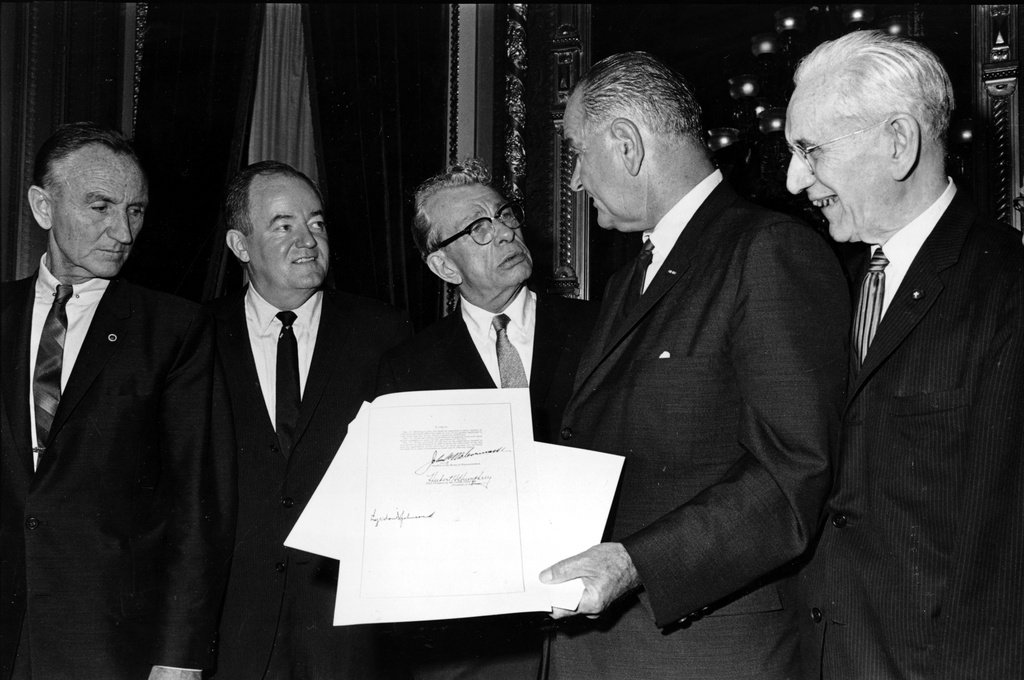
In the sweltering heat of August 1965, President Lyndon B. Johnson took a step that few presidents before him had dared. He left the comfort of the Oval Office and marched to Capitol Hill. His mission was to sign the Voting Rights Act (VRA), a piece of legislation born from the blood and bruises of civil rights marchers in Selma, Alabama.
For six decades, this law stood as the “greatest legislative landmark” in American history. It transformed the democratic landscape, ensuring that the color of a voter’s skin did not determine the weight of their ballot. However, in a seismic shift in April 2026, the U.S. Supreme Court effectively dismantled the final standing pillar of this historic shield.
This article explores the profound implications of the Court’s decision, the legal nuances that led to this moment, and what the future of minority representation looks like in a post-VRA America.
The 2026 Turning Point: Louisiana v. Callais
The death knell for the Voting Rights Act as we knew it came in the form of a congressional redistricting case out of Louisiana. At the heart of the dispute was a map that had created a second Black-majority district, a move designed to give the state’s significant Black population a fair shot at electing a representative of their choice.
In a 6-3 decision, the Court’s conservative majority ruled that the map was an unconstitutional racial gerrymander. Writing for the majority, Justice Samuel Alito argued that the lines were drawn with too much emphasis on race, violating the Equal Protection Clause of the 14th Amendment.
The ruling did more than just strike down a map; it fundamentally reinterpreted Section 2 of the Voting Rights Act. By narrowing the scope of what constitutes “discrimination,” the Court has shifted the burden of proof from the effects of a map to the intent of the mapmakers.

Section 2: The Final Pillar Falls
For years, Section 2 was the “workhorse” of voting rights litigation. It allowed advocates to challenge maps that “diluted” the voting power of minority communities, even if they couldn’t prove a “smoking gun” of racist intent.
The Shift to “Intentional Discrimination”
The 2026 ruling stipulates that Section 2 was primarily designed to protect against intentional discrimination. This is a monumental shift. Under this new standard, it is no longer enough to show that a map “cracks” a minority community into several districts to neutralize their influence.
Now, plaintiffs must prove that the legislators intended to discriminate—a task that many legal experts describe as nearly impossible.
Why “Intent” is an Insurmountable Barrier
Proving intent requires internal emails, testimonies, or overt admissions of bias. In the modern era, political mapmakers are far more sophisticated. They often use partisan data as a proxy for race, allowing them to achieve the same dilutive effects while claiming their goals were purely political.
As Justice Elena Kagan noted in her blistering dissent, this creates an “almost insurmountable barrier.” It effectively gives a green light to states to dismantle minority-opportunity districts under the guise of “partisan objectives.”
A 60-Year Legacy Under Siege
To understand why this ruling is so devastating to civil rights advocates, one must look at the progress made since 1965. The VRA was not just a set of rules; it was a catalyst for social and political evolution.
- 1970: There were approximately 1,500 Black elected officials across the United States.
- 2026: That number has surged to over 10,000.
This growth wasn’t a coincidence. It was the direct result of legal tools that allowed communities to fight back against vote dilution. From local school boards to state legislatures, the VRA ensured that minority voices were not just heard but were capable of winning.
The Slow Erosion: From Shelby County to Today
The 2026 decision didn’t happen in a vacuum. It was the culmination of a decade-long effort by the Supreme Court to weaken the VRA.
- Shelby County v. Holder (2013): This ruling struck down the “preclearance” formula, which required states with a history of discrimination to get federal approval before changing voting laws.
- Brnovich v. DNC (2021): This decision made it harder to challenge restrictive voting laws like those involving mail-in ballots or voter ID.
- Louisiana v. Callais (2026): The final blow, gutting the protections against discriminatory redistricting.

The “Cracking and Packing” Strategy
With the federal courts now largely sidelined, experts predict a surge in aggressive redistricting tactics. Two primary methods are used to dilute minority votes:
- Cracking: Spreading minority voters across many districts so they are a permanent minority in each, ensuring they cannot elect their preferred candidate.
- Packing: Concentrating as many minority voters as possible into a single district to “waste” their votes and reduce their influence in neighboring districts.
Maria Teresa Kumar, president of Voto Latino, warned that this decision will allow these tactics to flourish not just in Congress, but in county commissions and city councils. The local level is where many minority communities feel the impact of representation most acutely—affecting everything from trash collection to police oversight.
The Ripple Effect: Beyond the Ballot Box
The loss of representation is more than a political setback; it is a quality-of-life issue. When minority communities lose their seat at the table, they lose their voice on critical policy decisions.
Healthcare and Education
Representatives from minority-majority districts are often the strongest advocates for equitable healthcare funding and public school upgrades. Without these representatives, these communities risk being overlooked during budget negotiations.
Public Works and Infrastructure
History has shown that infrastructure projects—such as highway expansions or water treatment plants—often disproportionately affect minority neighborhoods. Without adequate representation in state legislatures, these communities have fewer defenses against environmental and economic displacement.
Looking Ahead: The Future of Minority Representation
The immediate fallout of the 2026 ruling is already being felt. In Louisiana, Democratic Representative Cleo Fields finds himself on the “endangered list” as his district faces a redraw.
In Alabama, Shomari Figures—who won a seat created after a brief 2023 legal victory—warns that the South is entering a new era of voter suppression. Figures noted that states will likely launch immediate efforts to redraw maps to “drastically reduce the number of realistic opportunities to elect Black members to Congress.”
Is There a Path Forward?
With the judicial branch increasingly hostile to the VRA, advocates are looking toward two potential avenues for change:
- Federal Legislation: The John Lewis Voting Rights Advancement Act remains a focal point for Democrats in Congress. However, passing such a bill requires a level of bipartisan cooperation that has been absent for years.
- State-Level Protections: Some states are passing their own “State Voting Rights Acts” to provide protections that the federal government no longer guarantees. However, this creates a “checkerboard” of democracy where your rights depend entirely on your zip code.
Conclusion: Burying a Landmark Without a Funeral
The Supreme Court’s 2026 decision represents a fundamental reordering of American democracy. By hollowing out the Voting Rights Act, the Court has signaled that the era of federal oversight in minority representation is largely over.
What remains is a “shell” of a law—a historic document that exists in name but lacks the teeth to bite back against modern forms of discrimination. As the nation moves deeper into 2026, the struggle for the ballot box has returned to its roots: a state-by-state, district-by-district battle for the soul of the American promise.
The gavel has fallen, and for many, the silence that follows is deafening.