The End of a Dream: Why Anas Sarwar’s Bid to Oust the SNP at Holyrood Failed

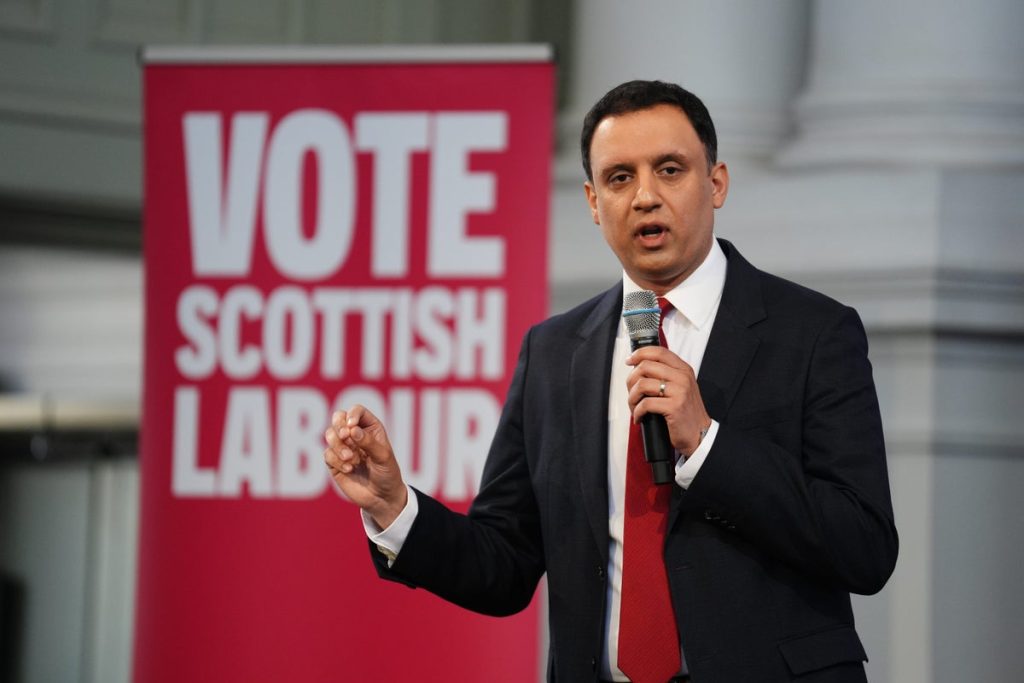
The political landscape in Scotland has undergone a seismic shift, yet the foundation remains stubbornly familiar. Following the 2026 Holyrood election for the Scottish Parliament, the dream of a Scottish Labour resurgence—a vision meticulously crafted by Anas Sarwar—has stalled. Despite high expectations and a landslide victory in the 2024 Westminster elections, Sarwar’s attempt to unseat First Minister John Swinney and end the SNP’s nearly two-decade grip on power has ended in disappointment.
This comprehensive analysis explores the factors behind the 2026 election results, the strain on the Labour-SNP dynamic, and what the future holds for the Scottish political establishment amidst the ongoing constitutional debate.
The Two-Part Plan That Stumbled
When Sir Keir Starmer first secured the keys to Downing Street, Anas Sarwar championed a “two-part process” as his key electoral strategy for Scottish renewal. The first stage was a resounding success: Scottish Labour decimated the competition in the 2024 general election, securing 37 of the 57 constituencies. It was a moment of euphoria that convinced many that the SNP’s dominance was finally entering its sunset years.
However, the second stage—the 2026 Holyrood election—proved to be an entirely different beast. As Sir Keir Starmer’s administration faced mounting criticism regarding UK-wide economic policies and public service management, reflected in declining public opinion polls, the “Starmer effect” in Scotland soured. What was once seen as a tailwind for Sarwar quickly transformed into a political anchor.
The Fractured Relationship: Sarwar vs. Starmer
The tension between the Scottish Labour leader and the UK Labour party leadership became an open secret during the campaign. In a move that shocked many, Sarwar publicly called for the Prime Minister to resign in February 2026, citing “too many mistakes” in Downing Street.
This distancing strategy was intended to insulate the Scottish party from the unpopularity of the UK government and reinforce the distinct nature of the devolution settlement. Sarwar repeatedly insisted that a vote for Scottish Labour was not a referendum on the Prime Minister. Yet, the electorate remained unconvinced. The lack of joint campaigning—highlighted by Starmer’s solo visit to the Faslane nuclear submarine base—served as a visual reminder of the disconnect between the two party leaders.
Why the SNP Held the Line
John Swinney, the embattled First Minister, managed to weather the storm by focusing on the “continuity” narrative and a clear policy agenda. While Sarwar accused the SNP of merely “running down the clock” and lacking the energy to govern, the party successfully leveraged its incumbency.
Key Factors in the SNP’s Survival:
- Voter Fragmentation: The rise of Reform UK, which tied with Labour at 17 seats, effectively split the anti-SNP vote. This prevented a clean sweep for any single opposition party, raising questions about the potential for a stable minority government or coalition prospects.
- Strategic Incumbency: Swinney’s ability to pivot the conversation back to specific Scottish issues, within the framework of the devolution settlement, such as the NHS and local government funding, resonated more than the nationalized debate pushed by Labour.
- The “No Energy” Counter-Attack: While Sarwar attacked Swinney’s leadership, the SNP successfully painted Labour as a party that was “out of touch” with the nuances of Scottish devolution and therefore unable to earn public trust.
The 2026 Election Results: A Stagnant Landscape
When the final tallies were announced, the electoral performance for Scottish Labour was sobering. Returning just 17 MSPs to the Scottish Parliament, the party actually saw a decline from its 2021 standing of 22 seats. This result left Labour tied with Nigel Farage’s Reform UK, a development that complicates the political narrative of a “Labour resurgence.”
The irony is palpable. Sarwar, the first Muslim to lead a major political party in the UK and a man who has been a central figure in Scottish politics for a decade, now finds himself at a crossroads. Having entered politics via the Glasgow Central seat—a constituency once held by his father—Sarwar has navigated the highs of 2010 and the lows of the 2015 SNP landslide. The 2026 failure, however, feels uniquely personal.
Analysis: The Future of Anas Sarwar
With the SNP retaining a comfortable, albeit challenged, position at Holyrood, having secured a renewed political mandate, the pressure on Anas Sarwar is mounting. Internal party critics are already questioning whether his decision to publicly break with the Prime Minister was a masterstroke of independence or a tactical blunder that confused the base.
Furthermore, the allegations—vehemently denied by Sarwar—that he attempted to strike a deal with Reform UK to oust the SNP have left a bitter taste in the mouth of some traditional Labour supporters. Sarwar dismissed these claims as “a desperate lie from a desperate man,” but the damage to the party’s ideological purity and public trust may take years to heal.
Conclusion: A Long Road Ahead
The 2026 Holyrood election, a pivotal moment in the ongoing constitutional debate, will be remembered as the moment the “two-part plan” failed to materialize in full. John Swinney remains in Bute House, and the SNP continues to dictate the pace of Scottish politics. For Anas Sarwar, the challenge is no longer just about ousting the SNP; it is about survival.
As the dust settles, the Scottish political landscape remains as polarized as ever. Whether Labour can realign its message to bridge the gap between Westminster’s policy direction and the specific needs of the Scottish electorate within the existing devolution settlement will define the next few years. One thing is certain: the era of easy victories for any party in Scotland is firmly in the past.
Key Takeaways for the Future
The Reform Factor: The emergence of Reform UK as a significant player in Holyrood suggests that the traditional binary of SNP vs. Labour is no longer the only game in town, potentially leading to more complex coalition prospects or a minority government.
Devolution Dynamics: The clash between Starmer’s Downing Street and the Scottish government indicates that constitutional tension surrounding the devolution settlement will remain a primary driver of voter sentiment.
- Leadership Stability: John Swinney enters the next term with a renewed political mandate, but the narrowness of the result means he will face constant challenges from an emboldened opposition.