The AI Displacement Dilemma: Should Canada Follow China’s Lead on Labour Protections?

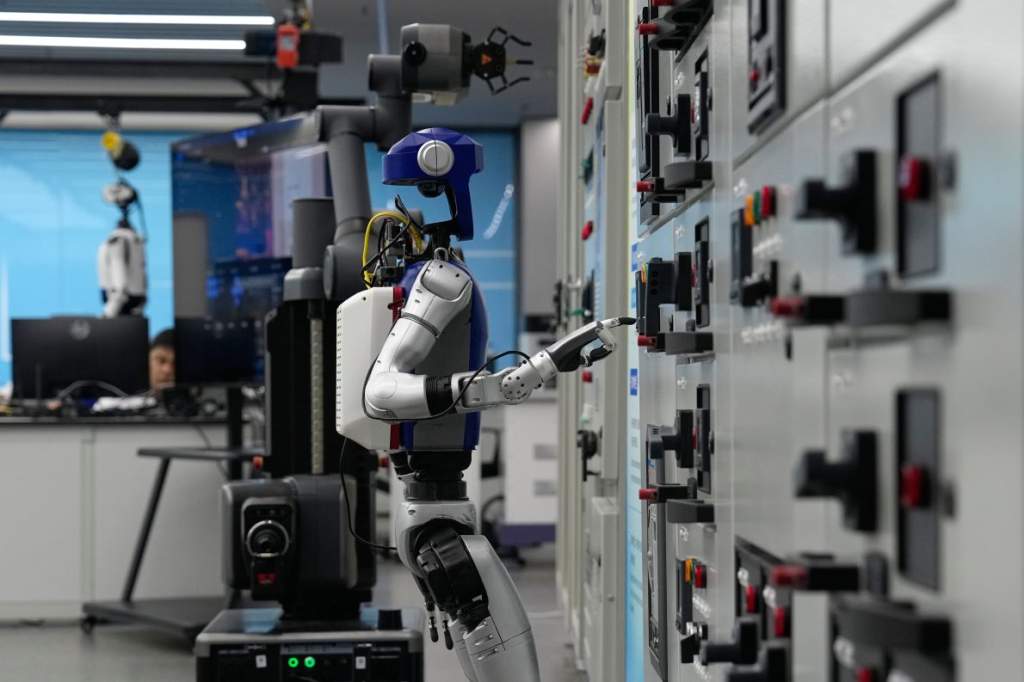
The rapid integration of artificial intelligence into the global workforce has transitioned from a futuristic concept to a daily reality. As we navigate 2026, the friction between technological efficiency and human job security has reached a boiling point. A landmark ruling from the Hangzhou Intermediate People’s Court in China—declaring that companies cannot fire employees solely to replace them with AI—has sent shockwaves through international labour markets.
This decision has sparked an urgent debate in Ottawa and beyond: Is it time for Canada to legislate similar protections, or would such a move stifle the innovation required to remain competitive in the global digital economy?
The Chinese Precedent: A Shift in Labour Philosophy
The Chinese court ruling centers on a fundamental principle: technology should be a tool for human empowerment, not an instrument of mass displacement. In the case of a senior technology worker demoted and eventually fired for refusing to accept a salary cut as his role was automated, the court ruled in his favor.
The judicial reasoning was clear—businesses are permitted to upgrade operations, but they must prioritize the legitimate rights of workers. The court emphasized that employers should focus on retraining, reasonable reassignment, and fair compensation rather than immediate termination.
Why China Acted Now
While the ruling appears to be a triumph for labour, experts suggest the motivation is multifaceted. Beyond simple worker protection, the ruling serves as a “self-preservation” mechanism for the state. In a nation where massive, sudden shifts in employment can lead to civil unrest, the government is signaling that AI adoption must be managed, not chaotic. For the Chinese Communist Party, ensuring social stability is often as vital as technological dominance.
The Canadian Landscape: A Democracy in Flux
In Canada, the conversation is significantly more complex. Unlike the top-down legal environment in China, Canada operates within a democratic framework where labour laws are a patchwork of federal and provincial jurisdictions, further complicated by union negotiations and industry-specific regulations.
The Challenge of Legislative Rigidity
Management experts, including those at McGill University, argue that replicating China’s model in Canada would be a logistical nightmare. Enforcing a law that dictates whether a business can automate a role would require:
Inter-governmental cooperation: Harmonizing federal and provincial labour codes.
Union involvement: Navigating existing collective bargaining agreements that already touch upon technological changes.
Judicial interpretation: Determining what constitutes a “legitimate” business upgrade versus a “pretextual” AI layoff.
The Economic Reality
Economists from Concordia University suggest that slowing down the inevitable is a losing battle. If Canada attempts to outlaw AI-led efficiency, domestic firms may simply fall behind their international competitors. Instead of protecting “jobs,” the focus should shift toward protecting “incomes” and “worker viability.”
What Should Canada’s Strategy Look Like?
As AI Minister Evan Solomon continues to consult on Canada’s long-awaited AI strategy, the pressure to provide a roadmap is mounting. The strategy has faced multiple delays, leaving businesses and workers in a state of uncertainty. To be effective, the government must look beyond the binary choice of “ban AI” versus “laissez-faire.”
1. Modernizing the Social Safety Net
If the goal is to protect the worker rather than the specific job, Canada’s Employment Insurance (EI) system needs a 21st-century overhaul. Current programs are built for cyclical layoffs, not the permanent, structural displacement caused by generative AI. A transition-focused benefit system could provide the financial runway for displaced workers to acquire new skills.
2. The Mandate for Reskilling
The Chinese court ruling explicitly calls for workers to “continuously update and improve their professional skills.” Canada could formalize this by creating tax incentives for corporations that invest in comprehensive employee reskilling programs. If a company automates a department, they should be legally or financially incentivized to retrain that team for roles that require human oversight, emotional intelligence, or complex problem-solving.
3. Transparent AI Adoption Policies
Perhaps the middle ground lies in transparency. Legislation could mandate that companies undergoing significant AI integration must provide a “Transition Impact Statement.” This would require firms to disclose their automation plans, provide evidence of attempts to retrain staff, and offer clear, negotiated severance or transition paths for those whose roles are fundamentally changed.
Is AI “Weak” Today? Why Urgency Matters
Management research suggests that we are currently in the “weakest” era of AI we will ever see. Every day, the technology becomes more capable, more autonomous, and more integrated into white-collar workflows.
Waiting for perfect legislation is a dangerous game. By the time a comprehensive, all-encompassing AI labour law is passed, the nature of the work it aims to protect may have shifted entirely. Canada’s approach must be agile—legislation that sets guardrails today while allowing for rapid adjustment as the technology matures.
The Human-AI Partnership: A Win-Win?
The ultimate goal, as hinted in the Chinese court ruling, is a “win-win situation.” AI has the potential to eliminate the drudgery of repetitive tasks, allowing humans to focus on higher-value creative and strategic work. However, this transition is not automatic. It requires a societal contract that ensures the dividends of AI-driven efficiency are not exclusively captured by shareholders, but are shared with the workforce that makes that efficiency possible.
Key Considerations for Canadian Policymakers:
Sector-Specific Guardrails: Rather than a blanket law, focus on industries where AI displacement poses an immediate risk to public safety or societal stability.
Public-Private Partnerships: Encourage tech firms to partner with post-secondary institutions to create “AI-ready” curricula.
Democratic Consultation: Unlike the directive nature of the Chinese ruling, Canada’s path must involve a robust dialogue between labour unions, tech industry leaders, and the public to ensure that “human-centric” AI is not just a slogan, but a policy reality.
Conclusion: Preparing for the Inevitable
The Chinese court ruling is a wake-up call, not necessarily a blueprint. It highlights that the global workforce is no longer willing to be an expendable casualty of technological progress. Canada has the opportunity to lead by creating a model that embraces innovation while maintaining a robust, dignified safety net for its citizens.
As we look toward the remainder of 2026, the question is not whether AI will change our jobs—that has already been answered. The question is whether we have the political courage to ensure that this change serves the many rather than the few. By fostering a culture of lifelong learning, modernizing our social safety nets, and demanding transparency from the architects of automation, Canada can navigate the transition into an AI-augmented future with its economy and its social fabric intact.