A Symbolic Shift: Putin’s Scaled-Back Victory Day Parade Amidst US-Brokered Ceasefire

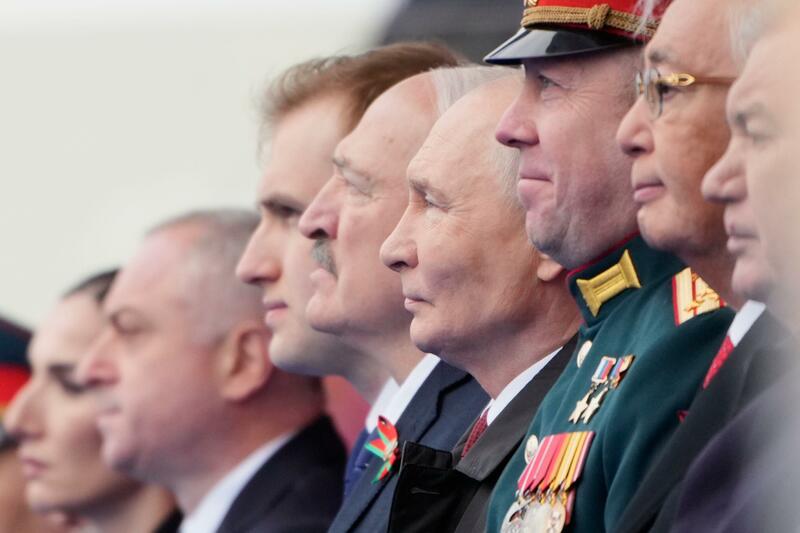
The annual Victory Day celebrations in Moscow, traditionally a display of overwhelming military might and national pride, took a starkly different tone in 2026. As Russia marked the anniversary of the Soviet victory over Nazi Germany, the atmosphere in Red Square was defined not by the rumble of tanks, but by an uneasy silence and heavy security. For the first time in nearly two decades, the parade proceeded without the signature display of heavy military hardware, signaling a profound shift in the Kremlin’s operational reality five years into the war in Ukraine.
This year’s event unfolded under the umbrella of a fragile, three-day ceasefire brokered by the United States. As the world watches, the intersection of historical commemoration and modern geopolitical conflict has highlighted the increasing isolation of the Russian leadership and the grueling toll of a war that has reshaped the European security landscape.
The 2026 Victory Day: A Departure from Tradition
Victory Day, celebrated on May 9, has long served as the centerpiece of Russian national identity. It is a day to honor the 27 million Soviet lives lost during the “Great Patriotic War.” However, in 2026, the spectacle was noticeably subdued. The decision to omit military hardware from the parade was a strategic admission of the current security environment.
Why the Parade Was Scaled Down
Security concerns dominated the planning phase. Following a series of long-range drone strikes and the persistent threat of aerial disruption, the Kremlin prioritized defense over pageantry. Mobile internet services were restricted in Moscow, and the perimeter around Red Square was tightened to an unprecedented degree.
The absence of heavy armor—usually the highlight for spectators—suggests that the Russian military-industrial complex is currently focused entirely on the front lines in Ukraine. Every available piece of equipment is deemed essential for the ongoing “special military operation,” leaving little to spare for the symbolic displays of past years.
A Diplomatic Landscape in Flux
The international guest list at this year’s parade offered a clear snapshot of Russia’s current standing on the global stage. Gone were the high-profile attendance of leaders like China’s Xi Jinping, who graced the event in previous years. Instead, the podium was shared with a smaller coalition: the leaders of Belarus, Malaysia, and Laos, alongside Slovak Prime Minister Robert Fico.
The presence of North Korean military units alongside Russian troops underscored the deepening strategic alignment between Moscow and Pyongyang. This partnership has become a cornerstone of Russia’s survival strategy, providing a critical lifeline of resources as the conflict enters its fifth year.
Putin’s Rhetoric: A Combative Stance
Addressing the assembled ranks, President Vladimir Putin remained defiant. He framed the ongoing war in Ukraine as a continuation of the struggle against fascism, drawing a direct line between the heroes of 1945 and the soldiers currently serving in the theater of war.
“The great feat of the generation of victors inspires the soldiers carrying out the goals of the special military operation today,” Putin stated. He characterized the conflict as a confrontation with an “aggressive force” backed by the entire NATO bloc. His rhetoric was designed to galvanize a domestic audience that has endured years of economic sanctions and war-related losses, emphasizing that “victory will always be ours.”
Despite the combative tone, there was an underlying acknowledgment of the challenges Russia faces. By invoking the “moral strength” and “ability to endure” of the Russian people, the President signaled that the Kremlin is preparing for a long-term struggle, regardless of temporary diplomatic pauses.
The US-Brokered Ceasefire: A Necessary Pause
The three-day ceasefire, announced by US President Donald Trump, provided the necessary breathing room for the parade to occur without the constant threat of incoming strikes. Both Moscow and Kyiv had been engaged in a brutal exchange of long-range fire, and the truce was widely viewed as a test of diplomatic influence from Washington.
The Human Cost of the Truce
While the ceasefire provided a temporary respite from artillery and drone warfare, its primary function appeared to be a humanitarian exchange. President Volodymyr Zelenskyy confirmed that Ukraine would respect the ceasefire to facilitate the exchange of 1,000 detainees from each side. For Zelenskyy, the decision was pragmatic: “Red Square is less important to us than the lives of Ukrainian prisoners who can be returned home.”
This prisoner swap represents a rare moment of cooperation in an otherwise deadlocked conflict. However, the move has been met with skepticism by some observers who fear that both sides are using the truce merely to regroup and rearm before the next phase of the war begins.
The Road Ahead: Can Peace Be Found?
As the ceasefire period concludes, the question remains: what comes next? US-mediated talks have struggled to gain traction since Washington shifted its primary focus to the ongoing conflict with Iran earlier this year. With European security in tatters and the human cost of the war reaching into the hundreds of thousands, the path to a sustainable peace is fraught with obstacles.
President Zelenskyy has expressed a desire to reboot negotiations, hoping for a visit from US envoys in the coming weeks. Yet, the deep-seated mistrust between Moscow and Kyiv, coupled with the Kremlin’s insistence that its war goals remain “just,” suggests that a comprehensive settlement is still far on the horizon.
Analyzing the Future of the Conflict
- Military Sustainability: With hardware being pulled from reserves for the front, Russia’s ability to sustain high-intensity operations is under scrutiny.
- Diplomatic Isolation: The shrinking list of international allies attending Moscow’s key events reflects a growing isolation that may eventually impact Russia’s economic stability.
- Domestic Sentiment: While Putin continues to frame the war as a patriotic duty, the long-term impact of the war on the Russian national psyche—a country that already carries the heavy scars of the 20th century—remains a critical variable.
Conclusion
The 2026 Victory Day parade was not the show of strength the Kremlin likely envisioned a few years ago. It was, instead, a reflection of a nation at a crossroads. By scaling back the event, Russia acknowledged the gravity of its current military situation, while the temporary ceasefire highlighted the desperate need for a diplomatic off-ramp.
As the world continues to monitor the situation, the events in Red Square serve as a stark reminder of the cost of conflict. Whether this brief moment of silence leads to a genuine breakthrough in peace negotiations or simply serves as a pause in a much longer, deadlier war, remains the defining question of our time.