The Future of Parliament: Inside the Radical Redesign of Canada’s House of Commons

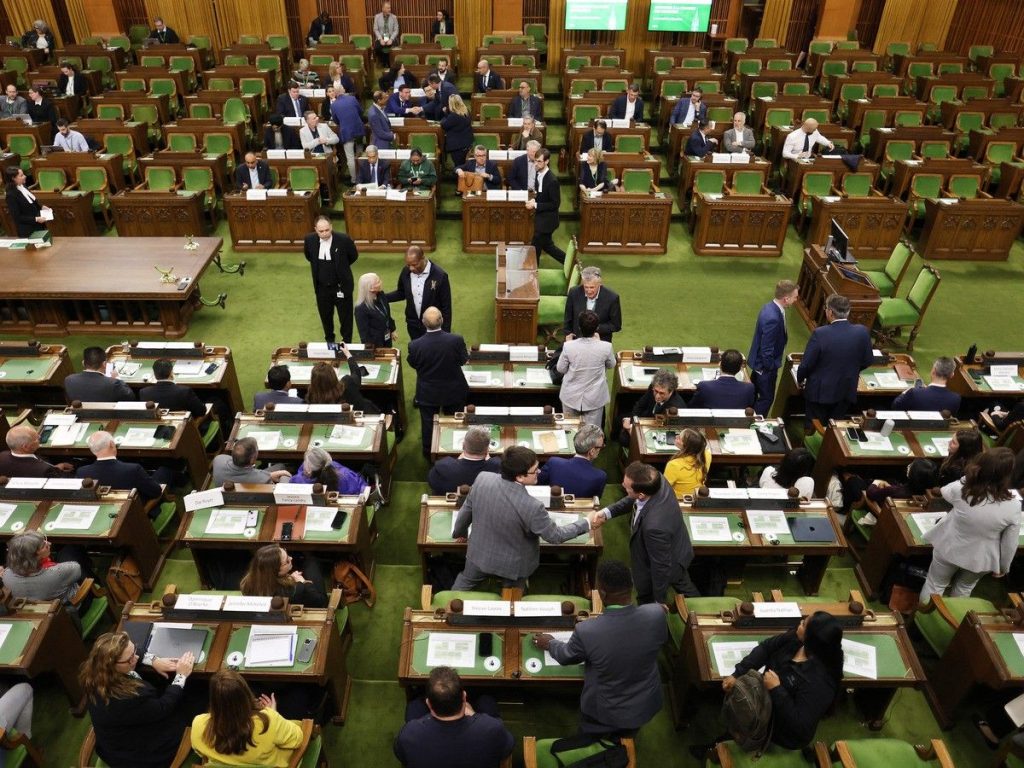
As Canada approaches the next decade of governance, the heart of its democracy—the Centre Block of Parliament—is undergoing a transformation that is as much about architecture as it is about the evolution of political culture. By 2032, when the historic building is slated to reopen following its massive $5-billion restoration, the House of Commons will look significantly different.
The proposed design for the new chamber has sparked intense debate among Members of Parliament (MPs). By moving toward a hybrid model of desks for the front bench and U.K.-style benches for backbenchers, the government is attempting to solve a modern logistical puzzle: how to fit 400 MPs into a space originally designed for 245, all while preserving the dignity of a heritage site.
A Shift in Seating: From Personal Desks to Communal Benches
For over a century, the iconic image of the Canadian House of Commons has been defined by individual, wood-carved desks assigned to each MP. These desks serve as personal offices, storage spaces, and symbolic anchors for representatives. However, the current restoration project presents a challenge to this tradition.
The latest mock-up on display in the Parliamentary precinct reveals a two-tier approach to seating:
The Front Bench: Ministers and opposition critics will retain the luxury of dedicated desks, though these will be redesigned to be shallower, optimizing space while maintaining a sense of authority.
The Back Benches: The remaining four rows will transition to long, communal benches, each accommodating up to seven MPs. To compensate for the loss of a desk, backbenchers will use airplane-style pull-out tray tables for their notes and devices.
Why the Change?
The primary driver behind this architectural shift is capacity. With the current number of MPs standing at 343 and the population of Canada growing, the House must prepare for future electoral redistributions that could see up to 400 representatives. The traditional desk-heavy layout simply cannot accommodate this density without compromising the movement and safety of those inside the chamber.
The “Cinema-Style” Dilemma and Ergonomic Concerns
One of the most debated aspects of the proposed design is the nature of the bench seating itself. Parliamentary officials are currently polling MPs on whether they prefer fixed benches or “cinema-style” flip-up seats.
The appeal of the cinema-style seat is largely ergonomic. MPs have long complained that the current seating arrangement is cramped, making it difficult to stand up for votes without their knees knocking against the desk in front of them. Flip-up seats would offer more clearance, potentially easing the physical strain of long, late-night sessions.
However, the transition to benches raises significant logistical questions:
- Unassigned Seating: If the House moves to unassigned seating in the back rows, how will the Speaker identify which MP is speaking?
- The “Middle-Seat” Problem: How does an MP navigate to a seat in the middle of a seven-person bench without disrupting the proceedings?
- Support Staff Access: How will Parliamentary Pages deliver notes or water to an MP buried in the middle of a row?
Technological Integration: The Digital Chamber
To address the logistical hurdles of a bench-based system, the proposed design includes a digital overhaul. Because the Speaker must recognize an MP by their riding name to maintain order, the new design envisions a card-reader system at every seat.
By inserting their Parliamentary ID, an MP would automatically be added to a digital queue, visible to the Speaker on a screen. While some traditionalists may view this as a step away from the organic, oratorical nature of Parliament, it is a pragmatic response to the realities of a larger, more complex legislative body.
Heritage vs. Innovation: The Maces and The Clerk’s Table
Perhaps the most sensitive aspect of this renovation is the treatment of the chamber’s historic artifacts. The Ceremonial Mace, a symbol of the Speaker’s authority and the Crown’s presence, currently rests on a large clerk’s table in the center aisle.
Because the new design calls for a slimmer clerk’s table to create more floor space, there is a legitimate concern that the mace might protrude, leading to accidental bumps. Architects have proposed a radical solution: placing the mace parallel to the benches rather than perpendicular. While this would be a historic Canadian first, it is a testament to how the 100-year plan for Centre Block requires balancing deep-seated tradition with the practical needs of modern governance.
The Impact on Political Culture
Architecture dictates behavior. The move to a U.K.-style bench system is not merely a space-saving measure; it is a shift in the political atmosphere. Desks create a “fortress” mentality, where each MP has their own physical territory. Benches, conversely, encourage interaction, negotiation, and the communal nature of the Westminster system.
Critics of the plan argue that the loss of personal space might diminish the prestige of the MP role. Proponents, however, suggest that it could foster more collaborative debates and reduce the “siloed” feeling that often permeates the current chamber.
Key Considerations for the 2032 Reopening:
Accessibility: The project aims to ensure the chamber is fully compliant with modern disability standards, ensuring that all MPs, regardless of physical ability, can participate fully.
Longevity: The designers are working with a 100-year horizon. Every material choice, from the wood grain to the upholstery, is being stress-tested to ensure it can withstand the wear and tear of a century of legislative work.
- Heritage Preservation: Despite the modern additions, the goal remains to make the chamber look as though it has always belonged in the iconic Centre Block, maintaining the architectural integrity of the original 1919 design.
Conclusion: A Balancing Act for Democracy
The redesign of the House of Commons is a microcosm of the challenges facing Canada itself: how to honor our history while adapting to a future that is larger, faster, and more technologically integrated. Whether the final design includes cinema-style seats or stays true to fixed benches, the decisions made today will define the Canadian parliamentary experience for generations to come.
As the government continues to solicit feedback from MPs, the focus remains on finding a “middle ground”—one that respects the solemnity of the institution while providing the functional tools required to serve a growing nation. By the time the scaffolding comes down in 2032, we will see whether these changes have successfully bridged the gap between the 20th and 22nd centuries.