Project Freedom: Why Trump’s Bold Attempt to Reopen the Strait of Hormuz Stalled

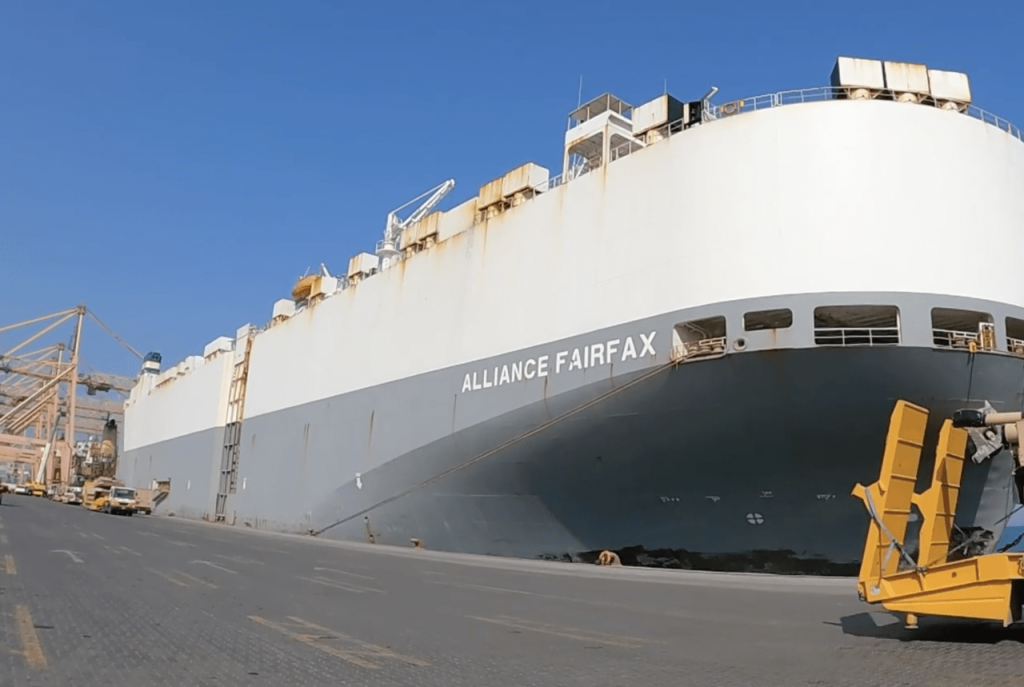
In the high-stakes theater of global energy security, few maritime passages hold as much volatility as the Strait of Hormuz. In May 2026, the world watched with bated breath as the United States launched “Project Freedom,” an ambitious military initiative designed to escort merchant vessels trapped in the Persian Gulf. What was initially framed as a humanitarian effort to clear a shipping bottleneck quickly devolved into a geopolitical flashpoint, exposing the precarious balance of power in the Middle East.
While the operation successfully guided a handful of ships to safety, the ensuing chaos—marked by missile strikes, burning oil hubs, and a rapid diplomatic retreat—raised fundamental questions about the limits of American maritime projection in the modern era.
The Strategic Anatomy of Project Freedom
Project Freedom was not merely a convoy mission; it was a calculated attempt to challenge Iran’s de facto control over the world’s most vital energy artery. Following months of tension and an ongoing U.S.-led blockade of Iranian ports, the Strait of Hormuz had become a graveyard for commercial maritime traffic.
The Objective: Breaking the Deadlock
The U.S. strategy focused on establishing a “safe corridor” along the southern edge of the strait, utilizing Omani waters to bypass minefields and Iranian naval patrols. By deploying guided-missile destroyers and a massive air umbrella—including Apache and Sea Hawk helicopters—the Pentagon aimed to neutralize Iran’s “mosquito fleet” of fast attack boats.
The Tactical Reality
The mission was an exercise in extreme precision. With the passage narrowed to a mere 500-foot-wide lane, ships were forced to transit in single file. The U.S. Navy’s role was to provide an anti-missile shield, while air assets stood ready to suppress any surface-level interference from the Iranian Revolutionary Guard Corps (IRGC).
Escalation and the “Project Deadlock” Counter-Narrative
Tehran was quick to brand the U.S. initiative as “Project Deadlock,” suggesting that the American presence was not a solution but a catalyst for further instability. The Iranian response was immediate and multi-dimensional, targeting not just the convoy but the broader regional infrastructure.
The Cost of Intervention
Within 36 hours of the mission’s inception, the region erupted. Iranian missile and drone strikes hit commercial vessels, including the Chinese-owned JV Innovation and the South Korean HMM Namu. The United Arab Emirates suffered collateral damage as an oil transit hub was set ablaze, marking the most significant escalation since the April cease-fire.
Why the Mission Was Paused
The tactical success of extracting the Alliance Fairfax and the CS Anthem was overshadowed by the strategic cost. According to reports from the time, key regional allies—specifically Saudi Arabia and Kuwait—grew increasingly anxious about the escalating firestorm. Their temporary withdrawal of permission for the U.S. to use critical bases and airspace forced the White House to hit the “pause” button on the operation.
Analysis: The Limits of Naval Hegemony
Military analysts have long debated whether “showing the flag” is enough to deter modern asymmetric threats. Project Freedom provides a sobering case study in the limitations of traditional naval power.
The Asymmetric Challenge: While the U.S. Navy possesses overwhelming conventional superiority, countering swarms of low-cost drones and fast-attack craft requires an unsustainable level of resource commitment.
Diplomatic Fragility: The mission highlighted that military operations in the Persian Gulf are inextricably linked to the cooperation of regional partners. When Saudi and Kuwaiti support wavered, the entire operational framework became untenable.
- The “Humanitarian” Mask: President Trump’s framing of the mission as a “humanitarian gesture” failed to convince regional actors that the operation was anything other than a direct challenge to Iranian sovereignty.
The Future of Gulf Shipping: Is Diplomacy the Only Way?
By early May 2026, the pause in Project Freedom was linked to ongoing diplomatic negotiations. The U.S. administration signaled that it would temporarily halt military escorts to see if a broader agreement with Tehran could be reached. This shift underscores a recurring theme in U.S. foreign policy: the reliance on military muscle to create leverage, followed by a pivot to back-channel diplomacy when the cost of escalation threatens to spiral out of control.
Key Considerations for Global Markets
For the shipping industry and global energy markets, the status of the Strait of Hormuz remains the single most important variable. As long as Iran maintains the capability to disrupt the channel, the threat of supply chain shocks will persist.
- Risk Management: Shipping companies are now operating in a “high-risk” environment where established corridors are no longer safe.
- Resource Allocation: The U.S. Navy must balance its blockade of Iranian ports with the need to protect international shipping, a dual-mission that stretches its assets thin.
- Regional Dependence: The stability of the Gulf is currently tied to a delicate web of mediation, involving countries like Pakistan and the shifting allegiances of Gulf Cooperation Council (GCC) states.
Conclusion: A Lesson in Strategic Overreach
Project Freedom serves as a reminder that the Strait of Hormuz remains a theater where tactical victories do not always equate to strategic success. While the U.S. military proved it could clear a path for individual ships, it also demonstrated that such actions can trigger a regional backlash that threatens the very stability it seeks to restore.
As of 2026, the region remains in a state of suspended animation. Whether the U.S. resumes its escort missions or finds a diplomatic off-ramp, the events of May have permanently altered the calculus for every tanker and cargo carrier navigating these volatile waters. The “Freedom” in Project Freedom was, for now, a short-lived reality in a region defined by its deep-seated, intractable tensions.