48 Hours of Chaos: Why Trump Abruptly Axed ‘Project Freedom’ Following Intense Saudi Backlash

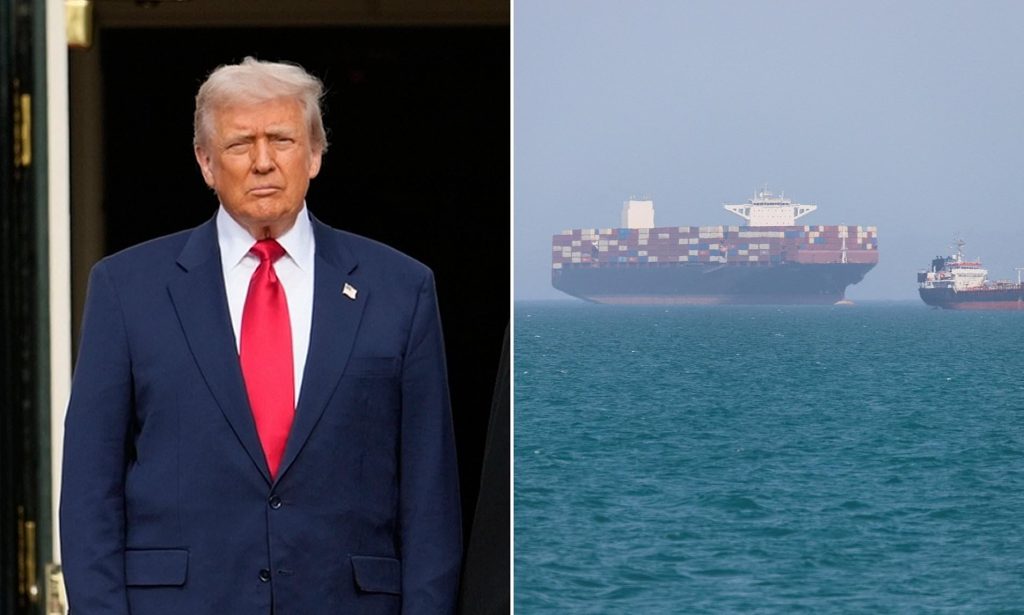
The geopolitical landscape of 2026 has been defined by rapid-fire escalations and sudden diplomatic pivots. Perhaps no event illustrates this volatility better than the rise and fall of Project Freedom. In a stunning reversal that sent shockwaves through global energy markets, US President Donald Trump terminated the highly publicized maritime operation less than 48 hours after its inception.
The catalyst for this retreat was not a military defeat on the water, but a furious diplomatic backlash from Saudi Arabia. As the world watches the Strait of Hormuz—a narrow waterway responsible for nearly 20% of the world’s oil supply—the collapse of Project Freedom reveals a deep fracture in the traditional alliance between Washington and Riyadh.
The Genesis of Project Freedom: A Bold Gamble in the Strait
Project Freedom was designed to be the Trump administration’s definitive answer to the Iranian blockade of the Strait of Hormuz. Following the start of hostilities on February 28, 2026, Tehran effectively shuttered the waterway, leading to a global energy crisis and skyrocketing fuel prices.
On a Sunday morning that now feels like a distant memory, President Trump announced the initiative with his trademark bravado. The goal was simple yet ambitious: to wrest control of the waterway from the Islamic Revolutionary Guard Corps (IRGC) and provide safe passage for commercial shipping.
The Strategic Objectives of the Operation
The mission was intended to achieve three primary goals:
- Reopen the Strait: Ensure the flow of oil to global markets to stabilize the 2026 economy.
- Challenge Iranian Hegemony: Demonstrate that the US Navy remains the ultimate arbiter of maritime security.
- Escort Commercial Vessels: Provide a military shield for tankers that had been paralyzed by threats of mines and drone strikes.
However, the plan had one fatal flaw: it was formulated with almost zero coordination with the regional partners whose cooperation was essential for its success.
The Saudi “Blindside”: A Diplomatic Disaster
The primary reason for the project’s collapse was the immediate and fierce opposition from the Kingdom of Saudi Arabia. US officials have since revealed that the Saudi leadership was completely blindsided by the announcement.
Riyadh, which has historically been the cornerstone of US strategy in the Middle East, found itself in the dark regarding a military operation occurring in its own backyard. The response from the Kingdom was swift and uncompromising.
Denying Airspace and Bases
In an unprecedented move, the Kingdom informed the United States that it would deny permission for American military aircraft to use the Prince Sultan Airbase. Furthermore, Saudi Arabia barred US jets from entering its airspace for any activities related to Project Freedom.
“Because of geography, you need cooperation from regional partners to utilize their airspace along their borders,” explained one US official. Without the ability to fly out of Saudi bases or traverse Saudi skies, the logistics of protecting ships in the Strait became a tactical nightmare.
The MBS-Trump Phone Call: A Dialogue of Discord
A high-stakes phone call between Saudi Crown Prince Mohammed bin Salman (MBS) and President Trump reportedly did little to ease the tension. According to sources familiar with the conversation, the Crown Prince expressed deep frustration over the lack of consultation.
Saudi Arabia had been working closely with Pakistan on a diplomatic track to resolve the crisis. Riyadh felt that Trump’s unilateral move threatened to blow up those delicate negotiations. The “tremendous friction” during the call left Trump with little choice but to pull the plug on the operation before it could fully begin.
Regional Fallout: Sidelining Gulf Allies
Saudi Arabia wasn’t the only nation feeling ignored. The “America First” approach to Project Freedom appeared to sideline almost every major player in the Gulf.
Oman: Reports indicate the US did not coordinate with Muscat until after the project was announced.
Qatar: The Emir of Qatar was only informed once the project had already commenced, prompting an immediate call to Trump urging de-escalation.
UAE: While the UAE has been active in its own defense—recently intercepting 15 missiles and four drones fired from Tehran—they were reportedly not integrated into the Project Freedom command structure.
This pattern of unilateral action has become a hallmark of the 2026 Trump administration, reminiscent of the earlier blockade of Iranian ports which also caught partners off guard.
The Iranian Response: “A Total Retreat”
In Tehran, the suspension of Project Freedom was met with jubilation and propaganda. Iranian state media, specifically INSA, branded the move as a “humiliating retreat” for the United States.
The IRGC had previously warned that any vessel violating their “maritime rules” would be stopped by force. When Trump announced the pause, Iran claimed victory, asserting that their “firm positions and warnings” had forced the American president to back down.
Hostilities Resume Amidst a Fragile Ceasefire
Despite the suspension of the maritime project, the region remains a tinderbox. On the Monday following the announcement, the UAE issued its first missile alert since a fragile ceasefire was announced last month.
An Iranian attack caused a significant fire at the oil port of Fujairah, and a container ship owned by the French firm CMA CGM was targeted in the waterway. These events suggest that while Project Freedom is dead, the conflict is very much alive.
The Official Narrative: A “Pause” for Diplomacy
To save face, President Trump took to Truth Social to frame the decision not as a surrender to Saudi pressure, but as a strategic pause to allow for diplomatic breakthroughs.
“Based on the request of Pakistan and other Countries… and the fact that Great Progress has been made toward a Complete and Final Agreement with Representatives of Iran, we have mutually agreed that… Project Freedom will be paused for a short period of time.” — Donald J. Trump, Truth Social
Trump highlighted the “tremendous Military Success” of the previous campaign, Operation Epic Fury, as a reason why the US could afford to wait. He suggested that a “Complete and Final Agreement” with Tehran might be within reach, provided Iran “agrees to give what has been agreed to.”
The View from the Pentagon
Defense Secretary Pete Hegseth maintained a firm stance during a recent briefing, insisting that the US is not looking for a fight but remains ready. “The US aims to protect shipping from Iranian aggression,” Hegseth stated. “They said they control the strait; they do not.”
However, General Dan Caine, Chairman of the Joint Chiefs of Staff, offered a grimmer reality, noting that Iranian forces had attacked US troops more than 10 times since the ceasefire supposedly began.
Marco Rubio and the “Insane” Leadership in Tehran
Secretary of State Marco Rubio has been the public face of the administration’s hardline rhetoric. In a recent White House briefing, Rubio defended the ongoing blockade of Iranian ports, vowing it would continue until Tehran ceased its “piracy” in the Strait.
Rubio did not hold back in his assessment of the Iranian regime, describing the top brass as “insane in the brain.” He argued that a fracture in the Iranian leadership is making it difficult for the regime to make “sensible choices,” further complicating the possibility of a lasting peace deal.
Economic Implications: The 20% Factor
The stakes of this diplomatic and military tug-of-war cannot be overstated. The Strait of Hormuz is the world’s most important oil transit chokepoint. With the strait “virtually shut,” the global energy crisis of 2026 has reached a fever pitch.
Why the Strait Matters:
Volume: Approximately 20-21 million barrels of oil pass through daily.
LNG: It is the primary route for Liquefied Natural Gas (LNG) from Qatar.
Global Inflation: The closure has led to a 40% increase in shipping insurance premiums and a significant spike in consumer goods prices worldwide.
Shipping firms remain skeptical of any “safe passage” promises. The confusion surrounding Project Freedom’s launch and subsequent cancellation has left major firms like Maersk and CMA CGM questioning whether any transit in the Gulf can be considered safe in the current climate.
Analysis: The Future of US-Saudi Relations
The axing of Project Freedom marks a turning point in the Trump-MBS relationship. While the two leaders shared a close bond during Trump’s first term, the realities of 2026 are different. Saudi Arabia is increasingly asserting its strategic autonomy, refusing to be a mere “launchpad” for American initiatives that they haven’t vetted.
By denying airspace, Saudi Arabia effectively exercised a veto over US military policy in the region. This suggests that any future attempt to reopen the Strait will require a multilateral approach—something the current administration has struggled to embrace.
Conclusion: A Stalemate with No Easy Exit
As of late May 2026, the situation in the Middle East remains a volatile stalemate. Project Freedom is in the rearview mirror, but the blockade of Iranian ports continues, and the IRGC remains entrenched in the Strait of Hormuz.
President Trump’s decision to “pause” the operation has provided a temporary cooling-off period, but the underlying issues—Iranian aggression, Saudi sovereignty, and global energy security—remain unresolved. Whether the “very good talks” mentioned by the President will lead to a “Final Agreement” or simply serve as a prelude to a larger conflict is the question that defines the year 2026.
For now, the world waits, oil prices fluctuate, and the Strait of Hormuz remains the most dangerous stretch of water on the planet.