Starmer’s Midnight Crisis: Polls Close on a Decisive Night for Labour’s Future

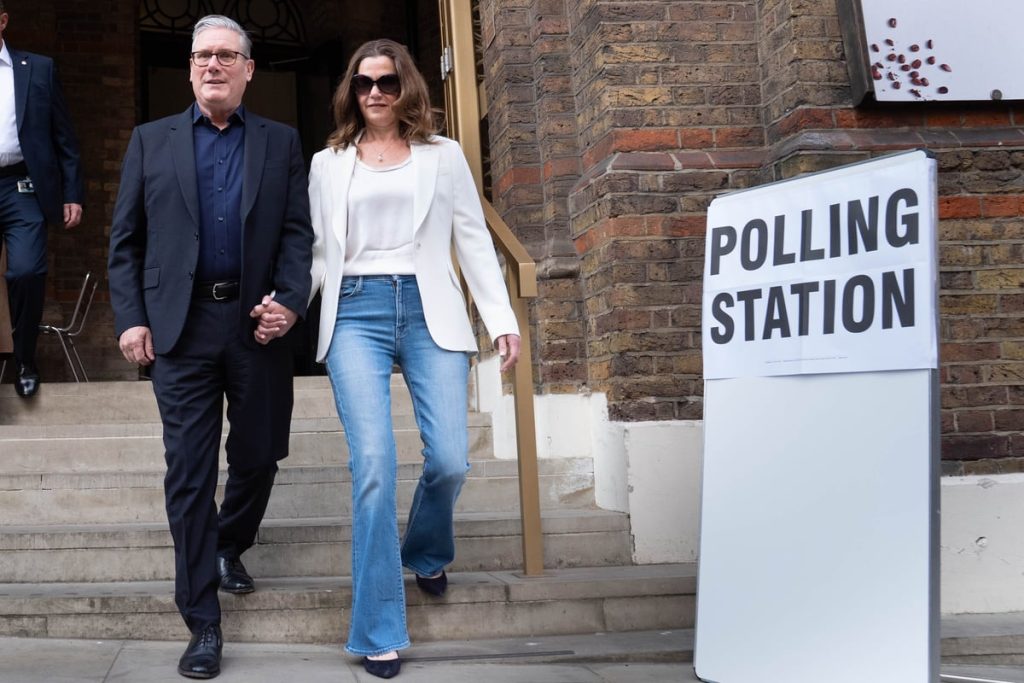
The clock has struck ten, and across the United Kingdom, the ballot boxes are being sealed. As of May 2026, the political landscape of Britain stands at a precipice. Polls have officially closed in what many are calling the most consequential mid-term test for a sitting Prime Minister in decades. For Sir Keir Starmer, the results trickling in from Scotland, Wales, and England represent more than just local governance—they are a referendum on his premiership and the very direction of the Labour Party.
For months, the narrative has been building: a government struggling with the “politics of delivery” while being besieged by an insurgent right and a revitalized left. As the first exit polls and early tallies emerge, the atmosphere in Whitehall is one of palpable anxiety. The “Starmer Surge” of the 2024 General Election feels like a distant memory as the reality of a mid-term drubbing begins to set in.
A National Wipeout: The Scale of the Challenge
The predictions leading up to tonight were nothing short of apocalyptic for the Labour hierarchy. Renowned polling expert Lord Robert Hayward has suggested that Labour could be looking at a loss of approximately 1,850 councillors across England alone. This isn’t just a minor correction; it is a seismic shift that could strip the party of its grassroots power base in regions it worked for a decade to reclaim.
The “Red Wall” and Beyond
In the traditional heartlands, the story is one of fragmentation. Where Labour once dominated, a multi-party system is taking root. Voters who lent their support to Starmer two years ago appear to be drifting. To the right, Reform UK is capitalizing on concerns over immigration and the economy. To the left, the Green Party is siphoning off younger, urban voters frustrated by what they perceive as a lack of radical action on climate change and social justice.
The Cost of Living Shadow
The primary driver behind this electoral discontent remains the cost of living crisis. Despite government efforts to stabilize the economy, the “message of delivery” mentioned by Deputy Prime Minister David Lammy has struggled to reach the kitchen tables of Britain. For many, the pace of change has been too slow, leaving a vacuum that the “politics of grievance” has successfully filled.
Trouble in the Devolved Nations: Wales and Scotland
Perhaps the most stinging blows for Sir Keir Starmer tonight are coming from west of the Severn Bridge and north of the border. For the first time in over a century, Labour is projected to lose the national vote in Wales. This historic shift in the Senedd elections marks a potential end to Labour’s unbroken streak of dominance in Welsh politics, a result that will send shockwaves through the party’s foundations.
In Scotland, the anticipated “Labour resurgence” appears to have stalled. The SNP, despite their own internal turmoils over the last few years, looks set to remain the largest party. For Starmer, who viewed a strong Scottish Labour performance as essential for his long-term stability, these results suggest that the constitutional question and local identity still outweigh the appeal of a Westminster-led Labour government.
The Inner Circle: Leadership Speculation Intensifies
As the scale of the losses becomes clear, the focus is shifting from the ballot boxes to the corridors of power in Westminster. Speculation regarding Sir Keir Starmer’s leadership is no longer a whisper; it is a roar. Even before the polls closed, reports surfaced that high-profile figures within the party were preparing for a post-election fallout.
The Challengers in the Wings
The names on everyone’s lips are Angela Rayner and Wes Streeting. Both the Deputy Prime Minister (in her previous role) and the Health Secretary are rumored to have the support of the 81 MPs required to launch a formal leadership challenge.
Angela Rayner: Seen as the bridge to the party’s working-class roots, her allies are confident she has the numbers.
Wes Streeting: Representing the modernizing wing of the party, Streeting is viewed as a formidable communicator who could offer a “fresh start.”
Ed Miliband: Most shockingly, reports from The Times* suggest that the Energy Secretary and former leader has privately urged Starmer to set out a timetable for his departure.
The Burnham Factor
Adding to the intrigue is the “King across the Water,” Andy Burnham. The Mayor of Greater Manchester has long been touted as a future leader. His sudden decision to drop out of a scheduled speech on Friday morning has set tongues wagging. While officially replaced by Caroline Simpson for the event, many insiders believe Burnham is clearing his diary to prepare for a return to Westminster within weeks.
The Rise of Reform UK and the Green Party
While the two main parties struggle, the “insurgent” parties are celebrating a night of historic gains. Nigel Farage’s Reform UK is no longer a fringe movement; it is a central pillar of the 2026 political landscape. Building on their success in 2025, Reform is expected to take control of several more local authorities, positioning themselves as the true opposition in many northern towns.
On the other side of the spectrum, the Green Party is experiencing what leader Zack Polanski calls “record-breaking” results. By targeting disillusioned Labour voters in London, Newcastle, and Sussex, the Greens have proved that their platform of “real change” resonates with an electorate tired of the status quo.
Liberal Democrat Persistence
Not to be overlooked, Sir Ed Davey’s Liberal Democrats are eyeing their eighth successive year of local gains. By focusing on “decency” and local issues in former Conservative heartlands, the Lib Dems continue to be the “quiet assassins” of the UK electoral map, picking up seats where Labour and the Tories have faltered.
The Government’s Defense: A “Mid-Term Blues” Narrative
In the face of these devastating numbers, the government’s top brass is attempting to manage the fallout. David Lammy has been the face of the Labour defense tonight, refusing to “sugarcoat” the results while simultaneously urging perspective.
Lammy’s argument rests on historical precedent. He pointed to Tony Blair’s poor local election results in 1999 following the 1997 landslide, and David Cameron’s successive local losses before winning the 2015 General Election. The message is clear: mid-term elections are a time for the public to “vent,” but they do not necessarily dictate the outcome of the next General Election.
“It’s not unusual to be given a message by the electorate at mid-term elections,” Lammy insisted. “The people want us to go faster, and we hear that. But our message of delivery remains the right one for the country.”
The Conservative Conundrum: A Pyrrhic Victory?
For the Conservative Party, the night is bittersweet. While they are gaining ground due to Labour’s collapse, they are also losing significant chunks of their base to Reform UK. Kemi Badenoch, whose approval ratings have seen a slight uptick recently, faces the difficult task of reuniting a fractured right-wing vote.
Tory chairman Kevin Hollinrake acknowledged the difficulty of the cycle, noting that the party is still recovering from the “historic general election defeat” of 2024. The strategy for the Conservatives moving forward appears to be a delicate balancing act: attacking Labour’s record while trying to prevent a total migration of voters to Nigel Farage.
Analysis: What Happens Next for Sir Keir?
The next 48 hours will be critical for Sir Keir Starmer. As the final results are confirmed, he faces three primary challenges:
- Cabinet Discipline: Can he prevent a full-scale mutiny? With Miliband, Rayner, and Streeting all linked to leadership talk, Starmer must reassert his authority immediately.
- Policy Pivot: The “message of delivery” isn’t landing. Does the government need a “soft relaunch” with more populist, high-impact policies to win back the Red Wall?
- The Reform Threat: Labour must find a way to address the concerns of voters moving to Reform UK without alienating their urban, progressive base—a political tightrope that is becoming increasingly frayed.
The Looming Shadow of 2027
With the next General Election likely only two years away, these local results serve as a final warning. If Starmer cannot stem the bleeding in the devolved nations and the English councils, the Labour Party may find its “era of renewal” cut tragically short.
Conclusion: A Night of Reckoning
As the sun begins to rise over a reshaped political map, one thing is certain: the 2026 elections have changed the trajectory of British politics. The era of two-party dominance is under threat from all sides, and the “Starmer Project” is facing its most rigorous stress test to date.
Whether Sir Keir can weather this storm—as Blair and Cameron did before him—remains to be seen. But for tonight, the message from the British public is loud, clear, and undeniably “tough.”