The Road Ahead: Pierre Poilievre’s Strategy for a Post-Election Conservative Party

The political landscape in Ottawa has shifted dramatically in 2026. Following a grueling election cycle that saw Prime Minister Mark Carney secure a decisive majority government, the Conservative Party of Canada finds itself in unfamiliar territory. After years of leading in the polls and positioning themselves as the inevitable government-in-waiting, the Conservatives are now navigating the realities of the Opposition benches.
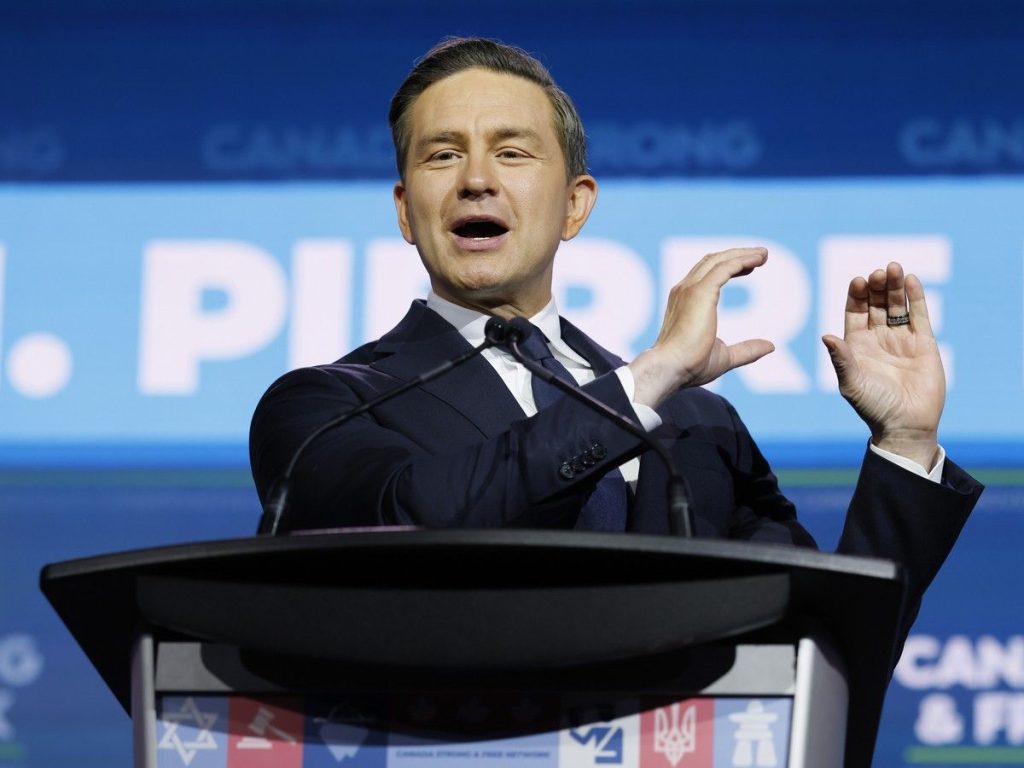
For Conservative leader Pierre Poilievre, the immediate challenge is existential. At the annual Canada Strong and Free Network conference in Ottawa, Poilievre addressed the “elephant in the room” directly: Where does the movement go from here? As his party grapples with internal dissent, defecting MPs, and the loss of a significant electoral lead, Poilievre’s message remained defiant. He is not stepping down; he is digging in.
The State of the Conservative Movement in 2026
The atmosphere at this year’s conference was markedly different from the optimism of previous years. Gone are the discussions about cabinet appointments and “Day One” policy rollouts. Instead, the focus has shifted to soul-searching. The party is currently reeling from the loss of four MPs who crossed the floor to join Prime Minister Carney’s Liberal caucus—a move that significantly bolstered the government’s majority.
Despite these setbacks, the party base remains largely loyal to Poilievre. Recent leadership review results, which saw him retain the support of nearly 90% of delegates, suggest that while the party is wounded, it is not broken. However, the question remains: Can the Conservatives regain the momentum they lost after the 2025 election?
Why the 2025 Election Result Still Stings
Political analysts and party insiders are still dissecting how a 27-point lead evaporated during the campaign. Critics argue that the campaign suffered from fundamental strategic errors, while supporters point to the Liberal machine’s effective use of fear-based messaging. Regardless of the cause, the result has forced the Conservatives to re-evaluate their entire platform.
Poilievre’s Critique: The “Illusion” of the Carney Government
Poilievre’s address was marked by a sharp, aggressive critique of Prime Minister Mark Carney. Throughout his speech, Poilievre used the word “illusion” no fewer than 13 times, aiming to dismantle the perception that the current Liberal government is a moderate departure from the Trudeau era.
Unmasking the Liberal Agenda
Poilievre argues that despite a change in leadership, the core Liberal ideology has not only persisted but accelerated. He highlights several key areas where he believes the Carney government is failing Canadians:
Fiscal Policy: Poilievre points to continued deficit spending as evidence that the “Trudeau agenda” is alive and well, regardless of the new face at the helm.
International Relations: He criticized the government’s approach to the Canada-U.S. relationship, warning against a “rupture” with our largest trading partner in favor of pivoting toward closer ties with Beijing.
- Policy Stagnation: From housing affordability to criminal code reforms on bail, Poilievre claims that the government’s promises are mere window dressing.
The Strategy: Being a “Voice for the Voiceless”
If the goal is to return to power by the next election, what is the path forward? Poilievre’s blueprint, as outlined in his keynote, relies on staying the course. He believes that the Conservative platform—focused on inflation, carbon taxes, and resource development—has been vindicated by the current economic reality.
Strengthening the Core
Rather than pivoting to the center, Poilievre intends to double down on his populist approach. He views his role as the “voice for the voiceless,” arguing that millions of Canadians feel ignored by the current administration.
- Maintaining the Fighter Persona: Poilievre explicitly rejected calls to soften his rhetoric, noting that “some things are actually worth fighting for.”
- Highlighting Policy Successes: The party plans to constantly remind voters that they were “proven right” on major policy issues over the last decade.
- Aggressive Scrutiny: By focusing on the gaps between Liberal promises and government actions, the Conservatives hope to erode the current majority’s credibility.
Addressing Internal Divisions
The defection of four Conservative MPs is a clear sign that all is not well within the caucus. To succeed, Poilievre must manage a delicate balance: satisfying the party’s grassroots base while preventing further hemorrhaging of moderate MPs who may fear the party’s current trajectory.
The Leadership Mandate
The overwhelming support he received in his leadership review provides Poilievre with the political capital to suppress dissent for now. However, the next three years will be a test of his ability to unite a fractured party. If he cannot bridge the gap between the populist wing and the more traditional fiscal conservatives, the party risks further internal fragmentation.
Looking Ahead: The Three-Year Horizon
The next three years are critical. The Conservatives are not just fighting the Liberals; they are fighting for the soul of their own party. The strategy moving forward appears to be one of attrition. By consistently highlighting the failures of the Carney government and maintaining a high-contrast political identity, Poilievre hopes to make the case that the “illusion” of a moderate Liberal government will eventually shatter.
The Role of the Canada Strong and Free Network
Events like the one in Ottawa serve as a vital rallying point for the movement. These gatherings allow strategists, lobbyists, and activists to align their messaging. For Poilievre, these events are essential for maintaining the energy of the party base, which is necessary to fuel the next election cycle.
Conclusion: A High-Stakes Game of Patience
Pierre Poilievre is betting everything on the idea that Canadians will eventually grow tired of the “Carney illusion.” By staying the course and positioning himself as the only true alternative, he is playing a high-stakes game of political patience.
Whether this strategy will lead to a comeback or further isolation remains to be seen. However, one thing is clear: the Conservative Party of Canada is not retreating. They are preparing for a long, grinding battle, anchored by a leader who believes that the fight is far from over.