Crisis in the Strait: South Korea Weighs Security Options After HMM Namu Incident

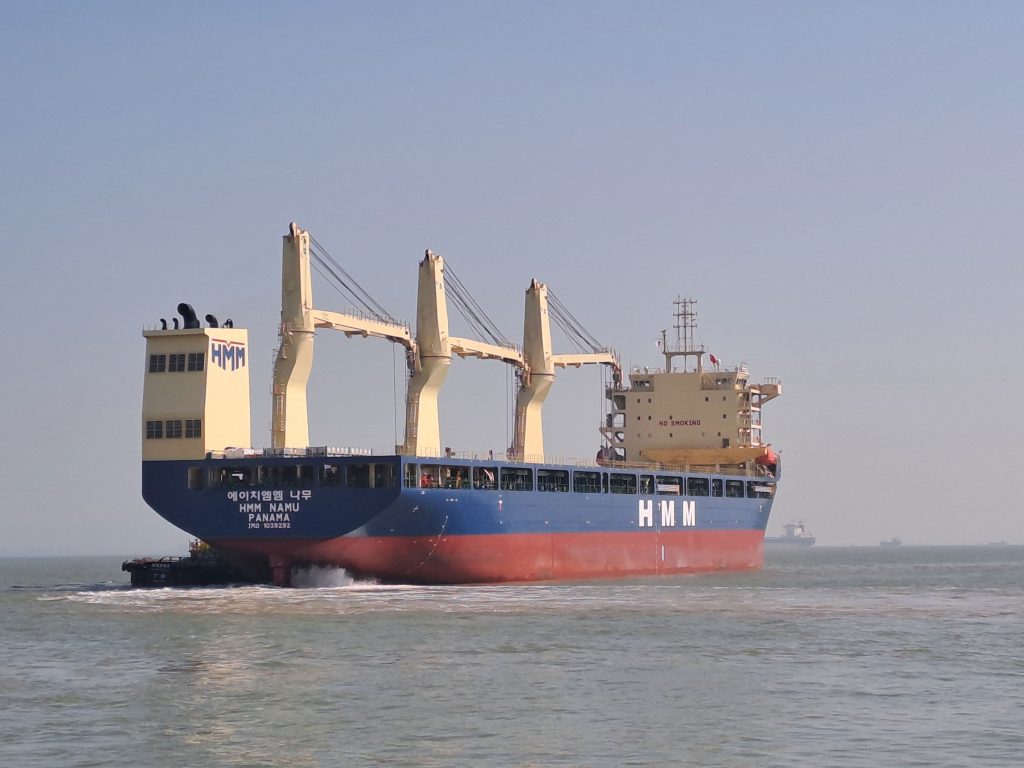
The geopolitical landscape of the Middle East remains as volatile as ever in 2026. A recent, alarming incident involving the HMM-operated cargo vessel Namu has sent shockwaves through the maritime industry and prompted immediate high-level diplomatic responses from Seoul. As the vessel, which suffered a mysterious explosion and fire while anchored in the Strait of Hormuz, is towed to Dubai for a forensic investigation, the South Korean government is recalibrating its stance on international maritime security coalitions.
Cheong Wa Dae (the South Korean Presidential Office) has officially stepped back from reviewing the U.S.-led “Project Freedom,” citing its termination by the Trump administration. However, the focus has now shifted toward the broader “Maritime Freedom Construct,” a multinational coalition aimed at stabilizing one of the world’s most critical shipping chokepoints.
The Namu Incident: A Mystery at Sea
On the 4th of this month, the Namu was anchored in the waters off the United Arab Emirates, awaiting transit clearance, when a loud explosion rocked the ship, followed by a fire. While initial reports from Cheong Wa Dae were cautious, the lack of immediate evidence of an internal mechanical failure has fueled intense speculation regarding external interference.
Analyzing the “Attack Theory”
Despite the official government stance that it is “too early to determine the cause,” military intelligence circles are buzzing with theories. Eyewitnesses on nearby vessels reported hearing a distinct explosion and observing a water column and splash near the Namu’s port side.
Drone Strike Possibility: Several military intelligence firms have suggested that a Shahed-136 drone—a weapon known for its precision and adjustable explosive yield—may have been involved.
Underwater Threats: British maritime security firm Vanguard Tech has pointed toward the possibility of an underwater drone or a floating mine.
The “Low-Intensity” Provocation: Experts suggest that if an attack occurred, it was likely designed as a “low-intensity provocation,” intended to send a signal without triggering a full-scale military conflict.
The Iranian Embassy in South Korea has vehemently denied any involvement, urging all vessels to adhere strictly to Iranian maritime regulations and designated transit routes. Nevertheless, the proximity of the incident to Iranian Revolutionary Guard Corps (IRGC) maneuvers has left many analysts skeptical of Tehran’s denial.
Cheong Wa Dae’s Strategic Pivot
The South Korean government, led by National Security Adviser Wi Sung-lac, is navigating a delicate diplomatic tightrope. The primary objective is to ensure the safety of Korean merchant vessels while maintaining a stable relationship with both the United States and regional powers like Iran.
Why “Project Freedom” Was Abandoned
The U.S.-led “Project Freedom,” which aimed to provide direct escort services to vessels moving through the Strait of Hormuz, has been suspended following recent diplomatic progress between Washington and Tehran. For Seoul, this is a significant relief. Participating in a U.S.-led escort operation would have placed South Korea in a direct confrontational position with Iran, potentially jeopardizing diplomatic ties and energy security.
Evaluating the “Maritime Freedom Construct”
With “Project Freedom” off the table, Seoul is now evaluating its participation in the broader Maritime Freedom Construct. Unlike the more aggressive escort operations of the past, this initiative is described by the U.S. as a “broad approach to stabilize the strait.”
Cheong Wa Dae’s current assessment involves:
- Ensuring Freedom of Navigation: South Korea, as a major global exporter, relies heavily on these sea lanes for energy imports.
- Multilateral Cooperation: Seoul prefers to act within a multinational framework rather than a bilateral one to dilute the appearance of alignment against any single nation.
- Risk Mitigation: The government is carefully weighing the potential for retaliatory measures against Korean assets in the region should they formally join an anti-piracy or security coalition.
The Investigation Moves to Dubai
As the Namu arrives in Dubai, a massive multi-agency effort is underway to uncover the truth. The ship, which suffered critical damage to its engine system, is no longer self-propelled, turning the salvage operation into a logistical challenge.
Who is Investigating?
The investigation is not limited to a single entity. The following teams are set to board the vessel:
HMM Internal Investigation Team: Focused on damage assessment and insurance liabilities.
Central Maritime Safety Tribunal (South Korea): Tasked with determining if safety protocols were violated.
National Fire Agency Forensic Experts: To analyze the origin of the blaze and whether it was caused by an external incendiary device.
Korean Register Personnel: To assess the structural integrity of the hull.
The findings of this investigation will be pivotal. If definitive proof of a drone or mine attack is discovered, it could force South Korea to take a much harder line on regional security, potentially accelerating its integration into the Maritime Freedom Construct.
Geopolitical Implications for 2026
The situation in the Strait of Hormuz remains a barometer for global stability. As the world transitions toward more complex energy security models, the ability of nations like South Korea to protect their merchant fleets is paramount.
The Role of Technology in Maritime Security
The Namu incident highlights the growing threat of asymmetric warfare at sea. The use of drones and underwater autonomous vehicles (UAVs) has shifted the power dynamic, allowing smaller actors to disrupt global trade with minimal risk to themselves. Future maritime security strategies must account for these technologies, moving beyond traditional radar and surface-patrol methods.
Balancing Trade and Defense
South Korea’s cautious approach reflects the reality of a nation that is both a top-tier global economy and a country caught in the crossfire of great-power competition. By prioritizing a “multilateral, broad approach,” Seoul is attempting to secure its economic lifeline without becoming a pawn in the broader U.S.-Iran geopolitical chess game.
Conclusion
The incident involving the Namu* is far from resolved. As the vessel sits in the dry docks of Dubai, the eyes of the international community remain fixed on the results of the forensic investigation. Whether the damage was caused by a mechanical failure or a targeted strike, the message for the shipping industry is clear: the Strait of Hormuz remains one of the most dangerous and unpredictable environments for international commerce.
Cheong Wa Dae’s decision to move away from bilateral escalatory operations in favor of a measured, multinational approach is a pragmatic response to an uncertain era. As 2026 progresses, South Korea’s involvement in the Maritime Freedom Construct will likely serve as a defining moment for its Middle East foreign policy.