The Great Northward Pivot: Why Millions of Americans are Rushing to Claim Canadian Citizenship in 2026

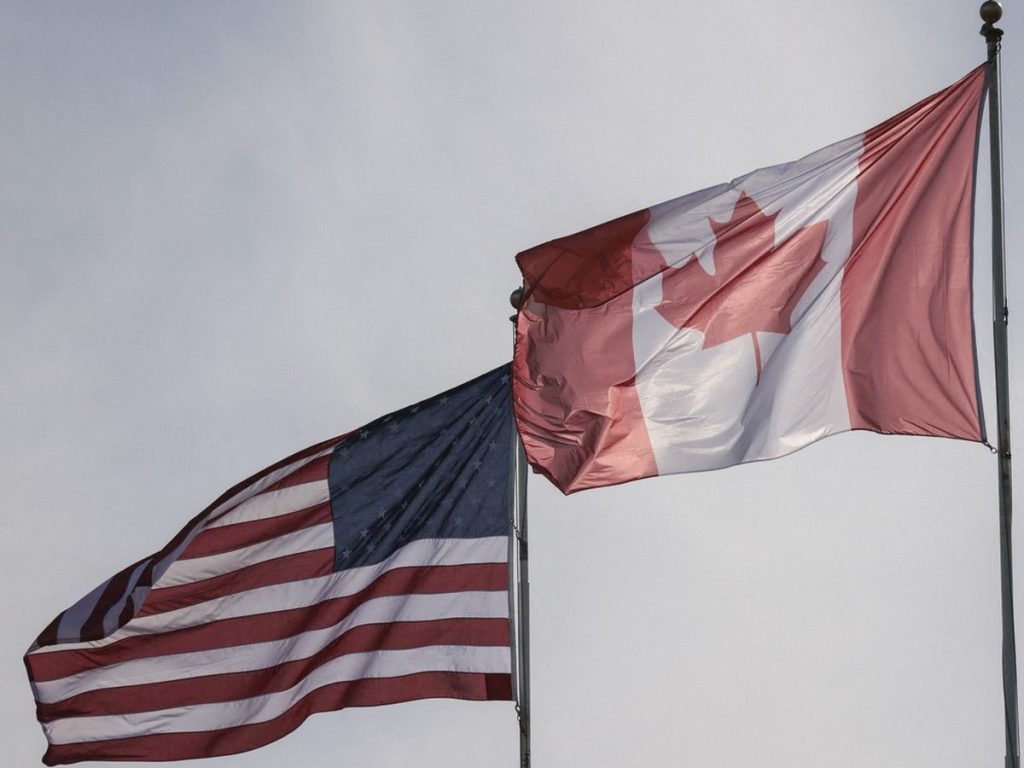
The political and social climate in the United States has undergone a seismic shift, and for millions of Americans, the solution is no longer just about moving states—it’s about moving countries. As of 2026, a quiet but profound legislative change has triggered an unprecedented exodus of interest toward Canada. Following the implementation of Bill C-3, widely referred to as the “Lost Canadians Act,” the northern border is no longer just a boundary; for many, it has become a gateway to a “Plan B.”
Archivists, genealogists, and government officials are currently struggling to keep pace with an “exceptional” volume of requests from U.S. residents. From Maine to California, Americans are scouring attics for birth certificates, hospital records, and marriage licenses, all with one goal: proving their ancestral ties to Canada to secure a second passport.
The Catalyst: Understanding Bill C-3
In December 2025, the Canadian government enacted legislation that fundamentally altered the landscape of citizenship by descent. Previously, obtaining Canadian citizenship through ancestry was a complex, often restrictive process. Bill C-3 changed the game by allowing anyone with a direct ancestor born in Canada—regardless of how many generations back that ancestor lived—to claim citizenship.
Why the Surge is “Exceptional”
The numbers are staggering. In March 2026 alone, the National Library and Archives of Québec (BAnQ) reported receiving approximately 1,500 requests for documentation. To put that into perspective, the same institution received only 43 requests in March 2025. This 3,400% increase is not an outlier; it is a trend reflected across the country.
Nova Scotia Archives: Reporting a backlog, with request volumes ten times higher than the previous year.
New Brunswick: The Provincial Archives are currently processing a massive backlog of over 1,000 records.
Federal Data: Immigration, Refugees and Citizenship Canada (IRCC) recorded 8,900 proof of citizenship applications in January 2026 alone—a 50% increase year-over-year.
More Than Just Genealogy: The “Plan B” Phenomenon
While some applicants are driven by a simple curiosity regarding their family heritage, the vast majority are motivated by the current socio-political environment in the U.S. Experts note that for many Americans, the pursuit of a Canadian passport is a strategic move to hedge against future uncertainty.
The Political Drive
Patrick White, a journalism professor at the Université du Québec à Montréal, notes that the interest is heavily concentrated among descendants of French Canadians who migrated to New England centuries ago. For these individuals, the current U.S. climate has made Canadian citizenship feel like a necessary insurance policy. It is a “Plan B” that offers stability, security, and a sense of belonging to a nation that many perceive as offering a different social contract.
Practical Advantages of the Canadian Passport
Beyond the psychological comfort of having an exit strategy, there are tangible, practical benefits to holding a Canadian passport. As of 2026, the Henley Passport Index continues to rank the Canadian passport highly, often providing greater global mobility than its American counterpart. For frequent travelers and global business professionals, the move is as much about logistics as it is about politics.
The Bottleneck: How Archives are Handling the Demand
The sudden influx of “document hunters” has placed an immense strain on public institutions. Professionals like Patrick Lacroix, director of the Acadian Archives at the University of Maine at Fort Kent, have seen their workloads double in just a few months.
A Shift in Applicant Intent
In previous years, those contacting archives were primarily genealogists or hobbyists interested in family history. Today, the demographic has shifted toward individuals demanding authenticated, government-compliant documents. These are not people looking for a story; they are people looking for a legal pathway.
The sheer scale of these requests has forced archives to implement new protocols. Many institutions now warn of delays of up to 30 business days, a significant departure from the quick turnaround times of the past. The message to applicants is clear: patience is required, as the surge is showing no signs of slowing down.
Who is Eligible? The Reach of the “Lost Canadians Act”
The eligibility criteria under Bill C-3 are remarkably broad. While many Americans have known about their Canadian roots for years, millions more are only just discovering their eligibility.
Ancestral Proof: Any individual who can trace their lineage to a person born on Canadian soil.
The New England Connection: Estimates suggest that up to 3 million Americans in the New England region alone may now be eligible for citizenship.
Generational Depth: Because the law does not set a strict generational limit, families that have been in the U.S. for over a century are finding they have a legitimate claim to Canadian nationality.
The Professional Immigration Perspective
It isn’t just archives feeling the pressure; immigration lawyers are also reporting a “noticeable increase” in consultations. Vancouver-based immigration lawyer Amandeep Hayer has noted that while inquiries come from the UK, Japan, Australia, and New Zealand, roughly 95% of the interest is coming from the United States.
The process of applying for citizenship by descent is rigorous. It requires more than just a family tree; it requires verified, primary-source documentation. This has created a secondary industry of “citizenship consultants” who assist applicants in navigating the bureaucracy of both U.S. and Canadian record-keeping systems.
Is This a Permanent Trend?
As we move further into 2026, the question remains whether this interest will plateau or continue to climb. The data suggests that as long as the political discourse in the United States remains polarized, the allure of Canada as a stable, nearby, and accessible neighbor will likely remain high.
For the Canadian government, this influx represents both a logistical challenge and a potential demographic boost. However, the immediate impact is a testament to the power of the “Lost Canadians Act” to reconnect the diaspora with their ancestral home.
Key Takeaways for Potential Applicants:
- Start Early: With backlogs at archives, the process of gathering documents can take months.
- Verify Everything: Ensure that your documents meet IRCC’s specific requirements for authentication.
- Consult a Professional: Given the 95% surge in American applications, specific nuances in the law are being tested daily.
- Be Patient: Archives are doing their best, but they are currently overwhelmed by the sheer volume of “exceptional” requests.
Conclusion: A New Era of North American Mobility
The “exceptional” surge of Americans seeking Canadian citizenship is a defining story of 2026. It highlights a unique moment where legislative change, ancestral curiosity, and political anxiety collide. Whether viewed as a desperate “Plan B” or a long-awaited homecoming, the trend is reshaping the relationship between the two nations. As millions of Americans look north, they aren’t just looking for a piece of paper—they are looking for a future that feels more secure in an increasingly unpredictable world.