Escalation Amidst Truce Talks: Russia Accused of Violating Ukraine’s Unilateral Ceasefire

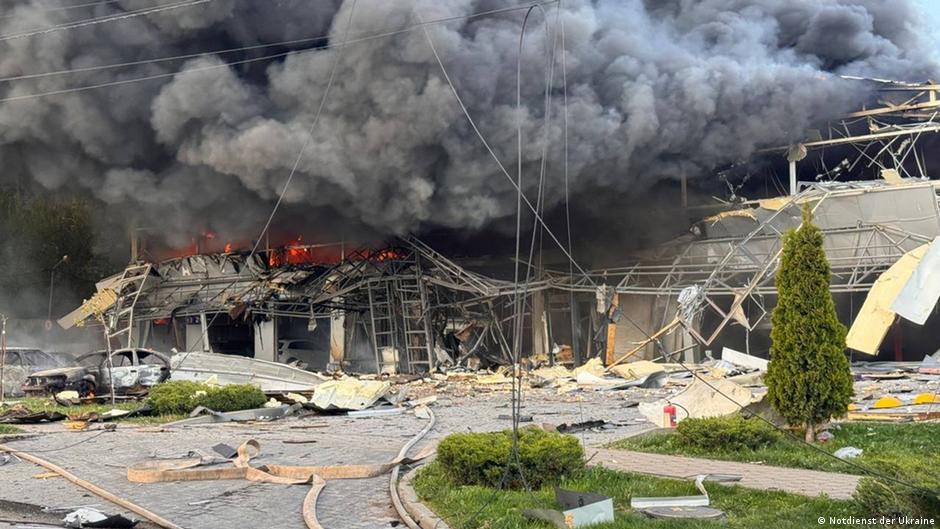
As of May 2026, the ongoing conflict between Ukraine and Russia has reached a harrowing new level of volatility, exacerbating global geopolitical instability. In a move that has drawn international condemnation and further strained diplomatic possibilities, Ukraine accused Russia of launching a massive, multi-pronged aerial assault on Ukrainian cities, a clear sign of the Kremlin’s aggression, just hours before a unilateral ceasefire proposed by Kyiv was set to take effect.
The incident, which occurred on the night of May 5th into May 6th, 2026, resulted in the loss of at least 27 lives and left dozens more injured, highlighting the severe humanitarian impact of the ongoing hostilities. This escalation, occurring mere days before Russia’s own planned Victory Day observances, underscores the profound disconnect between humanitarian gestures and the grim reality on the front lines.
The Timeline of the Violation
The ceasefire proposed by Kyiv was intended to be an open-ended suspension of hostilities, a strategic attempt by President Volodymyr Zelenskyy to signal a willingness to de-escalate through diplomatic efforts. However, the proposal was met with what Ukrainian officials described as “utter cynicism.”
According to official reports from the Ukrainian government, Moscow launched a staggering 108 combat drones and three ballistic missiles targeting civilian infrastructure across eastern and southern Ukraine, challenging the nation’s air defense systems. The strikes began late Tuesday night, ignoring the midnight deadline set for the cessation of fire.
Key Casualty Reports
The human cost of these strikes has been devastating. The regions of Zaporizhzhia, Kramatorsk, Dnipro, and Poltava bore the brunt of the assault.
Zaporizhzhia: At least 12 people were killed and 20 wounded after a double-tap strike, where guided aerial bombs hit a target, followed immediately by a swarm of Iranian-designed Shahed drones to strike first responders.
Kramatorsk: Powerful glide bombs decimated civilian areas, resulting in six deaths and 12 injuries.
Dnipro: Four individuals were confirmed dead following precision missile strikes.
Poltava: A strike on critical gas production facilities resulted in five fatalities.
Zelenskyy’s Condemnation and the “Double-Tap” Tactic
President Zelenskyy did not mince words in his address following the tragedy. He branded the attacks as “cynical, vile,” and “senseless,” emphasizing that the strikes were devoid of any legitimate military purpose.
The “double-tap” strategy utilized in Zaporizhzhia and Poltava—where a second projectile is launched specifically to target emergency personnel—has been condemned by the international community as clear violations of international humanitarian law. By intentionally targeting those attempting to rescue survivors, Russia’s military has signaled a complete disregard for the basic tenets of wartime conduct and principles enshrined in the UN Charter.
The Diplomatic Impasse: Victory Day and Broken Promises
The timing of these attacks is particularly symbolic. While Moscow has declared its own unilateral ceasefire for May 9th to commemorate the allied victory over Nazi Germany, the continued bombardment of Ukrainian cities has rendered these peace overtures, in the eyes of Kyiv, as nothing more than “fake calls for a ceasefire.”
Foreign Minister Andrii Sybiha noted that Putin’s focus remains squarely on military parades rather than the preservation of human life. The disconnect is stark: while Russia prepares for nationalistic pageantry, its military machine continues to grind through the infrastructure and population of its neighbor.
The Strategic Response: Ukraine’s Counter-Strikes
Despite the humanitarian crisis, Ukraine has not remained passive. Recognizing that the ceasefire proposal was likely to be ignored, Ukrainian forces, with continued support from Western allies, continued their strategic campaign to disrupt the Russian war economy.
Targeting the War Machine
In a significant display of long-range capability, Ukraine launched F-5 Flamingo cruise missiles at military-industrial facilities deep within Russian territory, including targets in Cheboksary, over 1,500 kilometers from the border. Additionally, Ukrainian drones targeted the Kirishi oil refinery near St. Petersburg, causing significant industrial fires.
The Russian Defense Ministry claimed to have intercepted 289 Ukrainian drones across 18 regions, highlighting the sheer scale of the ongoing aerial war. Even after the midnight deadline passed, the cycle of violence continued, with authorities in Russian-occupied Crimea reporting five civilian deaths in Dzhankoi following a Ukrainian drone strike.
Analyzing the 2026 Conflict Trajectory
As we move further into 2026, the nature of the conflict has evolved into a war of attrition characterized by high-tech aerial warfare and persistent psychological pressure. The failure of the unilateral ceasefire indicates that neither side is currently in a position to negotiate from a place of perceived weakness.
The Role of Technology
The widespread use of Shahed drones and glide bombs suggests that Russia is leaning into low-cost, high-impact weapon systems to exhaust Ukraine’s already strained air defense systems. Conversely, Ukraine’s increasing use of long-range cruise missiles to hit Russian oil refineries and military production hubs demonstrates a shift toward asymmetric warfare, aiming to hit the Kremlin where it is most vulnerable: its revenue stream and industrial capacity.
Why Ceasefires Fail in Modern Warfare
The recent events highlight a recurring issue in the Russia-Ukraine conflict: the lack of a third-party monitor or a solidified, bilateral framework for truce. Without a mutually agreed-upon verification process, unilateral declarations of peace and broader peace negotiations are often viewed by the opposing side as tactical maneuvers designed to reset defenses or regroup forces.
For a ceasefire to hold, both parties must believe that stopping the fighting is more beneficial than continuing it. As of early May 2026, the strategic objectives of both Moscow and Kyiv remain diametrically opposed, making any form of enduring peace an elusive goal.
Conclusion: The Path Ahead
The tragedy of the past 48 hours is a sobering reminder that the war in Ukraine is far from over. As the world watches, the human cost continues to mount, exacerbating the displacement crisis, with cities turned into battlegrounds and civilians caught in the crossfire of a conflict that shows no signs of waning.
The failure of the May ceasefire serves as a grim marker in the 2026 calendar. Until there is a fundamental shift in the geopolitical landscape or a breakthrough in high-level diplomatic efforts, the cycle of “cynical” attacks and retaliatory strikes is likely to persist. The international community remains on high alert, waiting to see if any real steps toward de-escalation can be salvaged from the wreckage of this latest failed truce.