The Eleventh Hour: Why the NI Place-Name Project Faced a Funding Cliff-Edge in 2026

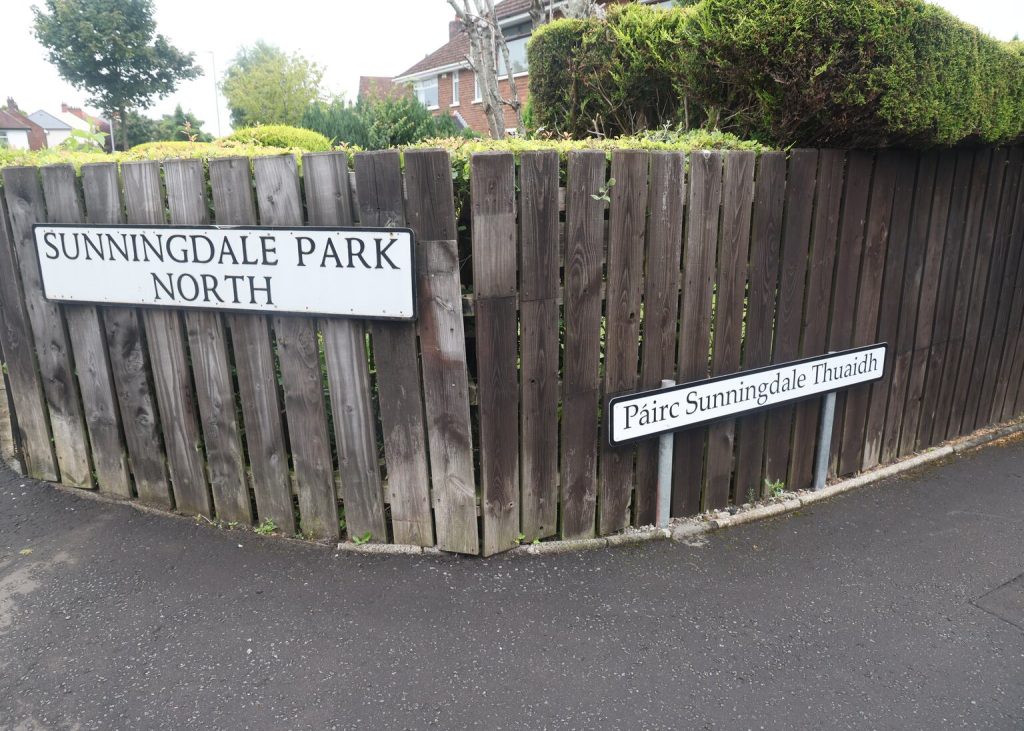
The survival of Northern Ireland’s cultural and linguistic heritage often hangs by a thread, but rarely has the tension been as palpable as it was in the spring of 2026. Recent revelations have sparked a firestorm of criticism regarding the Northern Ireland Place-Name Project (NIPNP), a cornerstone of Irish linguistic research. Despite explicit warnings as early as November 2025 that funds were set to expire, critical discussions to save the project only commenced a few weeks before the final deadline in March 2026.
This delay has highlighted significant fractures within the Northern Ireland Executive, pitting government departments against one another while a decades-old academic treasure faced a “winding down” of services. In this comprehensive analysis, we explore the timeline of the crisis, the political blame game, and why the loss of this project would have meant wasting millions in public investment.
The Warning Ignored: A Timeline of the Funding Crisis
The NIPNP, based at Queen’s University Belfast, is not merely an academic exercise; it is a vital public service. However, documents released by the Department for Communities (DfC) reveal a startling lack of urgency in addressing its financial stability.
In November 2025, the project submitted a quarterly report to the DfC. In this document, the NIPNP clearly flagged a “funding cliff-edge” scheduled for the end of March 2026. Despite this early warning, the machinery of government remained largely silent for months. It wasn’t until mid-February 2026—barely six weeks before the project was due to collapse—that the DfC, led by Minister Gordon Lyons, first reached out to the Department for Finance (DoF) to request a one-year extension of £90,000.
Adding to the controversy, internal emails suggest a lack of administrative clarity. The initial request from the DfC reportedly showed that the sender was unsure of the correct point of contact within the Finance Department. This administrative stumbling block occurred while the project was already preparing for a “winding down” phase, a move that would have seen the loss of expert staff and specialized data.
What is the NI Place-Name Project?
To understand why this funding gap caused such an uproar, one must look at the scope of the NIPNP’s work. Established in 1987, the project’s mission is to research the origins, meanings, and historical development of local place-names across the region.
A Database of 30,000 Names
The project maintains a database of over 30,000 names, covering settlements, townlands, and physical features. This is the sole authoritative source for Irish versions of street names in Northern Ireland.
Practical Applications in Modern NI
Beyond historical research, the NIPNP performs essential functions for modern governance:
Dual-Language Signage: It provides the verified Irish translations for the dual-language street signs being rolled out by local councils.
Rates and Billing: It ensures that Land and Property Services (LPS) have accurate Irish language addresses for rates bills.
Linguistic Topography: It serves as a bridge between the region’s Gaelic past and its bilingual future.
The Political Blame Game: Lyons vs. O’Dowd
As the March 31st deadline approached without a resolution, a public dispute erupted between the DfC and the Department for Finance.
Gordon Lyons (DUP), the Communities Minister, maintained that the decision to cease funding rested with the Finance Department, then led by Sinn Féin’s John O’Dowd. Lyons claimed that the issue of continued funding “never reached his desk” and pointed to emails where Finance officials stated they were “not prepared to fund it anymore.”
Conversely, the Department for Finance argued that they had fulfilled their obligation by providing £270,000 in transition funding over a three-year period starting in 2023. Their stance was that the responsibility for long-term sustainability had been transferred to the DfC. Finance officials claimed there was an “understanding” that the DfC would manage the project’s future, whereas DfC officials argued that the support was never intended to be strictly limited to three years.
By late March, the DfC had scaled back its request from £90,000 for a full year to approximately £70,000, which would have allowed for a “full review” by September 2026 to establish a permanent funding model. Even this compromise failed to reach an agreement before the clock ran out.
The Intervention: Caoimhe Archibald Steps In
With the project on the brink of closure, Economy Minister Caoimhe Archibald made a high-profile announcement on social media. She stated she was “stepping in” to ensure the project’s survival, citing her department’s responsibility for Higher Education.
While the move was welcomed by language activists, the details remained sparse in the immediate aftermath. A spokesperson for the Department for the Economy (DfE) confirmed that Minister Archibald had instructed officials to engage with Queen’s University Belfast to find a path forward.
This intervention was seen by many as a necessary “rescue mission” to prevent a catastrophic loss of data, though it raised questions about why a multi-departmental agreement couldn’t have been reached months earlier.
The High Cost of Failure: A £6 Million Risk
One of the most damning aspects of the funding crisis was the potential waste of public money. Since its inception, approximately £6 million in public funding has been invested in the NIPNP.
The DfC itself admitted in internal correspondence that if the database could not be maintained, the information would be lost, effectively rendering the previous £6 million investment a total waste. Furthermore, the timing of the crisis was particularly poor, coinciding with:
- The appointment of the Irish Language Commissioner.
- The upcoming publication of the Irish Language (IL) Strategy.
- New statutory obligations regarding bilingual signage.
The NIPNP is central to the success of the Irish Language Strategy. Without an authoritative body to verify place-names, the roll-out of dual-language signs could be stalled by legal challenges or inaccuracies, leading to even higher costs for local councils.
Broader Context: The 2026 Irish Language Funding Crisis
The NIPNP saga is not an isolated incident. In early 2026, the broader Irish language sector in Northern Ireland faced what many described as a “funding emergency.”
Over 50 Irish language and Gaeltacht organizations met in Belfast to discuss the RAIC campaign (Réiteach Anois, Infheistíocht Chothrom – Solution Now, Fair Investment). These groups argued that both the UK and Irish governments have failed to provide the “fair investment” required to sustain language growth.
Key Struggles in the Sector:
Foras na Gaeilge Cuts: The all-Ireland agency has faced criticism for funding levels that haven’t kept pace with inflation or the growing demand for Irish-medium education.
Primary School Schemes: Education Minister Paul Givan recently had to “look again” at funding for an Irish language scheme involving 80 primary schools that was also facing the axe.
Linguistic Parity: Activists argue that while the Irish Government has boosted funding for the language revival (including a €23m increase in a recent budget), the Northern Ireland Executive remains inconsistent in its support.
Analysis: Why “Last-Minute” Governance is Failing
The NIPNP crisis serves as a case study in the dangers of short-termism in cultural funding. When projects are funded in three-year cycles without a clear transition plan, they become vulnerable to political shifts and budgetary pressures.
The fact that the DfC was unaware of who to contact in Finance regarding a £90,000 request—a relatively small sum in the context of a multi-billion pound budget—suggests a breakdown in inter-departmental communication. For a project that manages the very names of the streets we walk on, such administrative hurdles are more than just “red tape”; they represent a threat to identity and heritage.
The Role of Queen’s University
As the host of the project, Queen’s University Belfast provides the academic rigor necessary for NIPNP. However, universities cannot be expected to bankroll public services indefinitely. The intervention by the Department for the Economy suggests that the NIPNP may eventually find a more stable home under the umbrella of Higher Education funding, rather than being treated as a discretionary “community” grant.
Conclusion: A Lesson Learned?
As we move further into 2026, the “saving” of the NI Place-Name Project by Minister Archibald provides a temporary sigh of relief. However, the underlying issues remain. The “funding cliff-edge” of March 2026 was entirely predictable, yet it took a public outcry and an eleventh-hour intervention to prevent the loss of 40 years of research.
For the Irish language to thrive in Northern Ireland, it requires more than just emergency rescues; it requires sustainable, long-term financial commitments that transcend departmental bickering. The NIPNP is a vital asset, not just for the Irish-speaking community, but for anyone interested in the rich, complex history of the land itself.
The coming months will reveal whether the “full review” promised by the DfC will actually lead to a sustainable future, or if the project will find itself back on the brink in another few years. For now, the database is safe, the researchers are at their desks, and the names of our towns and villages remain preserved for the next generation.
This article was written with the most up-to-date context for the year 2026, reflecting the ongoing developments in the Northern Ireland Irish Language Strategy and departmental funding disputes.