Ted Turner, the Maverick Media Mogul and CNN Founder, Dies at 87: A Legacy of Innovation

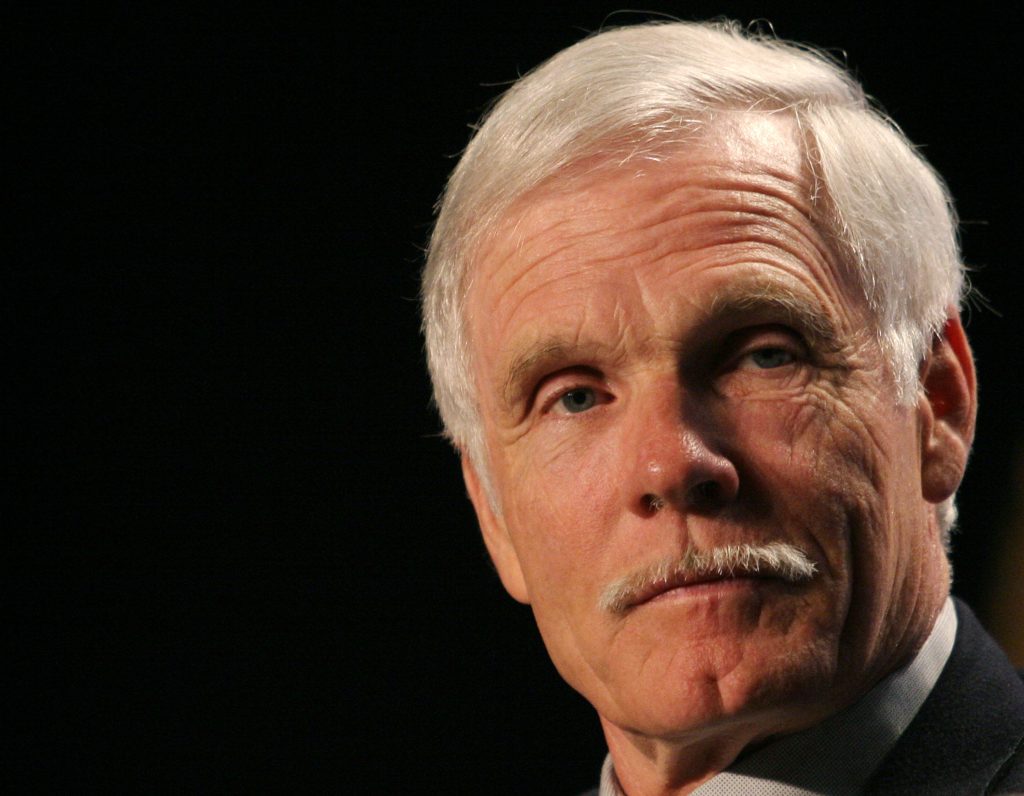
The world of media and broadcasting has lost one of its most transformative figures. Ted Turner, the visionary entrepreneur who fundamentally reshaped how the world consumes information, passed away in May 2026 at the age of 87. Known for his boisterous personality, competitive spirit, and unparalleled business instincts, Turner’s death marks the end of an era for the industry he helped define.
From his early days as a billboard salesman to his status as a global media titan, Turner’s life was defined by the mantra his father instilled in him: set goals so high you could never achieve them in a single lifetime. As we reflect on his monumental career, we look back at the man who gave us the first 24-hour news cycle and changed the face of cable television forever.
The Rise of a Media Empire: From Billboards to Broadcasting
Robert Edward Turner III was born on November 19, 1938, in Cincinnati, Ohio. While his early life was marred by family tragedies—most notably the loss of his sister and the eventual suicide of his father in 1963—Turner channeled his grief into an unrelenting work ethic. At just 24 years old, he took the reins of the family’s struggling billboard business and began his ascent.
The Birth of the Superstation
In 1970, Turner purchased an independent Atlanta station, WJRJ (Channel 17), which would eventually become the foundation for his entire empire. By utilizing satellite technology to beam his programming across the country, he created the concept of the “Superstation.” This move allowed his station to reach millions of viewers, effectively turning a local operation into a national powerhouse known as TBS.
CNN: Revolutionizing the News
Perhaps his most enduring legacy is the launch of the Cable News Network (CNN) in 1980. At the time, the idea of 24-hour news was met with skepticism; critics famously dubbed it the “Chicken Noodle Network.” However, Turner’s intuition proved correct. CNN became the world’s primary source for real-time reporting, reaching global ubiquity during the 1991 Gulf War. It wasn’t just a network; it was the birth of the modern, hyper-connected digital age.
Captain Outrageous: The Man Behind the Headlines
Ted Turner was never content with just being a businessman. He was a sportsman, an environmentalist, and, by his own admission, a character. His nickname, “The Mouth of the South,” was a testament to his unfiltered nature and his willingness to challenge the status quo, whether in the boardroom, on the high seas, or in political discourse.
A Life of Sports and Adventure
Turner’s influence extended deep into professional sports. He purchased the Atlanta Braves and the Atlanta Hawks, providing his television networks with consistent, high-value content. Under his ownership, the Braves transformed from a “cellar-dweller” franchise into a national phenomenon, culminating in their 1995 World Series victory.
Beyond the diamond and the court, Turner was a master of the ocean. His passion for yachting led him to win the 1977 America’s Cup, earning him the title “Captain Outrageous.” His competitive drive was matched only by his eccentricities, which included deep-sea adventures and spirited debates with global leaders like Fidel Castro.
The Unlikely Romance: Turner and Fonda
One of the most publicized chapters of Turner’s life was his high-profile marriage to actress and activist Jane Fonda. The couple wed in 1991, forming one of the most intriguing power couples of the decade. Their union was a collision of worlds—the media mogul and the Hollywood starlet.
Though the marriage ended in divorce in 2001 after ten years, the mutual respect between the two never faded. Fonda famously noted years later that she would never love anyone quite like she loved Ted. Their relationship was a testament to the intensity with which Turner lived his life—always center stage, always in the spotlight, and always deeply connected to the figures who defined his era.
Philanthropy and Stewardship: A Lasting Impact
As Turner aged, his focus shifted from building empires to preserving the planet. He became one of the most prominent environmentalists in the United States, utilizing his immense wealth to fund conservation efforts through the Turner Foundation.
The Land Baron
Turner was, at one point, the second-largest individual landowner in North America. Owning roughly 2 million acres across eight states and Argentina, he managed his ranches with a focus on ecological sustainability. His commitment to protecting native species, particularly the American bison, remains a cornerstone of his philanthropic legacy. His $1 billion donation to the United Nations in 1997 remains one of the largest private charitable gifts in history, highlighting his desire to impact global policy as much as he impacted global media.
The Later Years and His Final Battle
In 2018, Turner went public with a personal struggle that would define his final years: a diagnosis of Lewy body dementia. The news shocked the public, who had long viewed him as an invincible, tireless force of nature. In interviews, Turner spoke candidly about the exhaustion and memory loss associated with the condition.
Despite the decline in his health, he remained a man of reflection. In his 2008 memoir, Call Me Ted, he mused on what his final words might be. Whether he chose to say “You Can’t Interview Me Here” or “I Have Nothing Left to Say,” the truth remains that Ted Turner said more than enough to change the world.
The Legacy of a Media Titan
Ted Turner’s life was not without its failures. He lost billions of dollars during the disastrous AOL-Time Warner merger, a moment he described as one of the most difficult of his career. Yet, even in his losses, he maintained a perspective that few billionaires could muster—he accepted his role as a risk-taker who lived life on his own terms.
He leaves behind a family of five children, fourteen grandchildren, and two great-grandchildren. While his family plans a private service, the world mourns a man who was, in every sense of the word, a giant.
Why Turner Matters
The media landscape of 2026 is built on the infrastructure that Ted Turner pioneered. Every 24-hour news stream, every niche cable channel, and every attempt to bridge global tensions through media can be traced back to his “hunch” in 1980. He taught the world that news could be constant, that entertainment could be global, and that a single person with a bold idea could rewrite the rules of an entire industry.
As we look back at the life of this maverick mogul, we aren’t just remembering a businessman. We are remembering an innovator who dared to look at a stagnant industry and demand something more. Ted Turner didn’t just report the news; he made it. And in doing so, he left a mark on history that will not soon be erased.