Cultural Crossroads: The Funding Crisis Threatening Irish-English Street Signage in Northern Ireland

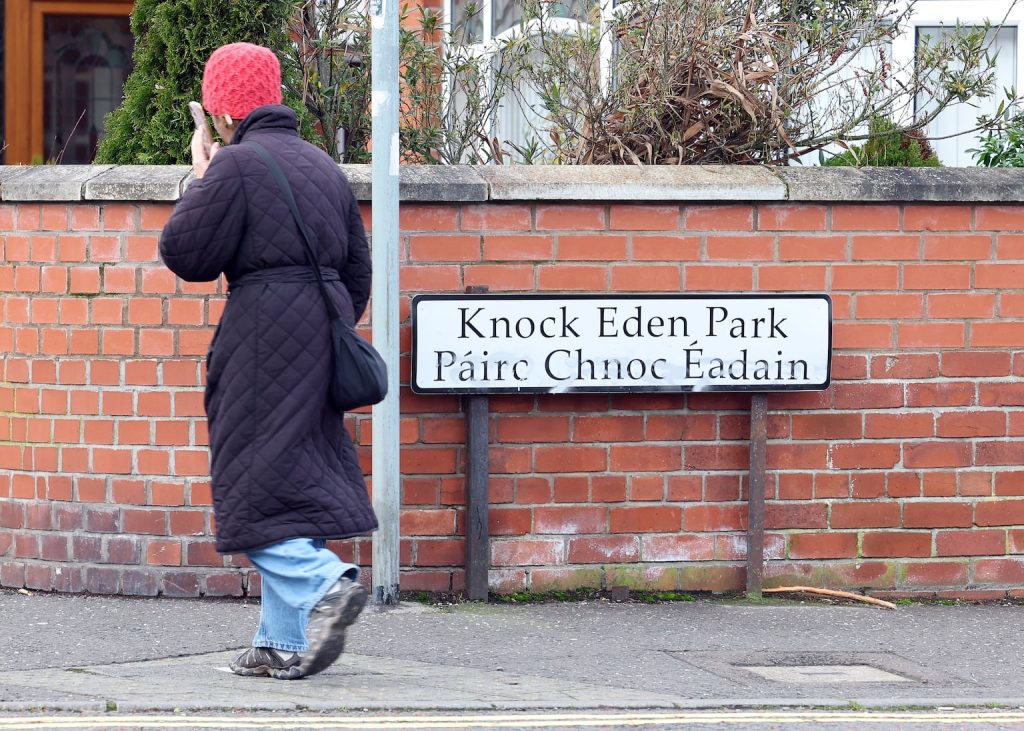
The landscape of Northern Ireland’s street signage is facing an unprecedented administrative hurdle. In a move that has sparked intense debate across the political divide, Communities Minister Gordon Lyons has presided over the cessation of funding for the Northern Ireland Place-Name Project (NIPNP). This 38-year-old institution has long served as the academic backbone for local councils attempting to navigate the complexities of bilingual signage.
As of 2026, the withdrawal of this financial lifeline has left local authorities in a precarious position. With the project now winding down, the expertise required to ensure accurate, historically grounded, and linguistically correct translations for new street signs has effectively been pulled from the table.
The Role of the Place-Name Project: More Than Just Translation
For nearly four decades, the NIPNP has been the gold standard for toponymic research in Northern Ireland. Founded in 1987, the project meticulously cataloged over 30,000 place names, drawing from a vast archive of historical records. From Ptolemy’s ancient geography to the foundational Ordnance Survey maps of the 19th century, the project acted as a guardian of regional heritage.
Why This Matters for Local Councils
Local councils are increasingly tasked with implementing dual-language signage policies. However, these policies are not merely about aesthetics; they require rigorous academic verification.
Historical Accuracy: The project ensures names reflect the original Irish roots rather than phonetically guessed translations.
Community Cohesion: Proper signage is viewed by many as a vital component of cultural recognition and equality.
Administrative Efficiency: Councils relied on the NIPNP to provide the final “stamp of approval” on translations, streamlining the installation process.
The Controversy: Political Motivation or Budgetary Reality?
Minister Gordon Lyons, a senior figure within the DUP, has faced a barrage of criticism regarding the timing and nature of this funding cut. Critics, including members of Sinn Féin and the SDLP, have questioned whether the decision is a veiled attempt to stall the expansion of Irish-language visibility throughout Northern Ireland.
The Department for Communities’ Stance
A spokesperson for the Department for Communities (DfC) framed the move as a standard conclusion of a funding cycle, compounded by “ongoing staffing challenges.” They noted that the latest agreement ended in April and emphasized that arrangements are being made to keep the existing database accessible to researchers. However, for those on the ground, the loss of the service—the human expertise—is far more damaging than the loss of the archive*.
Voices of Dissent: Advocacy and Political Backlash
The decision has sent shockwaves through language advocacy groups. Conchúr Ó Muadaigh of Conradh na Gaeilge has been particularly vocal, describing the project as the “engine room” of bilingual signage. He argues that by cutting funding, the DfC is effectively sabotaging the ability of councils to fulfill their statutory duties regarding language policy.
SDLP and Sinn Féin Responses
The political opposition has been swift to act. SDLP MLA Mark H. Durkan has highlighted the “serious consequences” for local councils, noting that the project’s closure will inevitably lead to delays in sign installation. Similarly, Sinn Féin MLA Colm Gildernew has engaged the Minister directly, viewing the move as part of a wider pattern of “thwarting” the development of an effective Irish Language Strategy.
The Future of Bilingual Signage in 2026
As the NIPNP winds down its operations, the path forward for bilingual signage remains murky. Many councils are now left to decide whether to seek expensive private alternatives, risk errors by relying on non-specialist translations, or pause their signage programs indefinitely.
Is There a Path to Restoration?
While Minister Lyons has faced pressure to reverse the decision, there has been no indication of a U-turn. Instead, the focus has shifted to whether other departments or cross-border bodies might step in to fill the void. However, the loss of a dedicated, centralized team that has spent decades building institutional knowledge is a blow that cannot be easily mitigated by “one-off” funding adjustments.
Conclusion: A Delicate Balance of Heritage and Policy
The closure of the Northern Ireland Place-Name Project represents a significant shift in how the region manages its cultural and linguistic heritage. Whether viewed as an administrative necessity or a politically motivated setback, the impact on local governance and the Irish language community is undeniable.
As we move through 2026, the debate over who controls the narrative of our street names—and how they are translated—will likely intensify. For now, the “engine room” of this essential cultural service has gone dark, leaving a silence where there was once academic rigor.