Canada’s $5 Billion Sky-Watch: The High-Stakes Race for Next-Gen Radar Aircraft

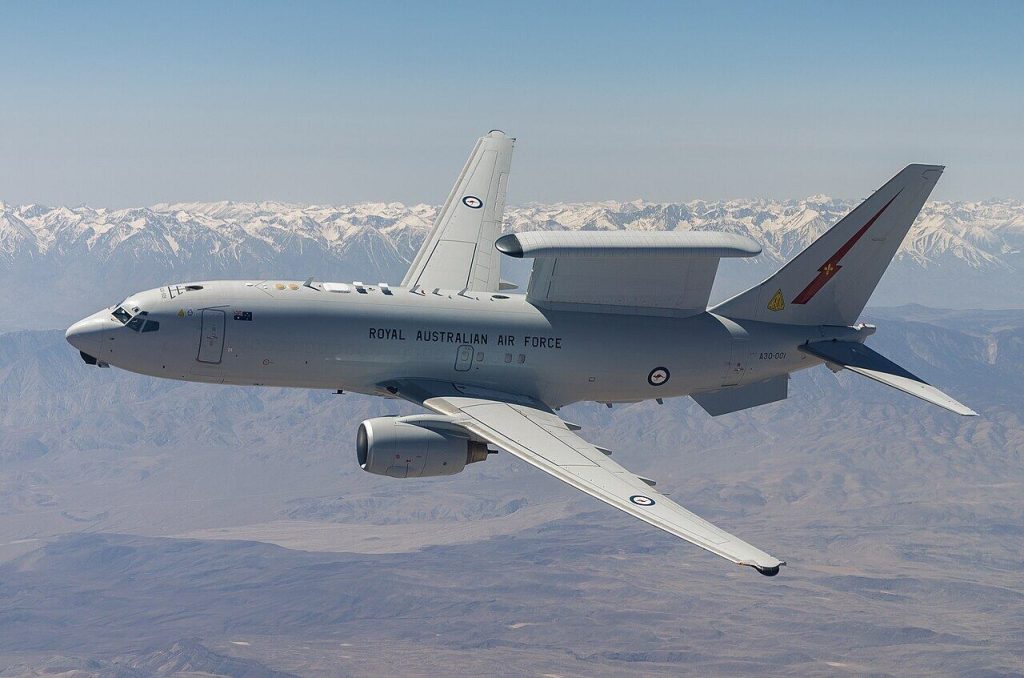
As the geopolitical landscape shifts in 2026, Canada is facing a pivotal moment in its national defense strategy. To counter the growing sophistication of hypersonic missiles, cruise missiles, and drone swarms originating from the Arctic and beyond, the Canadian government is moving rapidly to acquire a fleet of six Airborne Early Warning and Control (AEW&C) aircraft.
This multi-billion dollar program is not just about purchasing hardware; it is a strategic decision that will define Canada’s military interoperability and industrial sovereignty for decades. With a budget exceeding $5 billion, the competition has narrowed down to three primary contenders: the Swedish GlobalEye and the American-led Aeris X and E-7 Wedgetail.
The Strategic Necessity of “Flying Radars”
The modern battlefield is no longer confined to land or sea; it extends deep into the atmosphere and space. The Canadian Armed Forces have identified a critical gap in their ability to detect threats arriving from the north. AEW&C aircraft—often described as “flying radars”—act as the eyes and ears of the air force, flying at altitudes above 10 kilometers to provide a 360-degree view of the battlespace.
Once these platforms identify a target, they relay real-time data to F-35 fighter jets, ground-based air defense systems, and international allies within NORAD. In an era where reaction times are measured in seconds, the ability to maintain superior situational awareness is the difference between a successful interception and a catastrophic security failure.
The Contenders: A Clash of Technology and Policy
The procurement process has sparked an intense debate regarding Canada’s geopolitical orientation. Should the nation double down on its deep integration with American systems, or should it diversify its defense portfolio by embracing European technology?
1. Saab’s GlobalEye: The Swedish Contender
The Saab GlobalEye has emerged as a formidable challenger. By utilizing the Bombardier Global 6500 jet as its platform, Saab is leaning heavily into Canadian industrial benefits. The company has pledged to transfer intellectual property and knowledge to Canada, enabling domestic assembly, maintenance, and future upgrades. With existing contracts in Sweden, France, and the UAE, the GlobalEye is a proven system that offers high-tech surveillance capabilities.
2. L3Harris’ Aeris X: The Canadian-Integrated Alternative
The Aeris X also utilizes the Bombardier Global 6500 platform, positioning itself as a “made-in-Canada” solution. L3Harris has promised to handle system integration at its facility in Mirabel, Quebec. While the aircraft is highly capable, its reliance on radar systems from Israel’s Elta Systems has raised questions, particularly given Canada’s 2024 suspension of military export permits to Israel.
3. Boeing’s E-7 Wedgetail: The Gold Standard
The E-7 Wedgetail is the incumbent favorite for many Western allies, including the United States and NATO. Based on the Boeing 737 airframe, it is the most battle-tested of the three. However, the program has faced production delays in the U.S., leading some Canadian officials to wonder if a more agile, bespoke approach—like that offered by Saab—might better serve Canada’s specific Arctic requirements.
The Industrial and Political Balancing Act
The Carney government is under immense pressure to deliver on promises of increased domestic military production. The choice of aircraft will have significant ripple effects on the Canadian economy.
Saab’s aggressive pitch—which includes a potential package involving 72 Gripen fighter jets alongside the six GlobalEye aircraft—claims it could support over 12,000 manufacturing jobs in Canada. This creates a “Gripen dilemma” for Ottawa: does the government stick to its primary F-35 procurement, or does it pivot to a hybrid fleet to secure greater industrial independence?
Integration and Interoperability: The NORAD Challenge
The primary mission of these aircraft is to function within the NORAD framework. Critics of the Swedish option argue that integrating non-American systems into a network dominated by U.S. data links could prove cumbersome. However, Saab maintains that the GlobalEye is fully compatible with NATO and NORAD standards, having been designed from the ground up for seamless data sharing.
Conversely, the American E-7 and Aeris X offer “plug-and-play” compatibility with existing U.S. Air Force assets, which simplifies training and logistics. For Canadian military planners, the decision boils down to a trade-off between total system synergy and sovereign industrial capability.
The Road Ahead in 2026
As the Defence Investment Agency continues its market analysis, the pressure to finalize a contract is mounting. Canada cannot afford to leave its northern skies vulnerable for long. While the government remains tight-lipped on the final decision, the coming months will likely see a showdown between the traditional, U.S.-led procurement model and a bold new vision for a more diversified, Canadian-centric defense industry.
Whether Canada opts for the battle-hardened Boeing E-7, the high-tech Swedish GlobalEye, or the Canadian-integrated Aeris X, the result will be a transformative step for the Royal Canadian Air Force. The “flying radars” are coming; the only question left is which flag they will fly under.