Is Honda’s $15B Canadian EV Vision Fading? Minister Joly Stays in “Regular Contact” Amidst Global Uncertainty

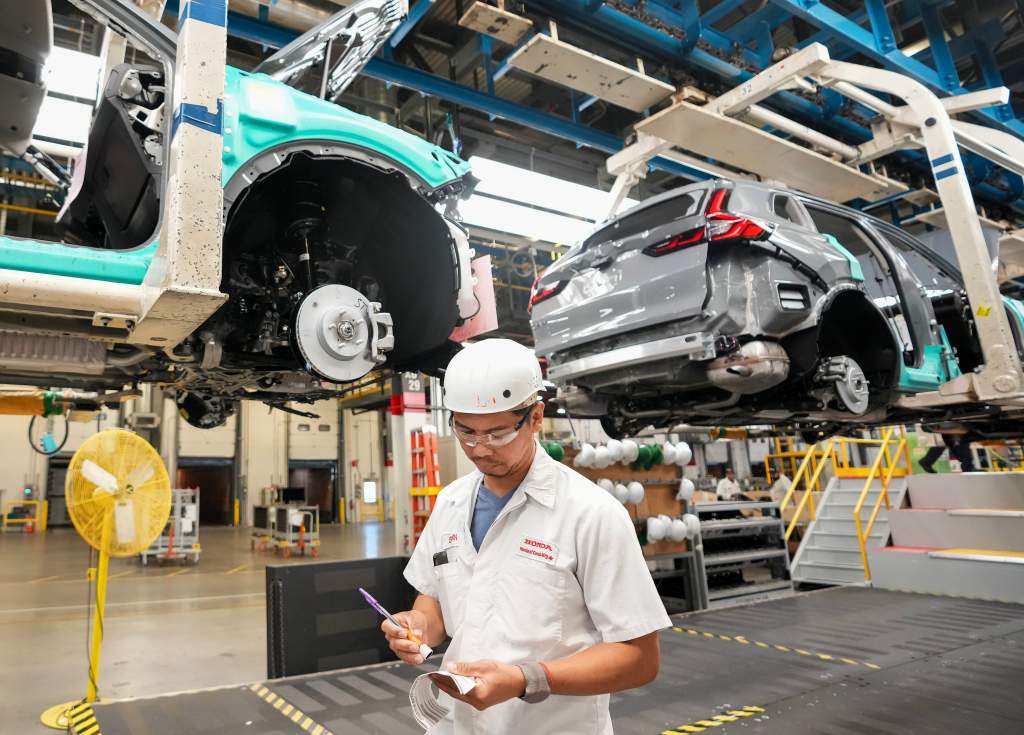
The automotive landscape in North America is currently navigating a period of unprecedented volatility. As of 2026, the ambitious $15-billion electric vehicle (EV) manufacturing facility in Alliston, Ontario—a project once hailed as the cornerstone of Canada’s green industrial strategy—finds itself under a cloud of speculation. With reports surfacing that the Japanese automotive giant may be halting its plans, Industry Minister Mélanie Joly has confirmed that her office remains in “regular contact” with Honda Motor Co. to navigate these turbulent waters.
The uncertainty surrounding this massive investment highlights the delicate balance between international trade policy, shifting consumer demand, and the high-stakes transition to sustainable transportation.
The Genesis of the Alliston Project
When the $15-billion investment was first unveiled in April 2024, it was celebrated as a landmark achievement for the Canadian automotive sector. The project was designed to create a comprehensive EV supply chain, including a massive battery plant and the retooling of existing assembly facilities.
The goal was clear: by 2028, the facility was expected to produce up to 240,000 electric vehicles annually, securing thousands of jobs and cementing Canada’s position as a global leader in the EV revolution. However, the economic climate of 2026 looks significantly different than the optimism of 2024.
Why the Delay? The Perfect Storm of Market Forces
The recent reports suggesting a halt to the project are not occurring in a vacuum. Several macro-economic factors have forced automakers to reconsider their timelines.
1. Sluggish U.S. EV Demand
Market saturation and a cooling in consumer interest for high-end electric vehicles have caused a ripple effect throughout the industry. Automakers, including Honda, are finding that the transition to EVs is not moving as quickly as analysts once predicted. When demand slows, the urgency to bring multi-billion dollar manufacturing plants online diminishes.
2. Tariff Pressures and Trade Policy
The current political landscape in the United States, marked by aggressive trade policies and evolving domestic requirements, has created significant “real pressures” for manufacturers. As noted by Minister Joly’s office, these policies are forcing companies to scale back or delay capital-intensive projects. For a company like Honda, which relies on a deeply integrated North American supply chain, the threat of tariffs is a major deterrent to long-term capital commitment.
3. The 2025 “Pause” as a Precursor
It is important to remember that this is not the first sign of trouble. In 2025, Honda had already announced a two-year pause on the project, citing the “slowdown of the EV market.” The current reports from outlets like Nikkei Asia suggest that the initial two-year delay may be extending into a more indefinite hiatus, fueling concerns about the future of the Alliston site.
The Government’s Stance: Protecting Canadian Interests
Minister Mélanie Joly’s office has maintained a posture of cautious optimism, emphasizing that the federal government remains committed to supporting the automotive sector.
“We remain in regular contact with Honda and will continue to put Canadians’ interest first,” a spokesperson stated. While the government has not confirmed whether Honda has officially signaled a permanent cancellation, the focus remains on mitigating the impact of trade volatility.
Sustaining Existing Infrastructure
Beyond the future-looking EV plant, the government is doubling down on protecting current automotive assets. This includes:
Mitigating Tariff Pressures: Engaging in high-level diplomatic and trade talks to shield Canadian parts and vehicle exports.
Supporting Fuel-Efficient Production: Continuing to incentivize the production of hybrid and fuel-efficient vehicles as a bridge to full electrification.
Job Retention: Ensuring that the existing 4,200 jobs at the Alliston assembly plant remain stable, regardless of the timeline for the new EV facility.
Honda’s Official Response: A Measured Silence
Despite the headlines, Honda Canada has been notably measured in its public communication. A spokesperson for the company recently told Global News* that the reports of a complete halt were not released by Honda and that they had “nothing to report at this time.”
This “no comment” approach is common in corporate strategy during sensitive negotiations. Honda is likely balancing its long-term strategic goals with short-term fiscal discipline. The company has repeatedly stated it remains “fully committed” to the Canadian market, operating at full capacity for the foreseeable future. This suggests that while the $15-billion EV project might be in a state of suspended animation, the company is not abandoning its Canadian operations.
Analyzing the 2026 Economic Outlook
What does this mean for the average Canadian? The uncertainty surrounding the Honda plant is a microcosm of the broader challenges facing the “Green Transition.”
The Shift in EV Strategy
The industry is currently moving away from the “all-in-on-EV” mentality of 2024 toward a more diversified approach. Many automakers are pivoting toward hybrids and plug-in hybrids to meet immediate consumer demand while hedging against the volatility of the battery-electric market.
The Role of International Investment
Canada’s ability to attract and retain foreign direct investment (FDI) in the EV sector depends heavily on its competitive edge. If trade barriers make it too expensive to ship vehicles from Ontario to the U.S. market, the business case for a $15-billion factory becomes increasingly difficult to justify.
Looking Ahead: Will the Plant Proceed?
The future of the Alliston facility likely hinges on three key factors:
- U.S. Trade Policy Stabilization: If the current trade friction between Canada and the U.S. eases, Honda may feel more confident in moving forward with the 2028 target.
- Market Recovery: A rebound in EV adoption rates in North America would make the production capacity of the new plant necessary rather than optional.
- Government Incentives: The federal government may need to provide additional assurances or support mechanisms to keep the project on its original trajectory.
Conclusion: A Wait-and-See Approach
As we move through 2026, the story of the Honda EV plant remains one of the most significant industrial developments in the country. While the headlines regarding a “halt” are concerning, they should be viewed through the lens of a global company navigating a complex and shifting economic environment.
Minister Joly’s “regular contact” is a sign that the dialogue remains open. For now, stakeholders—from local workers in Alliston to investors across the country—must balance the reality of current delays with the undeniable fact that the global automotive industry is still in the midst of a once-in-a-century transformation. Whether Honda ultimately breaks ground on its full-scale EV facility remains to be seen, but the commitment to Canadian manufacturing remains a central pillar of the nation’s industrial strategy.