The Invisible Prime Minister: Why ‘Toxic’ Keir Starmer is Being Hidden from the 2026 Campaign Trail

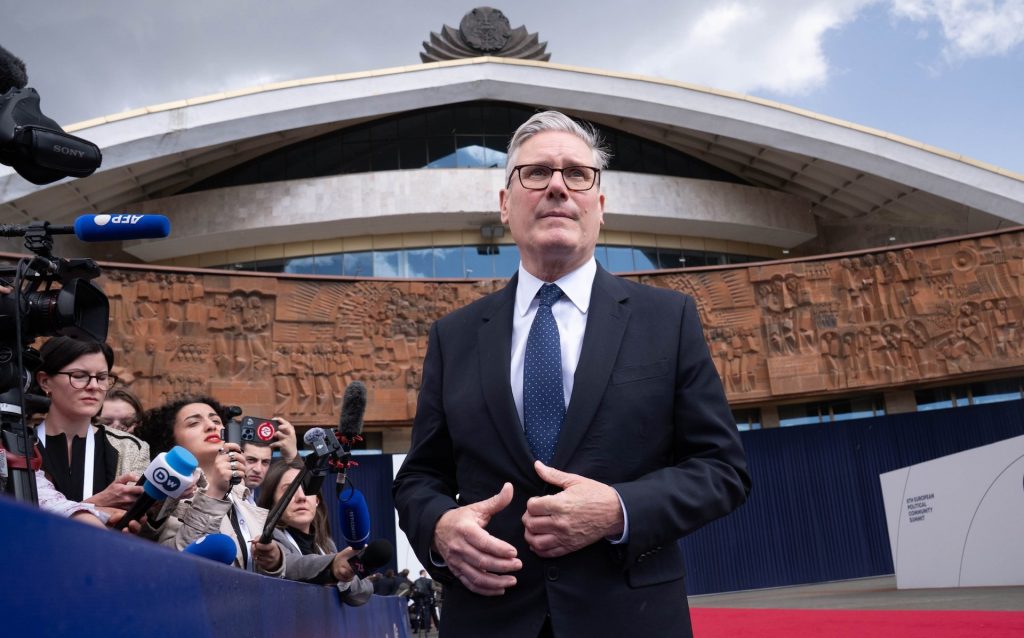
As the United Kingdom approaches the critical local elections of May 2026, a peculiar phenomenon has gripped the political landscape: the Prime Minister is nowhere to be found. In what should be a high-stakes showcase of government achievements, Sir Keir Starmer has been effectively sidelined from the Labour Party’s campaign trail.
Insiders suggest that the Prime Minister’s image has become so “toxic” that local candidates are actively pleading with Downing Street to keep him away from their wards. This strategic withdrawal comes at a time when Labour is braced for a “catastrophic” set of results, with projections suggesting the party could surrender up to 2,000 council seats across England.
The Strategy of Absence: Why Starmer is ‘Kryptonite’
In the high-octane world of British politics, a Prime Minister is usually the “Campaigner-in-Chief.” However, for Keir Starmer, the 2026 local elections have become a lesson in invisibility. Since the beginning of March, the Prime Minister has participated in fewer than a dozen campaign visits.
According to senior Labour figures, this is not an accidental scheduling conflict but a deliberate containment strategy. One senior official described the Prime Minister’s reputation as “visceral loathing,” noting that he is increasingly viewed as insincere and two-faced by a broad spectrum of the electorate.
The Doorstep Reality
For local councillors fighting to keep their seats, the Prime Minister is no longer an asset; he is a liability. Reports from the doorstep suggest that mentioning Starmer’s name often triggers a hostile response from voters.
Voter Dissatisfaction: Recent Ipsos polling shows a staggering 74% dissatisfaction rating for Starmer.
Candidate Anxiety: Many Labour councillors have requested that Starmer’s face be removed from their campaign leaflets.
The “Corbyn” Comparison: Some MPs on the soft-left of the party have noted that the reception Starmer receives now mirrors the hostility once directed at Jeremy Corbyn, but without the loyal grassroots base Corbyn once commanded.
A Tale of Three Leaders: The Campaign Gap
The disparity in campaign activity between the major party leaders is stark. While Starmer has remained largely confined to the corridors of Number 10 or international summits, his rivals have been clocking up the miles.
Nigel Farage and the Reform UK Surge
Nigel Farage, leading a resurgent Reform UK, has turned the campaign trail into a marathon. Recording over 71 visits by late April, Farage is successfully positioning himself as the primary alternative for disillusioned voters on the Right. Reform UK is currently eating into Labour’s traditional working-class heartlands, capitalizing on the perception that Starmer has abandoned his 2024 promises.
Kemi Badenoch and the Conservative Resilience
Meanwhile, Conservative leader Kemi Badenoch has maintained a vigorous schedule, making 41 appearances across key battlegrounds. By focusing on local issues and highlighting Labour’s domestic failings, Badenoch is managing to stabilize the Tory vote, even as Reform UK gains ground.
The Policy Failures Haunting the Polls
The “toxic” label didn’t appear overnight. It is the result of a series of political choices that have alienated both the left and the right of the British public.
The Winter Fuel Allowance Fiasco
One of the most significant blows to Starmer’s popularity remains the July 2024 decision to strip the winter fuel allowance from millions of pensioners. Although the move was later partially reversed following a massive public outcry, the political damage was permanent. For many, it cemented the image of a Prime Minister who is out of touch with the struggles of ordinary people.
The Armenia Distraction
While his party was struggling on the ground, Starmer spent a significant portion of the final campaign week at the European Political Community summit in Yerevan, Armenia. While Number 10 defended the trip as essential for “closer British-EU ties,” local councillors were reportedly laughing in derision. To them, the Prime Minister’s preference for international diplomacy over domestic campaigning was the ultimate sign of his detachment.
The Vultures are Circling: A Leadership Crisis in Waiting
With Labour expected to lose the Welsh Senedd and suffer heavy defeats to the SNP in Scotland, the knives are out in Westminster. A formal challenge to Starmer’s leadership is widely expected within days of the election results.
The Streeting Maneuver
Health Secretary Wes Streeting is widely seen as the frontrunner to replace Starmer. Reports suggest that Streeting has already recruited more than 81 MPs—the magic number required to trigger a leadership contest. His supporters are reportedly ready to move as early as the Friday following the polls, potentially through a coordinated wave of cabinet resignations.
The Burnham Factor
Andy Burnham, the Mayor of Greater Manchester, remains a constant shadow over Starmer’s leadership. Despite being blocked by the Prime Minister from standing for a Westminster seat in the February 2026 Gorton and Denton by-election, Burnham’s popularity remains high. While he cannot lead the party without being an MP, his refusal to rule out a return to Parliament has kept the pressure on Number 10.
The Potential Successors:
Wes Streeting: The “change” candidate with significant backbench support.
Angela Rayner: The former deputy leader who remains popular with the party’s core activists.
Andy Burnham: The “King over the Water” who appeals to the northern heartlands.
The Electoral Map: A Multi-Front War
Labour is no longer just fighting the Conservatives. In 2026, the party is facing a multi-directional exodus of voters:
- To the Right: Reform UK is attracting voters who feel betrayed by Starmer’s perceived pro-EU stance and failure to control immigration.
- To the Left: The Green Party is surging in urban areas, picking up younger voters and activists who believe Starmer has moved too far to the right on environmental and social issues.
- To the Nationalists: In Scotland and Wales, the SNP and Plaid Cymru are capitalizing on the “unpopularity of London-led Labour.”
Analysis: Can Labour Survive the Starmer Era?
The current state of the Labour Party is one of profound demoralization. The “Starmer Project,” which was designed to make Labour “electable” after the Corbyn years, appears to have hit a brick wall of public indifference and internal resentment.
The fundamental issue is one of identity. By trying to appeal to everyone, Starmer has ended up standing for very little in the eyes of the public. His “about-turns” on major policy platforms have left voters questioning his core convictions. As one Labour MP put it: “Starmer has no followers, he only has enemies.”
If the local election results are as grim as predicted, the party faces a choice: double down on a leader the public has clearly rejected, or risk a divisive leadership contest that could plunge the government into further chaos.
Conclusion: The Friday Reckoning
As the polls prepare to open, the silence from Downing Street is deafening. Whether Sir Keir Starmer can survive the coming week depends less on his own actions and more on the appetite for risk among his Cabinet.
The “toxic” label is a difficult one to wash off. In the history of British politics, few leaders have managed to recover from such profound levels of public dissatisfaction. Friday morning will not just bring the results of local council races; it will likely bring the beginning of the end for the Starmer premiership.
The question is no longer if Labour will seek a new direction, but who will be brave enough to lead the charge.