Canada’s Stance on Chinese Forced Labour: Why Minister Joly Defers to the UN

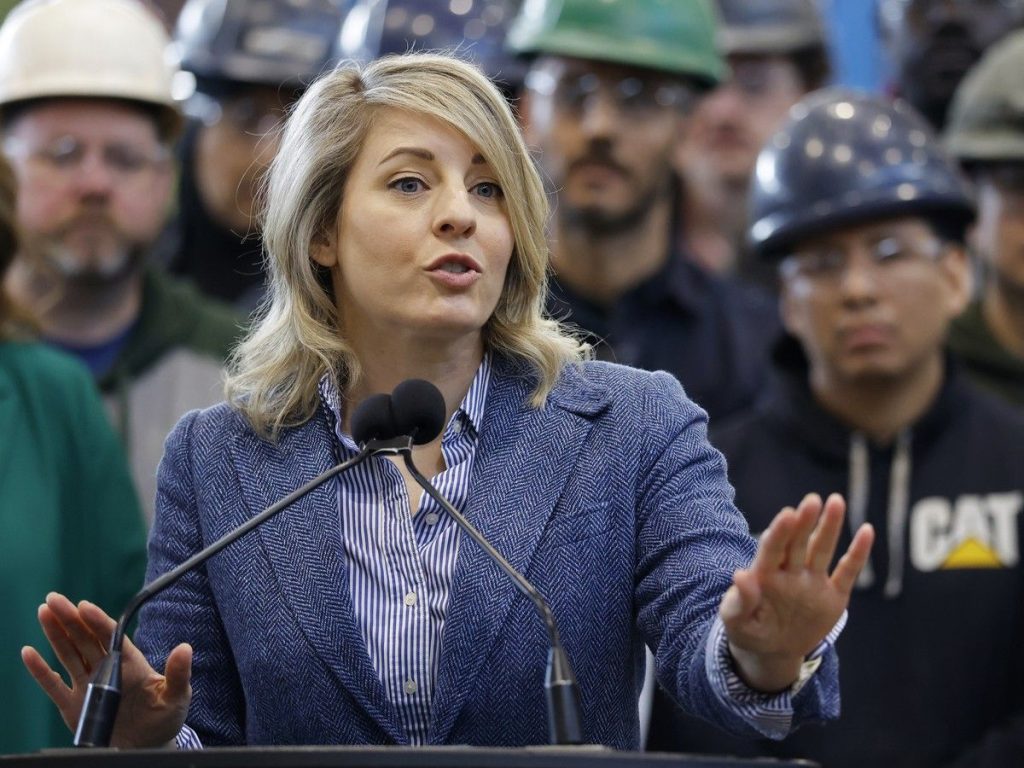
As the Canadian government navigates the complex landscape of international trade and human rights, the question of forced labour in China remains a contentious flashpoint. In recent parliamentary testimony, Industry Minister Mélanie Joly faced intense questioning regarding the federal government’s position on human rights allegations linked to the Chinese electric vehicle (EV) market. Her response—a firm commitment to following United Nations findings rather than offering a personal opinion—has sparked a broader debate about the intersection of trade policy and moral accountability in 2026.
The Parliamentary Showdown: Joly’s Testimony on EVs
During a recent parliamentary committee hearing, Minister Joly appeared to discuss Prime Minister Mark Carney’s strategic policies regarding the electric vehicle sector. The conversation, however, quickly pivoted to the controversial deal struck earlier this year, which allows a quota of Chinese-made EVs into Canada in exchange for reduced tariffs on Canadian agricultural exports, such as canola.
Conservative MPs pressed the Minister to clarify her stance on whether forced labour practices are actively occurring within Chinese supply chains. These concerns are rooted in reports from human rights organizations suggesting that aluminum and other critical components found in Chinese-manufactured vehicles are linked to the exploitation of the Uyghur population in Xinjiang.
“Always Follow” the UN: A Strategic Pivot
When challenged directly, Minister Joly maintained a disciplined, diplomatic posture. She declined to provide a personal confirmation of the allegations, stating that as the Minister of Industry, her primary focus is the protection of Canadian autoworkers and the domestic economy.
“My point of view is we will always follow what the UN is saying,” Joly told the committee. By deferring to the United Nations—specifically the reports from the UN Human Rights Commissioner—the Minister underscored that Canada’s foreign policy on human rights is anchored in multilateral consensus rather than individual political opinion. However, this refusal to explicitly validate the claims in her own words drew sharp criticism from opposition members, who argued that such a position lacks the moral clarity required on the global stage.
The Economic-Human Rights Dilemma
The Canadian government is currently walking a tightrope. On one side, there is an urgent need to decarbonize the transportation sector and keep EV prices affordable for Canadians. On the other, there is growing public and legislative pressure to ensure that the “green transition” is not built upon the backs of exploited workers.
Understanding the Trade Deal
The current agreement allows up to 49,000 Chinese-made electric vehicles to enter the Canadian market at a preferential tariff rate of 6.1%. This policy marks a significant reversal from the 100% surtax that was previously imposed in 2024. The government argues that these vehicles—produced by global giants like Tesla, Ford, and General Motors within their Chinese facilities—are subject to strict corporate due diligence.
Critics, however, remain unconvinced. They point to investigative reports, such as those from The Bureau of Investigative Journalism (TBIJ), which highlight that the problem of forced labour extends far beyond the borders of Xinjiang, potentially contaminating global supply chains for aluminum and lithium.
The Role of Corporate Due Diligence
Prime Minister Mark Carney has previously emphasized that Canadian companies are legally bound to prevent child or forced labour from entering their supply chains. Yet, the burden of proof remains an issue for many.
Risk Assessment: Certain regions in China are classified as “high risk,” requiring enhanced due diligence.
Legislative Barriers: Canada has existing laws designed to prohibit the importation of goods produced through forced labour, but enforcement and verification in foreign jurisdictions remain notoriously difficult.
Political Fallout and Public Sentiment
The tension inside the committee room is reflective of a larger struggle within the federal government. Earlier this year, Liberal MP Michael Ma faced backlash after questioning a witness who presented evidence of forced labour in the EV supply chain. This incident set a precedent for the current climate, where the government is being scrutinized for its perceived reluctance to antagonize Beijing while simultaneously attempting to uphold international human rights standards.
Is Diplomacy Failing?
Some political analysts suggest that Minister Joly’s shift to the Industry portfolio has necessitated a more “internally-focused” approach. While her previous role as Minister of Foreign Affairs required a vocal stance on human rights, her current mandate prioritizes economic stability.
However, observers note that this “compartmentalization” of roles is becoming increasingly difficult for the public to accept. When the government advocates for human rights in one forum and signs trade deals in another, it creates a “credibility gap” that opposition parties are eager to exploit.
Looking Ahead: The Path for Canada-China Relations
As we move deeper into 2026, the challenge for the Canadian government will be to reconcile its trade ambitions with its ethical commitments. If the UN continues to find evidence of systematic human rights abuses, Canada’s “follow the UN” policy will eventually force a choice: either restrict imports and risk a trade war, or continue the status quo and face domestic political fallout.
Key Takeaways for Stakeholders
- Multilateral Reliance: The government intends to use UN reports as the “gold standard” for its human rights policy, effectively outsourcing the verification process to international bodies.
- Focus on Domestic Industry: Minister Joly’s rhetoric indicates that the government’s priority is protecting the Canadian automotive sector, even if it means navigating controversial trade partnerships.
- Ongoing Scrutiny: With human rights groups and opposition MPs keeping a close watch on supply chains, the government will likely face continued pressure to prove that its “due diligence” requirements are more than just bureaucratic formality.
In conclusion, the situation remains fluid. While Minister Joly maintains that Canada stands against all forms of forced labour, the lack of a direct, personal denunciation of the situation in China highlights the uncomfortable reality of modern global trade. For now, the government is banking on the idea that by aligning with the United Nations, they can balance their economic objectives with their international obligations—a strategy that will undoubtedly be tested in the months to come.