Tensions Surge in the Gulf: Trump Pressures South Korea to Join ‘Project Freedom’

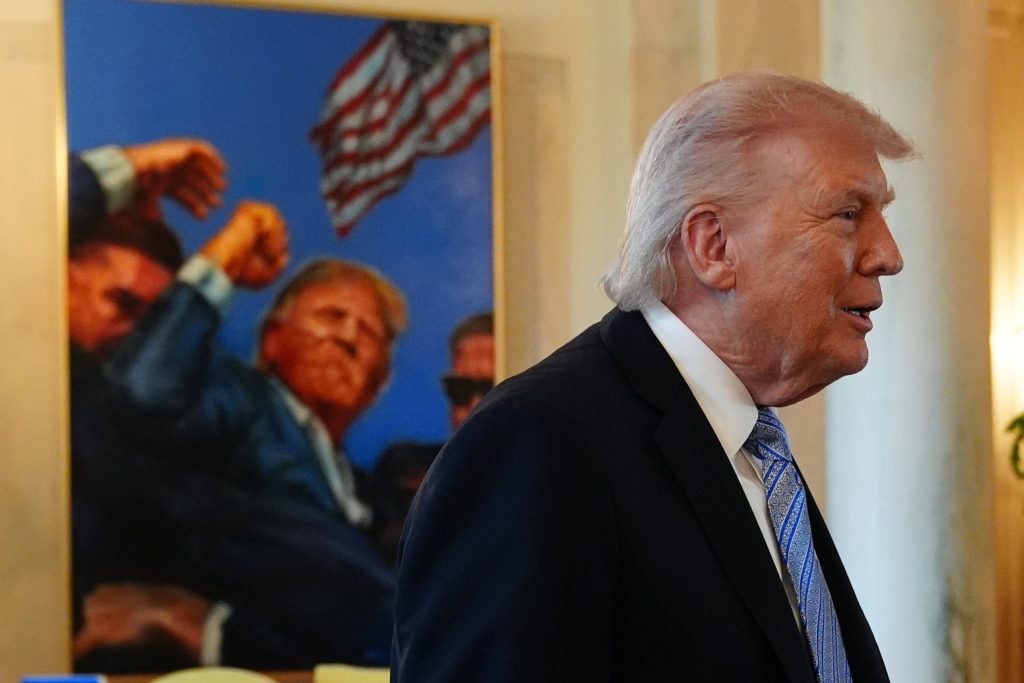
The geopolitical landscape of the Middle East shifted dramatically this week as U.S. President Donald Trump publicly urged South Korea to join the newly minted military initiative, “Project Freedom.” The call comes in the wake of a volatile incident involving an explosion aboard a South Korean-operated cargo vessel in the Strait of Hormuz, a critical maritime chokepoint that has become the epicenter of escalating tensions between Washington and Tehran.
As of May 2026, the situation remains fluid, with the U.S. asserting that the incident was an Iranian-led attack, while Seoul maintains a diplomatic “cautious stance,” balancing its deep-rooted alliance with the United States against the need for objective evidence and regional stability.
The Genesis of ‘Project Freedom’
“Project Freedom” was unveiled by the Trump administration as a direct response to the increasing danger faced by civilian vessels attempting to navigate the Persian Gulf. According to official statements, the operation involves the U.S. Navy and Air Force providing active escort and guidance to commercial ships trapped in the region.
President Trump took to social media on May 4, 2026, to explicitly link the safety of international waters to the participation of key allies. He stated that Iran had targeted “unrelated nations” in its attempts to disrupt ship movement, specifically citing the HMM Namu, a Panamanian-flagged vessel operated by a South Korean firm, as a primary example of why collective security is now mandatory.
Why the Strait of Hormuz Matters
The Strait of Hormuz is one of the world’s most important oil chokepoints. Any disruption here causes immediate ripples in the global economy, affecting fuel prices and supply chain logistics. By launching “Project Freedom,” the U.S. aims to ensure that global trade continues despite the ongoing friction between the U.S. and Iran. However, the mission has raised questions about whether this is a humanitarian escort or a precursor to a wider regional conflict.
South Korea’s Diplomatic Tightrope
The South Korean government, led by the Ministry of National Defense and the Ministry of Foreign Affairs, finds itself in a precarious position. The ROK-U.S. alliance remains the cornerstone of South Korean national security, particularly regarding the Korean Peninsula. Yet, outright participation in a military mission that could be perceived as a direct act of aggression against Iran carries significant diplomatic and economic risks.
A Measured Response
On May 5, 2026, the South Korean Ministry of National Defense issued a statement outlining their current position:
Evidence-Based Decision Making: Officials are waiting for the vessel to be towed to a safe port to determine if the explosion was truly an “Iranian attack” or the result of internal mechanical failures.
International Law & Safety: The government is reviewing how participation in “Project Freedom” aligns with international maritime law.
- Domestic Procedures: Any deployment of military assets requires legislative oversight and public consensus, which takes time to navigate.
The government maintains that it is in “close communication” with the U.S. but emphasizes that it will only finalize its stance once the cause of the accident is independently verified. This careful maneuvering highlights the difficulty of maintaining a neutral stance when a major strategic partner is demanding immediate solidarity.
Analyzing the Risks and Potential Escalation
The pressure from Washington is not an isolated event. It is part of a broader trend where the U.S. expects its allies to shoulder more of the burden for global security. For South Korea, the dilemma is twofold:
- Security of Supply: South Korea is heavily dependent on energy imports that transit through the Strait of Hormuz. Ignoring the threat to these routes is not an option.
- Strategic Autonomy: Aligning too closely with U.S. military operations in the Middle East could complicate South Korea’s own diplomatic efforts in the region and invite retaliation against its commercial interests.
The “Iranian Factor”
Tehran has consistently warned against foreign military presence in the Gulf, viewing it as a provocative act that threatens their sovereignty. If South Korea joins the operation, they risk becoming a target for Iranian naval harassment, which could impact the safety of its citizens working in the region and disrupt vital trade routes that the country relies on for its industrial engine.
Looking Ahead: What Comes Next?
The coming weeks will be critical. As the investigation into the HMM Namu incident progresses, the international community will be watching to see if forensic evidence confirms the U.S. narrative of an “Iranian attack.”
If the evidence is conclusive, South Korea may find it increasingly difficult to resist the pressure to join “Project Freedom.” Conversely, if the investigation suggests an internal issue, it could provide Seoul with the necessary diplomatic cover to decline a direct military role while still supporting the mission through non-combatant means, such as intelligence sharing or increased diplomatic engagement with regional stakeholders.
Ultimately, this situation serves as a stark reminder of how interconnected global security has become. In 2026, a single explosion in the Persian Gulf can set off a chain reaction that challenges the foundations of long-standing military alliances and demands swift, calculated responses from leaders across the globe.