Strategic Hesitation: Why South Korea Rebuffed Trump’s ‘Project Freedom’ Call After Hormuz Ship Explosion

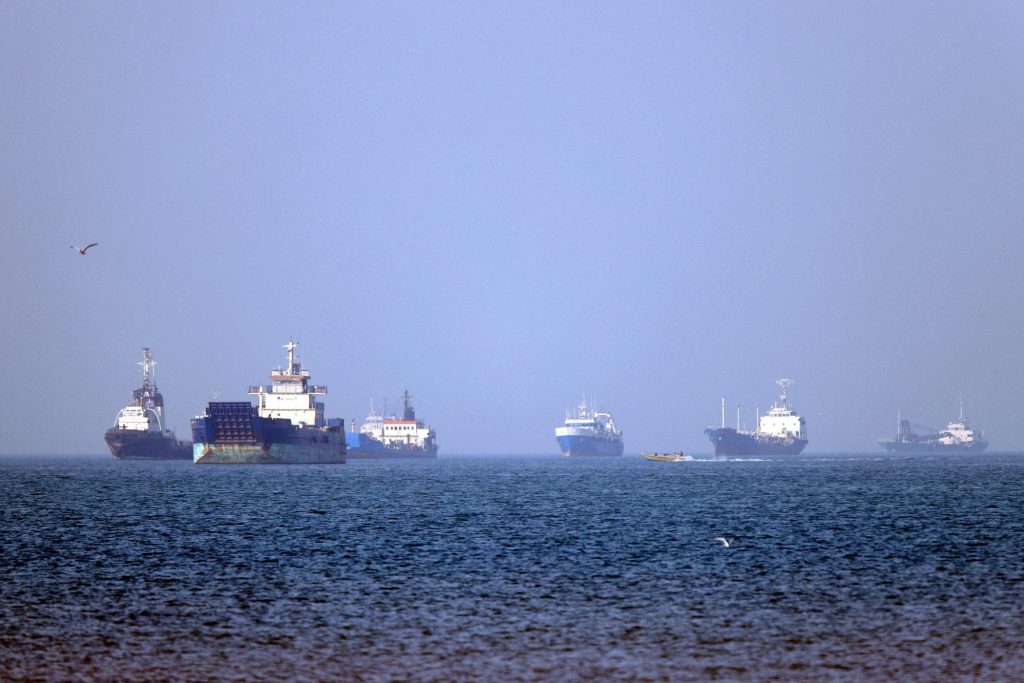
The geopolitical landscape of 2026 has been defined by rapid escalations and high-stakes maritime brinkmanship. Late Monday night, the volatile waters of the Strait of Hormuz became the center of a fresh diplomatic tug-of-war between Washington and Seoul, specifically concerning how South Korea rebuffs Trump’s ‘Project Freedom’ call after Hormuz ship fire, a move with significant implications for maritime security in the region. Following a mysterious explosion and subsequent fire aboard a South Korean-operated cargo ship, U.S. President Donald Trump issued a characteristic call to arms, urging South Korea to join a naval mission dubbed “Project Freedom.”
However, the response from Seoul has been one of calculated restraint, clearly demonstrating how South Korea rebuffs Trump’s ‘Project Freedom’ call after Hormuz ship fire. Rather than rushing to join the U.S.-led coalition, the administration of President Lee Jae-myung has signaled a “wait-and-see” approach, prioritizing international law and domestic consensus over immediate military alignment. This rebuff highlights the growing complexity of diplomatic relations within the South Korea-U.S. alliance in an era of heightened geopolitical tensions and direct conflict between the U.S., Israel, and Iran.
The Incident: Fire in the World’s Most Dangerous Waterway
The crisis began at approximately 8:40 PM Seoul time on Monday. A Panama-flagged vessel operated by HMM (Hyundai Merchant Marine), one of South Korea’s largest shipping conglomerates, suffered a violent explosion while anchored near the United Arab Emirates.
Key details of the incident include:
The Vessel: A large cargo ship carrying 24 crew members (six South Koreans and 18 foreign nationals).
The Damage: A fire erupted on the port side of the engine room, taking four hours for the crew to contain.
Casualties: Miraculously, no injuries or deaths were reported.
Current Status: The ship is currently being towed to Dubai for a forensic investigation to determine if the blast was an internal mechanical failure or an external attack.
While investigators in Seoul and Dubai remain cautious, President Trump wasted no time in assigning blame, asserting that Iran was responsible for the “attack” as part of a broader campaign against international shipping lanes.
Trump’s “Project Freedom” and the Social Media Ultimatum
In the immediate aftermath of the explosion, which ultimately led to South Korea rebuffs Trump’s ‘Project Freedom’ call after Hormuz ship fire, President Trump took to his social media platform, Truth Social, to announce the launch of “Project Freedom.” This operation is Washington’s official framework for ensuring freedom of navigation and escorting commercial vessels through the Strait of Hormuz, which has been largely closed to international traffic since February 2026 following U.S.-Israeli strikes on Iranian leadership, necessitating significant naval deployments.
“Perhaps it’s time for South Korea to come and join the mission!” Trump wrote, framing the HMM ship fire as the ultimate justification for Seoul to engage in closer military cooperation and deploy its naval assets to the Middle East, a call that would soon see South Korea rebuffs Trump’s ‘Project Freedom’ call after Hormuz ship fire. According to the White House, U.S. forces have already been active in the region, reportedly destroying seven Iranian fast boats during recent escort missions.
What is Project Freedom?
- Objective: To reopen the Strait of Hormuz for commercial transit amid the ongoing U.S.-Israel war on Iran.
- Strategy: Utilizing U.S. destroyers and “Golden Dome” maritime defense systems to provide safe passage for tankers.
- Coalition Building: A push to involve key Asian and European allies to share the military and financial burden.
Seoul’s Response: “Polite but Firm”
Despite the pressure from the Oval Office, South Korean officials have remained steadfast in their refusal to act unilaterally, clearly illustrating why South Korea rebuffs Trump’s ‘Project Freedom’ call after Hormuz ship fire, prioritizing regional stability and a multilateral approach. A senior official from the presidential Blue House indicated that any decision to join “Project Freedom” is contingent on several rigid conditions.
The Three Pillars of South Korea’s Hesitation
UN Mandate: Seoul insists on a UN Security Council resolution to provide international legal legitimacy for the mission.
Multinational Consensus: South Korea is unlikely to move until the European Union and Japan agree to form a unified, multinational escort fleet.
- Domestic Approval: Under South Korean law, the deployment of military forces to a foreign conflict zone requires explicit approval from the National Assembly, which is currently divided on the issue.
Political scientist Jun Bong-geun, president of the Korea Nuclear Policy Society, noted that the asymmetry of interests between Washington and Seoul is too wide to ignore, providing a key reason why South Korea rebuffs Trump’s ‘Project Freedom’ call after Hormuz ship fire. “It is unimaginable for South Korea to deploy forces independently at the outset of such a mission,” Jun stated, citing the lack of surplus capacity to project force so far from the Korean Peninsula.
The Iranian Counter-Narrative: “Project Deadlock”
As the U.S. pushes for a military solution, Tehran has offered a sharply different perspective. Iranian Foreign Minister Abbas Araghchi dismissed Trump’s initiative, mockingly relabeling it “Project Deadlock.”
Araghchi took to social media to argue that there is “no military solution to a political crisis.” From Tehran’s view, the presence of U.S. and Israeli warships in the Persian Gulf is the primary cause of instability, not the solution. Iranian state media has even claimed—though U.S. Central Command denies—that an American destroyer was struck during recent skirmishes.
Economic Stakes: The “Stranded 26”
For South Korea, the crisis is not merely a matter of military strategy; it is a profound economic threat, impacting energy security and causing significant supply chain disruptions, further complicating the decision to join “Project Freedom” and reinforcing why South Korea rebuffs Trump’s ‘Project Freedom’ call after Hormuz ship fire. The Ministry of Oceans and Fisheries reports that 26 South Korean vessels are currently stranded in the Middle East, unable to navigate the blocked strait.
The Strait of Hormuz is the world’s most important oil transit chokepoint. With the waterway effectively closed since late February, South Korea—a nation heavily dependent on Middle Eastern crude—faces rising energy costs and supply chain disruptions. Despite this, the Lee Jae-myung administration believes that joining a “war mission” could further endanger these vessels rather than protect them, a core reason why South Korea rebuffs Trump’s ‘Project Freedom’ call after Hormuz ship fire.
The Opposition’s Blunt Warning
Lawmaker Kim Joon-hyung of the Rebuild Korea Party expressed the skepticism felt by many in Seoul regarding the call to join “Project Freedom,” echoing the sentiment behind why South Korea rebuffs Trump’s ‘Project Freedom’ call after Hormuz ship fire. He questioned whether Trump’s social media posts even constituted a serious operational request. “We do not need to feel burdened by staying out of a war initiated by the United States and Israel,” Kim said, highlighting the progressive opposition’s reluctance to become “entangled” in Middle Eastern conflicts.
The North Korea Factor: A Strategic Distraction
One of the most significant reasons for Seoul’s rebuff, and why South Korea rebuffs Trump’s ‘Project Freedom’ call after Hormuz ship fire, is the constant threat from its northern neighbor. In 2026, tensions on the Korean Peninsula remain at a decade-high. Analysts argue that South Korea cannot afford to divert its elite naval assets—such as the Cheonghae Unit—to the Middle East when they are needed to monitor North Korean provocations and maintain deterrence in the East Sea.
The “strategic simultaneity” required to manage a domestic nuclear threat while participating in a U.S.-led war in Iran is a burden that Seoul is currently unwilling to shoulder, further solidifying why South Korea rebuffs Trump’s ‘Project Freedom’ call after Hormuz ship fire.
Conclusion: Watching and Waiting
For now, South Korea is practicing a policy of “managed ambiguity.” While President Lee Jae-myung has previously pledged “practical contributions” to freedom of navigation and global maritime security during summits with UK and French leaders, the specifics remain undefined, a stance that effectively means South Korea rebuffs Trump’s ‘Project Freedom’ call after Hormuz ship fire.
Seoul is hoping that a broader multinational coalition—one that includes a diverse array of global powers—will emerge, allowing South Korea to participate under a “collective security” banner rather than a “U.S. war” banner. Until then, the HMM cargo ship remains a charred reminder of the risks involved, and South Korea remains on the sidelines, having made its position clear that South Korea rebuffs Trump’s ‘Project Freedom’ call after Hormuz ship fire, waiting for the next move in a global game of chess.