Canada on the Front Lines: Unpacking the New $1.5B Tariff Relief Strategy

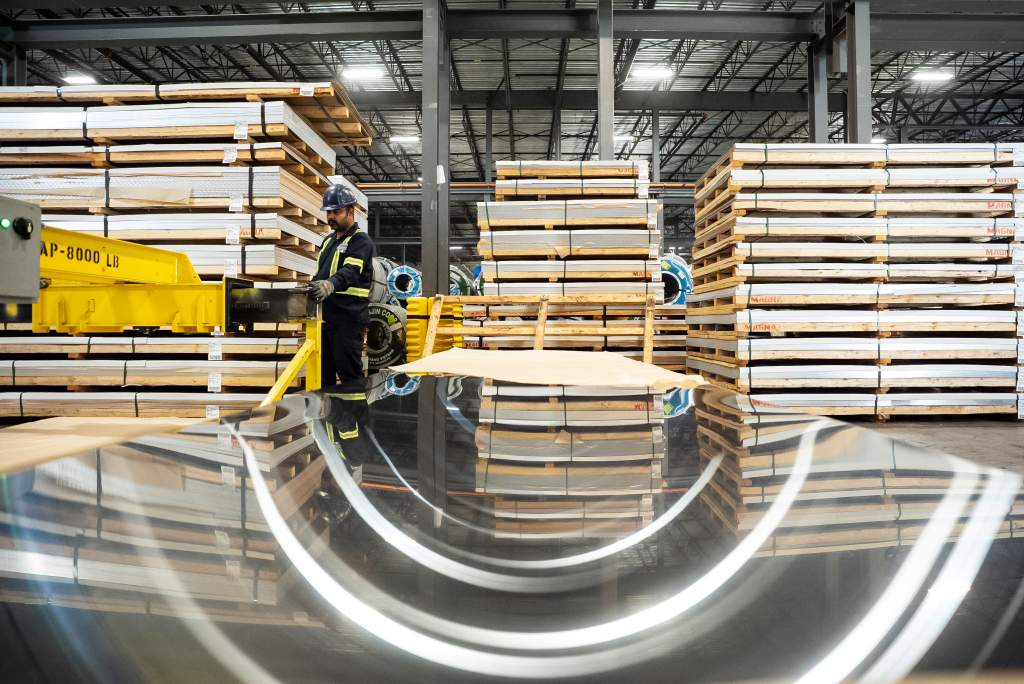
As the geopolitical landscape shifts in 2026, Canada finds itself navigating the volatile waters of an intensifying trade war. With the United States under President Donald Trump expanding the range and depth of metal duties, the Canadian federal government has officially stepped into the fray. Industry Minister Mélanie Joly and AI and Digital Innovation Minister Evan Solomon recently unveiled a $1.5 billion tariff relief package designed to act as a financial bulkhead for Canadian manufacturers.
This move is not merely a reaction; it is a strategic defense of Canada’s industrial backbone. As ministers have explicitly stated, Canada is now on the “front lines” of a global trade conflict. But what does this mean for the average business owner, the factory worker, and the broader Canadian economy?
The Anatomy of the $1.5 Billion Relief Package
The federal government’s response is bifurcated, targeting both immediate liquidity needs and long-term structural adaptation. By splitting the support into two primary pillars, Ottawa hopes to stabilize the manufacturing sector while simultaneously pushing for necessary technological pivots.
Pillar One: The BDC Loan Program ($1 Billion)
The core of the relief effort is a $1 billion loan program administered through the Business Development Bank of Canada (BDC). This initiative is specifically tailored to support companies struggling with the sudden, sharp rise in costs associated with U.S. tariffs on steel, aluminum, and copper.
Loan Thresholds: Businesses can access loans ranging from $2 million to $50 million.
The “Zero-Interest” Grace Period: The first year of the loan is interest-free, providing immediate breathing room for companies facing cash-flow crunches.
Structured Repayment: The second and third years feature “very low” interest rates, with no principal repayment required until the end of the three-year term.
This structure is designed to keep factories operating and workers employed despite the heavy weight of the 25% to 50% surcharges currently being levied by the U.S. administration.
Pillar Two: The Regional Tariff Response Initiative ($500 Million)
While the BDC loans provide liquidity, the second pillar—a $500 million injection into the Regional Tariff Response Initiative—is focused on transformation. Minister Solomon emphasized that this funding is aimed at small and medium-sized enterprises (SMEs) that need to diversify their markets and improve productivity.
This segment of the package encourages firms to:
- Pivot Strategies: Move away from over-reliance on the U.S. market.
- Invest in Innovation: Utilize AI and digital tools to reduce operational costs.
- Enhance Competitiveness: Offset the “tariff tax” by becoming leaner and more efficient.
Why the Trade War Matters in 2026
The current trade climate is significantly more complex than previous cycles. The expansion of duties to include a wider array of copper products and the fluctuating percentage of steel and aluminum surcharges have created a climate of uncertainty for cross-border supply chains.
For Canadian manufacturers, the goal is survival. As Minister Joly remarked, the objective is to “protect workers and actually keep companies” within Canadian borders. If companies cannot absorb the increased costs of materials, they risk either closing down or relocating production to more favorable jurisdictions. This relief package is a deliberate attempt to prevent a “brain and brawn drain” of the Canadian manufacturing sector.
The Challenges Ahead: Who Gets Left Behind?
Despite the fanfare, the announcement has sparked debate. Critics point out that the relief is not a “one-size-fits-all” solution. For instance, players in the B.C. softwood lumber industry have noted that they remain largely excluded from this specific round of funding, despite facing their own set of long-standing trade pressures.
Furthermore, there is the question of long-term sustainability. While $1.5 billion provides a critical buffer, it is ultimately a temporary measure. If the trade war persists beyond the three-year loan repayment window, many businesses may find themselves in a precarious position once the grace period ends.
Strategic Pivot: Diversification as the Ultimate Defense
The inclusion of AI and digital innovation in the funding criteria signals a shift in government policy. Ottawa is essentially telling Canadian businesses that they cannot wait for the tariff situation to normalize; they must actively change how they operate.
By incentivizing the integration of AI, the government hopes to make Canadian steel and aluminum products more cost-competitive through automation and precision manufacturing. The goal is to ensure that even if the tariffs remain high, the cost per unit of production decreases, effectively neutralizing the impact of the U.S. duties.
Expert Analysis: The Economic Outlook
Economists are watching these developments closely. The effectiveness of the $1.5 billion package will likely depend on the speed of implementation. In a fast-moving trade war, bureaucratic delays can be just as damaging as the tariffs themselves.
However, the BDC’s involvement is generally viewed as a positive move, as the bank has the infrastructure to deploy capital relatively quickly. If the rollout is successful, it could provide a template for how Canada handles future trade disputes with its largest trading partner.
Key Takeaways for Canadian Businesses:
Liquidity is Key: Use the BDC loans for immediate operational stability, but reserve some capital for the necessary digital pivots.
Diversify Now: The Regional Tariff Response Initiative is a clear signal that the government is prioritizing companies that are actively seeking new export markets outside of the United States.
Stay Informed: With trade policy shifting almost weekly in 2026, maintaining a close relationship with industry associations and regional development agencies is essential for accessing these funds.
Conclusion
Canada’s $1.5 billion response to U.S. metal tariffs is a bold move to defend its manufacturing heartland. By mixing debt relief with innovation-focused grants, the federal government is attempting to balance short-term survival with long-term industrial evolution.
Whether this package is enough to weather the storm depends on how effectively companies utilize these resources to pivot. As the “front lines” of this trade war continue to shift, one thing is clear: Canadian manufacturers will need to be more agile, more innovative, and more diversified than ever before to remain competitive on the global stage.