Canada’s $1.5 Billion Steel Shield: Navigating the Escalating U.S. Tariff Crisis in 2026

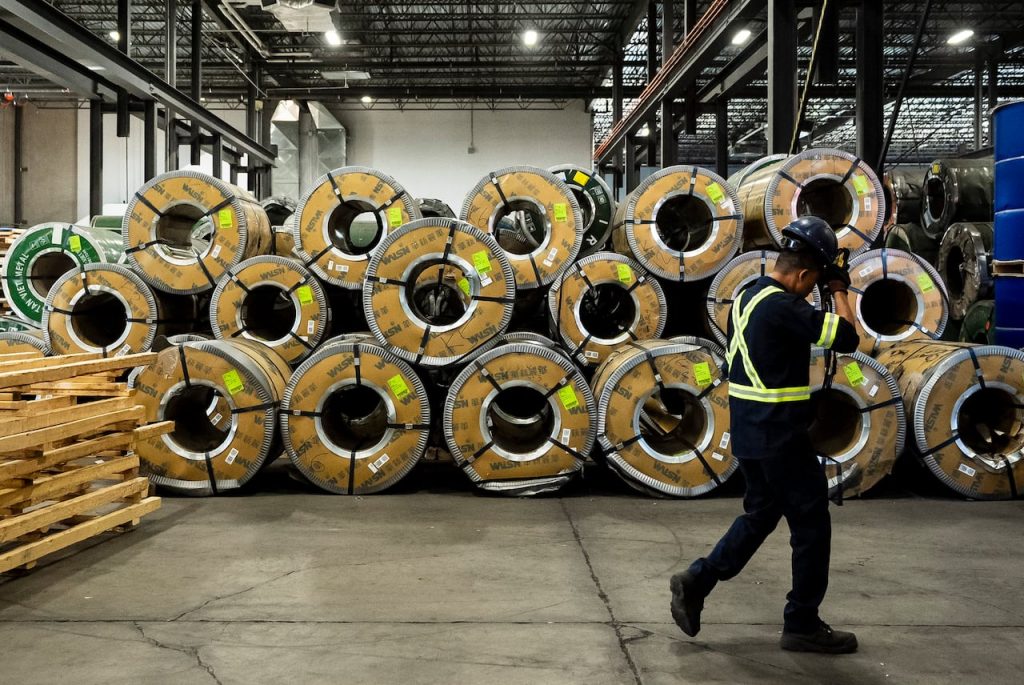
The year 2026 has ushered in a period of profound uncertainty for Canadian manufacturers. As U.S. President Donald Trump continues to tighten his protectionist trade regime, the Canadian federal government has been forced to take decisive, albeit reactive, action. With the announcement of a massive $1.5 billion support package, Ottawa is attempting to prevent the collapse of the nation’s vital steel, aluminum, and copper industries.
This financial lifeline arrives at a critical juncture. Following the expansion of Section 232 tariffs to include previously exempt derivatives—such as steel coils and aluminum sheets—Canadian tool and mold makers are finding themselves on the front lines of an increasingly volatile trade war. As the CUSMA review talks loom, the government is betting that liquidity will keep the lights on while diplomatic channels search for a way out of the deadlock.
The Anatomy of the $1.5 Billion Lifeline
The government’s strategy is split into two distinct, high-impact pillars designed to provide immediate relief while fostering long-term resilience. Industry Minister Melanie Joly, speaking from a production plant in Vars, Ontario, emphasized that the goal is to prevent permanent industrial scarring.
The BDC Loan Program: A $1 Billion Bridge
At the core of the support package is a $1 billion loan program administered through the Business Development Bank of Canada (BDC). This initiative provides:
Favourable Terms: Loans are structured to be accessible, ensuring that companies facing sudden liquidity crunches due to customs bills can cover operational costs.
Three-Year Horizon: The support is intended to act as a buffer for the next 36 months, allowing firms to weather the current tariff environment without resorting to mass layoffs or bankruptcy.
Rapid Deployment: Isabelle Hudon, CEO of the BDC, confirmed that the Crown corporation is prepared to move with unprecedented speed to inject capital into struggling operations.
Strategic Pivots: The $500 Million Fund
Recognizing that the U.S. market may never return to its pre-tariff state, the government has allocated an additional $500 million specifically for companies making “strategic pivots.” This funding is aimed at:
Diversifying export markets beyond the United States.
Investing in domestic production efficiencies to lower costs.
Transitioning toward high-value manufacturing that can better absorb the impact of border levies.
Why the U.S. Tariff Regime is Hurting Canada
The current trade friction is not merely a political disagreement; it is a structural challenge to the Canadian economy. StatsCan data reveals a grim reality: exports of steel products have plummeted to just one-third of their pre-2025 levels.
The expansion of tariffs to “derivatives” has been particularly punishing. Previously, many Canadian manufacturers operated under the assumption that processed goods—like specialized steel coils—would remain exempt. By closing these loopholes, the Trump administration has effectively increased the cost of doing business across the border, forcing companies like Algoma Steel into difficult decisions regarding their workforce.
The Economic Impact: A Two-Way Street
While the tariffs are marketed by the U.S. administration as a tool to boost American employment, the results remain questionable.
- Modest U.S. Growth: World Steel Association data indicates that American steel production increased by a mere 3% in 2025, suggesting that domestic capacity is not scaling as quickly as the tariffs were intended to force.
- Job Losses in the U.S.: Research from the U.S. Tax Foundation suggests the policy has backfired, contributing to the loss of approximately 154,000 jobs in the United States due to increased input costs for manufacturers.
- Canadian Supply Chain Disruption: For Canadian firms, the “customs bill” is now a primary driver of inflation and operational instability, making it difficult to compete on price in the North American market.
Is This a Permanent New Normal?
When pressed on whether the government believes these tariffs are permanent, Minister Joly remained pragmatic. “You don’t know. I don’t know,” she stated, noting that the ultimate decision rests entirely with the administration in Washington.
However, U.S. Trade Representative Jamieson Greer has been far less ambiguous. His recent comments suggest that the U.S. is firmly committed to a protectionist agenda, explicitly stating that the era of “no tariffs” and free-flowing foreign goods is over. For Canadian policymakers, this signals that the status quo of the mid-2020s is unlikely to return. Canada is no longer waiting for a return to normalcy; it is actively building an industrial defense strategy to survive in a fragmented global economy.
Strategic Response: Beyond the $1.5 Billion
The $1.5 billion package is the latest in a series of manoeuvres. It follows the government’s earlier $5 billion Strategic Response Fund, which provides flexible support to industries hit by trade volatility. Furthermore, Ottawa has already implemented targeted tariffs on Chinese steel to prevent the Canadian market from being flooded by redirected global supply, a move intended to preserve domestic market share for Canadian producers.
The challenge moving forward will be balancing this financial support with the need for long-term innovation. If Canadian steel and aluminum manufacturers are to survive, they must move beyond simply waiting for the tariffs to be lifted. They must leverage these government funds to modernize their facilities, embrace automation, and find new, non-U.S. markets that can sustain their growth in the coming decade.
Conclusion
The Canadian government’s $1.5 billion lifeline is a necessary intervention, but it is also a sign of the times. As the global trade landscape shifts toward protectionism and regionalism, the Canadian manufacturing sector is being forced to adapt to a much harsher environment. While the BDC loans and strategic pivot funds will provide much-needed breathing room, the ultimate success of the steel and aluminum sectors will depend on their ability to pivot toward a future where the North American trade border is no longer the seamless engine of prosperity it once was.