The 2026 Reproductive Rights Stand-Off: US Supreme Court Reinstates Abortion Pill Mail Delivery in High-Stakes Legal Battle

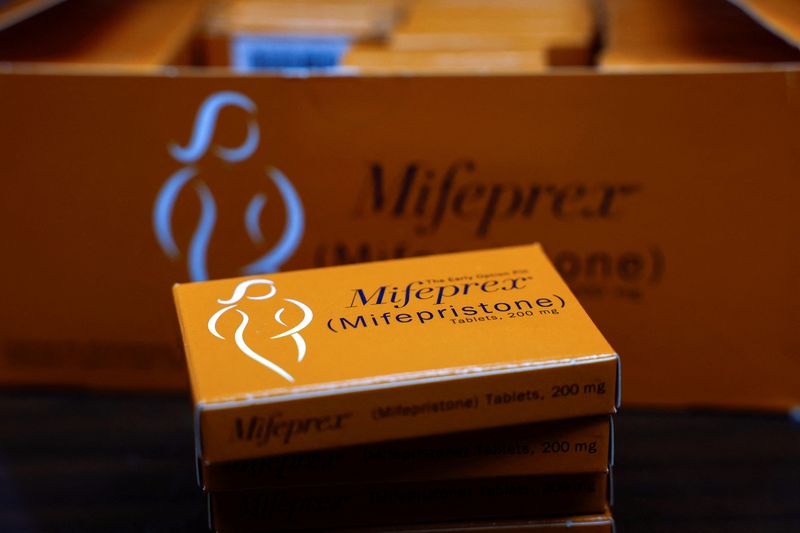
In a move that has sent shockwaves through the American legal and healthcare landscapes, the U.S. Supreme Court has intervened in a high-stakes battle over reproductive autonomy. On Monday, May 4, 2026, Justice Samuel Alito issued an interim order that effectively restarts the mail delivery of mifepristone, the primary drug used in medication abortions.
This decision temporarily lifts a previous judicial blockade, allowing the medication to be prescribed via telemedicine and dispensed through the mail once again. While the order is “administrative” and temporary, its implications for millions of Americans are immediate and profound. As the nation moves toward the 2026 congressional elections, this ruling places the Supreme Court squarely back at the center of the country’s most contentious social debate.
Understanding the “Administrative Stay”: A Temporary Reprieve
The Supreme Court’s action, technically known as an administrative stay, is not a final ruling on the legality of abortion pill mail delivery. Instead, it acts as a “pause button” on a lower court’s decision.
Justice Samuel Alito, who oversees emergency matters for the 5th U.S. Circuit Court of Appeals region, issued the order to give the full court more time to review emergency requests from Danco Laboratories and GenBioPro—the primary manufacturers of mifepristone.
Why the Stay Matters Right Now
Restores Access: Patients who were left in limbo over the weekend can once again access medication via telehealth.
Legal Breathing Room: It prevents a “patchwork” of legality while the justices weigh the merits of the case.
Timeline: The stay is currently set to expire on May 11, 2026, though most legal experts expect an extension or a formal decision by that date.
The stay was a direct response to a ruling by the New Orleans-based 5th Circuit, which had sought to re-impose a 2011-era federal rule requiring patients to visit a clinician in person to receive the drug. By lifting that block, the Supreme Court has—for the moment—upheld the FDA’s 2023 regulations that modernized access to reproductive care.
The Core of the Conflict: Louisiana vs. The FDA
The current legal firestorm was ignited by the state of Louisiana. In 2025, Republican Attorney General Liz Murrill filed a lawsuit against the U.S. Food and Drug Administration (FDA), claiming that the agency’s decision to eliminate the in-person dispensing requirement was illegal.
Louisiana’s argument hinges on the idea that the federal government is undermining state-level abortion bans. Since the overturning of Roe v. Wade* in 2022, Louisiana has enacted near-total bans on the procedure. State officials argue that allowing the pill to be mailed into their jurisdiction bypasses state law and creates a “regulatory loophole” that the FDA had no authority to create.
The FDA’s Stance on Safety
Conversely, the FDA maintains that its 2023 rule change was based on decades of scientific evidence. Mifepristone was first approved in 2000, and the agency argues that the drug has a proven safety record that justifies its use via telemedicine.
According to recent data, medication abortions now account for more than 60% of all abortions in the United States. For many in rural or restrictive areas, mail-order access is not just a convenience—it is the only available pathway to care.
The Manufacturers Speak Out: “Chaos and Confusion”
The pharmaceutical companies behind mifepristone have been vocal in their defense of the drug. Evan Masingill, CEO of GenBioPro, which produces the generic version of the pill, welcomed the Supreme Court’s intervention.
“With this critical temporary administrative stay granted, we anticipate some of the chaos and confusion inflicted on patients and providers over the weekend will subside,” Masingill stated. He emphasized that the company remains committed to using every legal and regulatory avenue to ensure the medication remains available.
On the other side, anti-abortion advocates view the stay as a dangerous delay. Carol Tobias, president of the National Right to Life, argued that the Biden administration’s FDA “recklessly removed longstanding safeguards,” leaving unresolved concerns about the safety of the drugs.
The 2026 Political Landscape and the “Shadow Docket”
The timing of this case is particularly sensitive. With the 2026 U.S. congressional elections approaching, the Supreme Court is navigating a political minefield.
Key Factors Influencing the 2026 Context:
- Judicial Precedent: In 2024, the Supreme Court unanimously rejected a similar challenge to mifepristone, ruling that the plaintiffs (anti-abortion doctors) lacked the standing to sue. This new case by the state of Louisiana attempts to bypass that “standing” hurdle by arguing that the state itself suffers harm.
- The 5th Circuit Factor: The 5th Circuit is widely considered one of the most conservative appellate courts in the country. Its consistent attempts to restrict mifepristone access have forced the Supreme Court to intervene multiple times via its “shadow docket”—the process of issuing emergency orders without full briefing or oral arguments.
- Voter Sentiment: Polls in 2026 suggest that reproductive rights remain a top-tier issue for voters. Any permanent ruling by the Supreme Court before November could significantly sway the balance of power in Congress.
Analysis: What Happens After May 11?
As the May 11 deadline approaches, legal scholars are watching for three possible outcomes:
1. Extension of the Stay
The court may choose to extend the administrative stay indefinitely while it decides whether to hear the full merits of the case during the next term. This would keep the status quo (mail delivery allowed) for several more months.
2. Granting a Preliminary Injunction
The court could issue a more formal stay that remains in place until the 5th Circuit finishes its review. This would be a significant victory for the Biden-Harris administration and reproductive rights advocates.
3. Allowing the 5th Circuit’s Restrictions to Take Effect
If the Supreme Court declines to extend the stay, the 5th Circuit’s ruling would immediately go into effect. This would mean that even in states where abortion is legal, patients would be required to see a doctor in person to receive mifepristone, effectively ending the telehealth abortion model nationwide.
The Human Impact of Medication Abortion Access
Beyond the legal jargon and political maneuvering lies the reality of healthcare for millions. Medication abortion involves a two-drug regimen: mifepristone followed by misoprostol.
For patients in restrictive states, the ability to consult with a doctor via a screen and receive a package in the mail is a lifeline. Nancy Northup, President of the Center for Reproductive Rights, noted that “Americans deserve access to this critical drug that has been FDA approved for 25 years.”
The restriction of mail-order pills doesn’t just affect those seeking abortions; it also impacts those managing miscarriages, as the same medications are often used for pregnancy loss care.
Conclusion: A Nation Watching the Bench
The Supreme Court’s decision to let abortion pill mail delivery restart “for now” provides a temporary sigh of relief for providers and patients. However, the underlying battle is far from over. By May 11, the justices must decide if they will continue to protect the FDA’s regulatory authority or if they will allow individual states to dictate the terms of federal drug distribution.
As 2026 unfolds, the intersection of science, law, and politics has never been more visible. The outcome of this case will not only define the future of reproductive healthcare but will also test the limits of federal power in a post-Roe America.