Tensions Escalate: Iran Claims Standoff in Strait of Hormuz as U.S. Denies Missile Strike

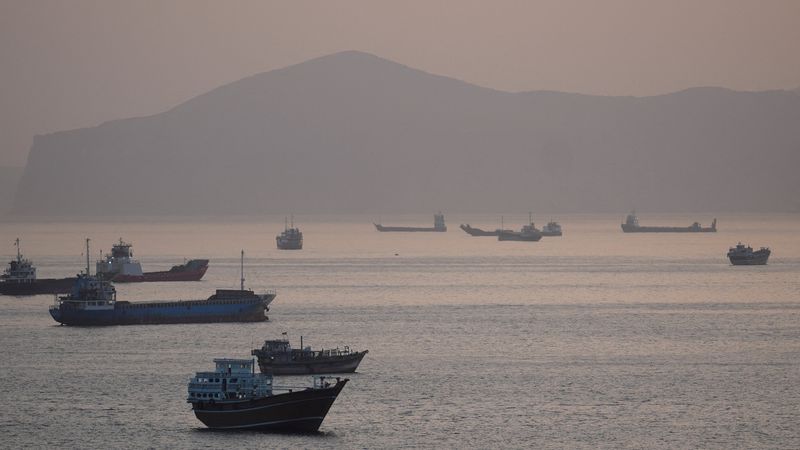
The geopolitical landscape in the Middle East reached a fever pitch this week as reports emerged from the Strait of Hormuz—the world’s most critical maritime oil chokepoint. In a dramatic series of conflicting narratives, Iranian officials claimed to have forced a U.S. warship to retreat from the area, while the United States Central Command (CENTCOM) vehemently denied allegations of a missile strike.
As of May 2026, the Strait of Hormuz remains a central theater of conflict, with global energy markets reacting sharply to the uncertainty. With oil prices jumping by 5% following the news, the international community is watching closely to see if this incident marks a dangerous escalation in the ongoing hostilities between Washington and Tehran.
The Conflicting Narratives: What Happened in the Strait?
The situation began when Iranian state media, specifically the Fars news agency, reported that two missiles had successfully struck a U.S. frigate near the port of Jask. According to Iranian officials, the military issued a “decisive warning” to “American-Zionist” vessels attempting to approach the restricted waters.
However, the U.S. military’s response was immediate and categorical. CENTCOM officials confirmed that no U.S. vessel had been hit by a missile or any other projectile. The denial highlights the “fog of war” that has characterized the region since the onset of the current conflict, where information warfare is as prevalent as naval posturing.
The Stakes of “Project Freedom”
The incident occurred against the backdrop of President Donald Trump’s newly announced “Project Freedom.” This operation aims to provide safe passage for commercial ships that have been effectively stranded in the Gulf for over two months.
Humanitarian Concerns: Nearly 20,000 seafarers are currently trapped in the waterway, facing dwindling supplies of food and fuel.
Military Presence: CENTCOM has pledged to support this mission with 15,000 personnel, over 100 aircraft, and a combination of drones and naval assets.
The Iranian Stance: Tehran has explicitly warned that any foreign military presence in the Strait, particularly U.S. forces, will be met with force. They maintain that the security of the strait is their sovereign responsibility.
Economic Fallout and Energy Security
The Strait of Hormuz is responsible for roughly one-fifth of the world’s oil and gas shipments. The prolonged closure of this route has caused massive disruptions to the global economy. Since the start of the conflict, energy prices have soared, and shipping companies remain deeply skeptical about the feasibility of resuming operations through the region.
Shipping giants, such as Hapag-Lloyd, have stated that their risk assessments remain unchanged. Despite the U.S. proposal for military-escorted convoys, industry executives argue that true stability can only be achieved through a comprehensive peace deal rather than a militarized escort system.
The View from Tehran and Washington
The diplomatic stalemate continues to frustrate global powers. While Washington has proposed a 14-point peace plan—delivered via Pakistani intermediaries—Tehran is currently in the process of reviewing the terms.
Iran’s Priority: Tehran seeks an end to the conflict on all fronts, including the situation in Lebanon, and a resolution to the maritime standoff.
- U.S. Priorities: The Biden-Trump transition era has left the U.S. focused on curbing Iran’s uranium enrichment program, which Washington claims has reached a threshold of 400 kg of highly enriched material.
Is a Resolution Possible?
The pressure on the U.S. administration is mounting, particularly with midterm congressional elections approaching in November. President Trump is acutely aware that rising gasoline prices are a major concern for the American electorate. However, a military solution to the maritime blockade remains fraught with risk.
The recent “confidence-building measure,” involving the release of 22 crew members from an Iranian container vessel, offers a glimmer of hope. Pakistan, acting as a broker, is attempting to move both sides toward a temporary memorandum of understanding (MoU) to prevent a total collapse of regional stability.
The Role of Regional Alliances
The United Arab Emirates (UAE) has reported ongoing drone attacks on its tankers, further complicating the diplomatic landscape. With the U.S. signaling that it will deal with interference “forcefully,” the risk of a miscalculation leading to a larger regional conflict is at an all-time high.
Conclusion: A Precarious Future
As of mid-2026, the situation in the Strait of Hormuz remains a volatile standoff. While the U.S. denies the missile strike, the underlying tension is undeniable. The global economy remains hostage to the outcome of these negotiations. Whether “Project Freedom” succeeds in reopening the world’s most important energy artery or leads to further military entanglements depends entirely on the willingness of both Washington and Tehran to prioritize diplomatic concessions over tactical posturing.
For now, the shipping industry remains in a “wait and see” mode, and the international community waits with bated breath for the next development in this high-stakes maritime drama.