Strategic Blow: Ukraine Strikes Primorsk Oil Port and Decimates Russian “Shadow Fleet” Tankers

The ongoing energy warfare between Ukraine and Russia reached a new level of intensity this weekend. In a coordinated, long-range aerial operation, Ukrainian forces executed a series of precision drone strikes targeting the heart of Russia’s oil export infrastructure. The campaign, which spanned from the Baltic Sea to the Black Sea, successfully struck the Primorsk oil-loading port and neutralized three vessels belonging to Russia’s controversial “shadow fleet.”
As the conflict enters its fifth year, these strikes represent more than just tactical military gains; they are a calculated effort to dismantle the financial engine that fuels Moscow’s military machine. By targeting the logistics of Russian crude oil exports, Kyiv is aiming to force a global reassessment of the Kremlin’s ability to bypass Western sanctions.
The Strike on Primorsk: A Long-Range Capability Demonstration
The assault on the Primorsk oil terminal—Russia’s largest oil exporting port on the Baltic Sea—marked a significant milestone in the conflict. Located over 1,000 kilometers from Ukrainian territory, the facility was struck by a nighttime drone swarm, resulting in a large-scale fire at the critical infrastructure site.
Primorsk is a vital artery for the Russian state oil company, Transneft, handling hundreds of thousands of barrels of crude oil daily. By hitting this facility, Ukraine has demonstrated that no part of the Russian energy export network is beyond the reach of its long-range drone technology. While Russian officials, including regional Governor Alexander Drozdenko, were quick to downplay the incident by claiming no oil spill occurred, the strategic impact on logistics is undeniable.
Neutralizing the “Shadow Fleet”
Beyond the port infrastructure, Ukrainian forces claimed the destruction of a Karakurt missile ship, a patrol boat, and several tankers. These vessels were identified as part of the “shadow fleet”—a clandestine network of aging tankers used by Moscow to transport oil in violation of Western-imposed price caps and international sanctions.
President Volodymyr Zelenskyy confirmed that these operations, overseen by the chief of the Ukrainian general staff, Andrii Hnatov, were specifically designed to cripple Russia’s ability to generate revenue from energy exports. By striking these vessels at the entrance to the Black Sea port of Novorossiysk, Kyiv is effectively raising the insurance and operational risks for any entity involved in the illicit Russian oil trade.
Escalating Energy Warfare in 2026
The strategy behind these strikes is rooted in the economic reality of the war. Ukrainian officials have long argued that as long as Russia can export oil freely, the invasion will continue. By attacking the tankers and the loading ports, Ukraine is attempting to force a reduction in the volume of oil reaching international markets, thereby tightening the financial pressure on the Kremlin.
However, this strategy carries significant risks. The tit-for-tat nature of these strikes has led to a brutal escalation in urban warfare. Following the Ukrainian strikes on Russian oil assets, Russia launched a massive retaliatory wave of drones and ballistic missiles across Ukraine.
The Human Toll of the Conflict
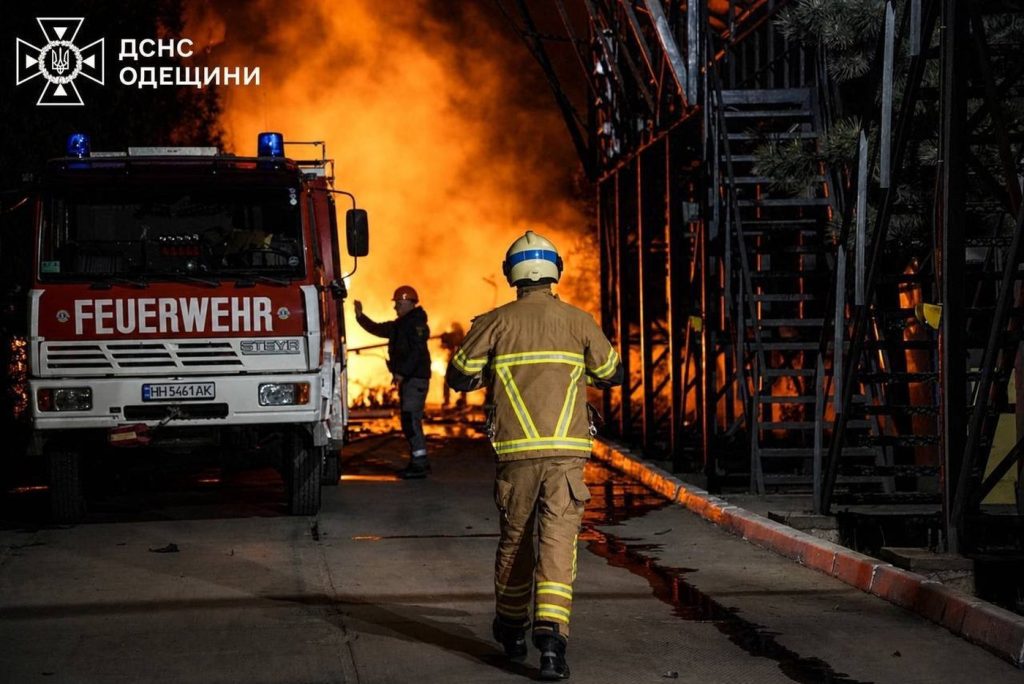
The cost of this energy war is being paid by civilians on both sides of the border. In the southern Odesa region, Russian strikes targeted residential buildings and port infrastructure, leading to tragic casualties and significant destruction. Emergency services reported at least two deaths and several injuries, with fire crews working through the night to contain the aftermath.
Similarly, deep inside Russia, the war has increasingly hit home. In the Moscow region, a 77-year-old man was killed by falling drone debris, and several others were injured across the Smolensk region. With the Russian Defense Ministry reporting that over 300 UAVs were downed in a single night, the scale of the drone warfare has reached unprecedented levels.
Analysis: Can Energy Infrastructure Strikes End the War?
Military analysts observing the 2026 landscape suggest that Ukraine’s focus on the “shadow fleet” is a pivot toward asymmetric warfare. Since the front lines in eastern and southern Ukraine have remained largely static, attacking the economic backbone of the Russian state is the most viable path to shifting the strategic balance.
Economic Impact: By forcing Russia to spend more on insurance and security for its tankers, Ukraine is effectively shrinking the profit margin on every barrel of oil exported.
Logistical Strain: Constant drone threats against major ports like Primorsk force the Russian military to divert air defense assets away from the front lines to protect energy hubs.
- Political Pressure: These strikes force the Kremlin to acknowledge the war’s reach to its own citizens, potentially undermining the narrative that the conflict is contained to Ukrainian territory.
The Road Ahead
As 2026 progresses, the efficacy of these strikes will be measured by their impact on global oil prices and the Russian budget. While Russia continues to retaliate with massive missile barrages, the tactical success of the Ukrainian operation on the Baltic and Black Sea ports suggests that the era of “business as usual” for Russian oil exports is firmly over.
The international community remains split on the morality of such strikes, with some Western allies expressing concern over potential global energy price volatility. However, Kyiv remains steadfast, maintaining that the destruction of tankers and ports is a necessary evil to starve the Russian war machine of its primary source of income.
In conclusion, the weekend’s events highlight a shift in the conflict’s trajectory. As both nations double down on their respective strategies—Russia through brute force against infrastructure and Ukraine through precise, economic-targeting drone strikes—the war has transformed into a high-stakes endurance test of national resilience and logistical capability.