The Collapse of Spirit Airlines: Political Finger-Pointing and the End of an Era

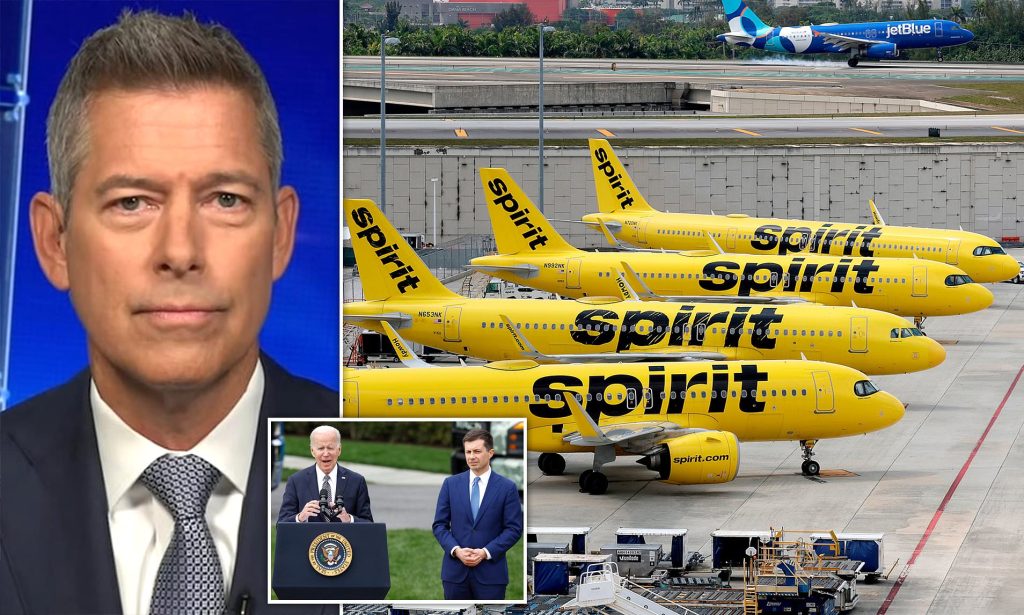
The American aviation landscape shifted dramatically this weekend as Spirit Airlines, a titan of the ultra-low-cost carrier (ULCC) model, officially ceased all operations. The shutdown, which occurred at 3:00 a.m. on Saturday, has left approximately 17,000 employees out of work and thousands of passengers stranded across the country. As the dust settles, a fierce political battle has erupted over the cause of the carrier’s demise.
Transportation Secretary Sean Duffy has been vocal in his assessment, placing the blame squarely on the shoulders of the previous administration. According to Duffy, the seeds of this collapse were sown long before the recent financial crisis, specifically citing the Biden-Harris administration’s intervention in the company’s business strategy.
The “Tanked” Merger: A Catalyst for Failure?
The primary point of contention in Secretary Duffy’s argument is the blocked merger between Spirit Airlines and JetBlue. In 2024, the Department of Justice (DOJ), under the guidance of the Biden-Buttigieg administration, successfully halted the multi-billion-dollar deal.
Duffy argues that this move was a fatal blow to Spirit’s long-term viability. “Spirit tried to merge with JetBlue. The Joe Biden-Pete Buttigieg administration and DOJ tanked that deal,” Duffy stated during an appearance on ABC’s This Week. He contends that the airline’s path to bankruptcy became inevitable the moment the government prevented the merger, stripping the company of its most viable lifeline.
Why the Bailout Failed to Materialize
As Spirit teetered on the edge of insolvency throughout 2025 and early 2026, hopes turned toward a potential federal lifeline. The airline sought a $500 million injection from the Trump administration to keep its fleet in the air. However, despite initial optimism, the deal ultimately fell through.
The Breakdown in Negotiations
Reports indicate that while President Trump expressed a desire to save the jobs associated with the airline, he remained firm that any federal intervention had to be a “good deal” for the American taxpayer. Key creditors reportedly balked at the proposed terms, which would have required the government to take a majority share of the airline. Without an agreement, the capital required to maintain operations simply wasn’t there.
The Opposition’s Perspective: Fuel Prices and Market Realities
The political blame game is not one-sided. Sean Manning, a spokesperson for former Transportation Secretary Pete Buttigieg, has pushed back against Duffy’s claims. Manning argues that the current administration is attempting to deflect responsibility for their own policy outcomes.
“Everyone knows that skyrocketing fuel prices from Trump’s war against Iran led to the end of Spirit,” Manning stated. Since the conflict began on February 28, 2026, the aviation industry has faced a double-digit percentage increase in jet fuel costs, particularly in major hubs like New York, Houston, and Chicago. Analysts suggest that for a low-cost carrier operating on razor-thin margins, such a volatility spike is catastrophic.
A Legacy of Financial Turbulence
Spirit’s collapse was not an overnight event; it was the result of years of mounting financial pressure. Since the global pandemic, the airline struggled to return to profitability. Between 2020 and 2024, the carrier reported losses exceeding $2.5 billion.
The Failure of the ULCC Model
Post-Pandemic Struggles: Unlike larger legacy carriers that could pivot their pricing models, Spirit’s reliance on ultra-low fares limited its ability to recover from inflation and decreased passenger capacity.
Operational Capacity: The airline needed to maintain roughly 80% passenger capacity to remain viable. By the final quarter of 2025, that number had dipped to roughly 74%.
- Multiple Bankruptcy Filings: This was not the company’s first brush with disaster. Spirit had previously filed for bankruptcy twice—once in late 2024 and again in August 2025—before finally succumbing to the pressure this weekend.
Impact on Passengers and Employees
The abrupt cessation of service has left thousands of travelers in a state of confusion. With customer service portals offline and a lack of reciprocal rebooking agreements, many passengers have been left to fend for themselves.
The human cost is equally staggering. With 17,000 employees out of a job, unions and labor advocates are scrambling to find placement opportunities within other major airlines. Secretary Duffy has noted that the current administration is working to ensure that the workforce is prioritized for new roles as other airlines absorb the routes formerly served by Spirit.
Conclusion: Lessons from the Fall of Spirit
The collapse of Spirit Airlines serves as a stark reminder of the fragility of the aviation industry in an era of geopolitical instability and regulatory scrutiny. While Secretary Duffy points to the failed JetBlue merger as the catalyst, critics argue that the combination of high fuel costs, poor management, and a changing economic landscape created a perfect storm.
As the industry moves forward, the loss of this major low-cost carrier will likely lead to higher fares for budget-conscious travelers. Whether the government will take steps to prevent similar collapses in the future remains a subject of intense debate in Washington. For now, the focus remains on navigating the immediate aftermath of the shutdown and assisting the thousands of families impacted by the closure.