The Don Cherry Divide: Why Canadians Are Split on His Order of Canada Nomination

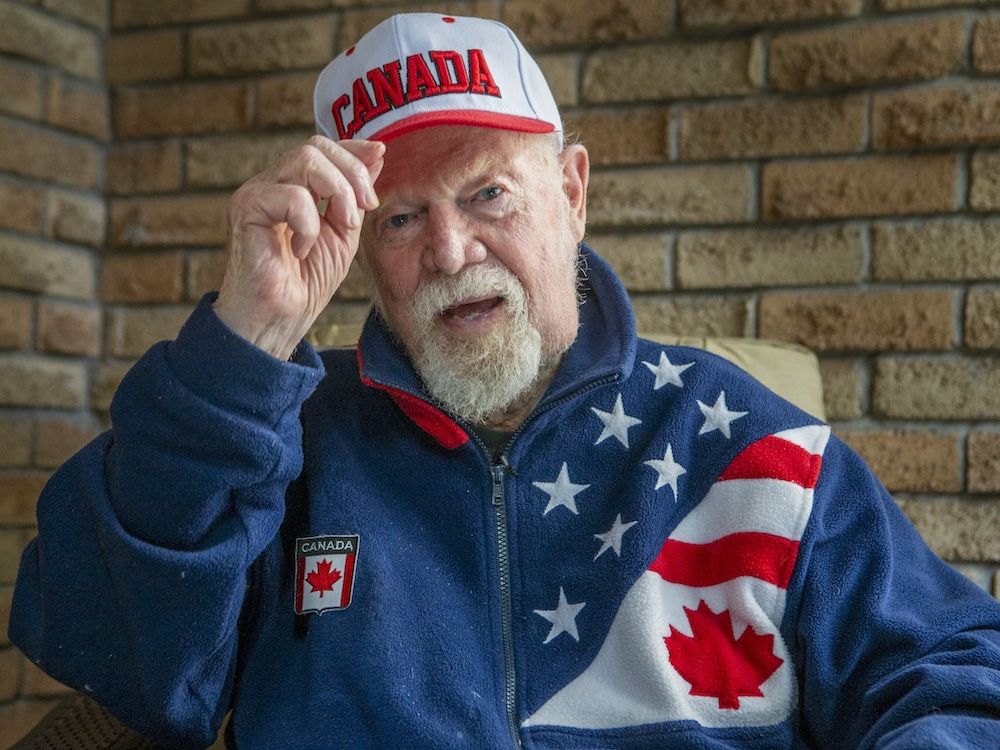
In the landscape of Canadian cultural icons, few figures have sparked as much passion—and polarization—as Don Cherry. As we move through 2026, the debate surrounding the former Hockey Night in Canada commentator has reached a fever pitch, moving from the living rooms of hockey fans to the hallowed halls of Parliament.
A recent Leger poll has shed light on this national conversation, revealing a fascinating three-way split among the Canadian public. The question is simple yet deeply divisive: Does Don Cherry deserve the Order of Canada? The answers, however, reveal a country grappling with its own history, changing demographics, and the definition of a “proud Canadian.”
The Leger Poll: A Snapshot of a Divided Nation
The latest data from Leger indicates that the Canadian public is far from a consensus. When asked about the merit of nominating the 92-year-old hockey legend for Canada’s highest civilian honour, the numbers are striking.
Approximately 30 per cent of Canadians believe Cherry should receive the award, while 29 per cent are firmly against it. Perhaps most revealing is the remaining cohort: 27 per cent of respondents admitted they didn’t know enough to have an opinion, and an additional 14 per cent explicitly stated they had never heard of Don Cherry.
Breaking Down the Demographics
The data highlights a clear generational and regional divide. Younger Canadians, specifically those aged 18 to 34, are the most likely to be unfamiliar with Cherry, with 30 per cent indicating they don’t know who he is. As we look at the older demographic—those aged 55 and up—that number drops to just 6 per cent.
Regionally, the divide is even more pronounced. In Quebec, the sentiment is overwhelmingly skeptical, with 40 per cent of respondents opposing the nomination and only 10 per cent in favor. Conversely, support remains robust in other provinces, where approval ratings frequently climb above 32 per cent.
The Political Tug-of-War
The nomination, initiated by Conservative MP Andrew Lawton and backed by party leader Pierre Poilievre, has turned the Order of Canada into a political lightning rod. Poilievre has been vocal in his support, stating that “Don Cherry embodies what it means to be a proud Canadian.”
However, this endorsement has not been without its internal friction. Within the Conservative party itself, particularly among Quebec MPs, there has been a notable revolt. Many argue that the nomination is an unnecessary wedge issue, especially given Cherry’s history of controversial remarks regarding immigrants and French-speaking Quebecers.
The 2019 Catalyst
To understand the opposition, one must look back at the 2019 firestorm that led to Cherry’s departure from Sportsnet. His comments regarding the perceived reluctance of immigrants to wear poppies and support veterans were seen by many as xenophobic and insensitive to Canada’s multicultural identity.
For many, these remarks fundamentally disqualify him from receiving an honour meant to recognize “outstanding achievement, dedication to the community, and service to the nation.” For others, his decades-long career as the voice of hockey and his unwavering patriotism outweigh the controversies of his later years.
Is the Order of Canada Being Politicized?
The involvement of political parties in nominating candidates for the Order of Canada is a relatively rare occurrence. Andrew Enns, executive vice-president of Leger, noted that testing the waters for an Order of Canada nomination through a public opinion poll is a “novelty.”
“I don’t recall us ever sort of testing the waters on any other personalities getting the Order of Canada,” Enns remarked. “So I don’t really have a benchmark here.”
The Risk of Negativity
The concern among political analysts is that by using the Order of Canada as a political football, both the government and the nominee suffer. If the Governor General or the Prime Minister’s Office perceives a nomination as a source of national division rather than a celebration of unity, the likelihood of a successful appointment diminishes.
As Enns pointed out, “It’s probably not the type of nominee that you’d necessarily want to put forward. It might garner some negativity.”
Cultural Impact vs. Modern Values
The debate over Don Cherry is essentially a debate over what Canada values in 2026. Proponents point to his massive influence on hockey culture, his charity work, and his long-standing role as a fixture in Canadian households. They see him as a symbol of a bygone era, a man who spoke his mind in a way that resonated with the blue-collar spirit of the nation.
Critics, however, argue that the Order of Canada should represent the inclusive, modern values of a diverse country. They contend that the honour is not just about popularity or longevity, but about the character of the recipient. When a figure is as divisive as Cherry, the act of bestowing an award becomes a statement in itself—one that many Canadians are not prepared to make.
Conclusion: A Nation Searching for Common Ground
As the debate continues, one thing remains clear: Don Cherry is a polarizing force, even at 92. The fact that a significant portion of the population is either unaware of his legacy or deeply divided on his merits suggests that the “Coach’s Corner” era is firmly in the rearview mirror for much of the country.
Whether the petition succeeds or stalls in the bureaucracy of the Governor General’s office, the conversation has already served its purpose in highlighting the deep-seated differences in how Canadians view their national identity. In a country as vast and diverse as ours, finding a consensus on a figure as loud and unfiltered as Don Cherry may simply be impossible.