Diplomatic Fracture: Trump Escalates War of Words with Germany’s Merz Amidst Iran Conflict

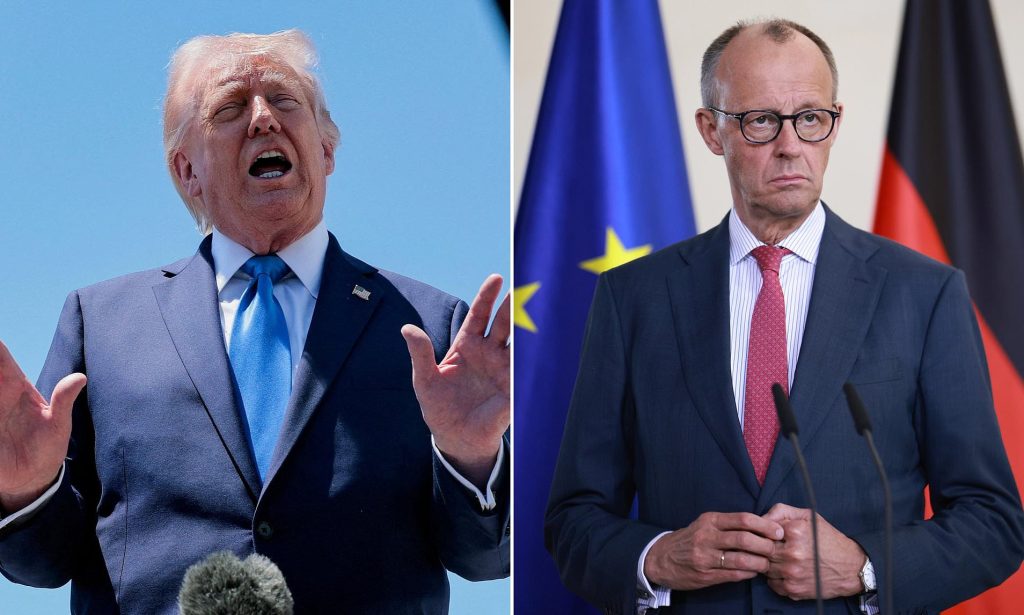
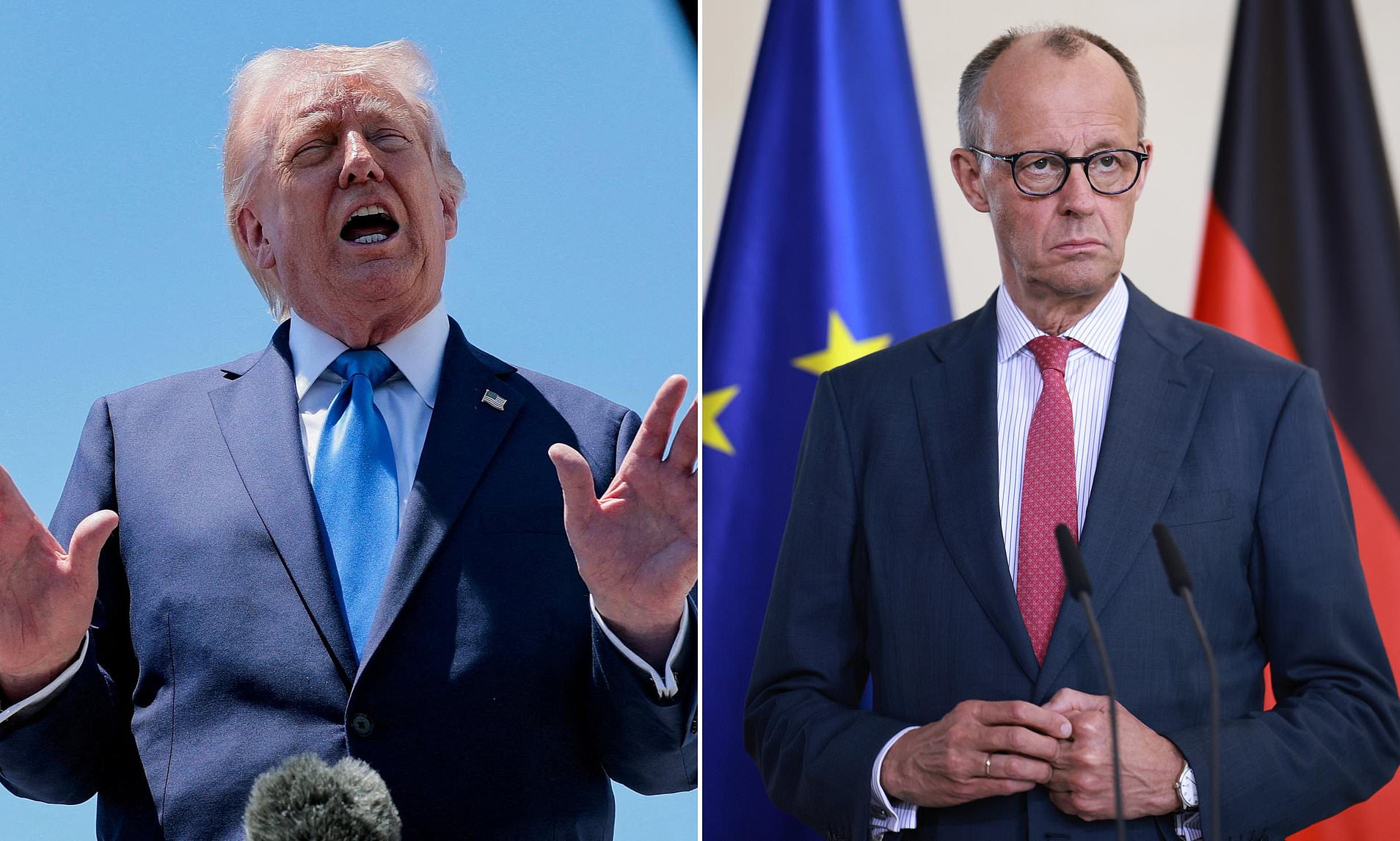
The geopolitical landscape of 2026 is witnessing a profound strain in the transatlantic alliance. A public and increasingly bitter fallout between U.S. President Donald Trump and German Chancellor Friedrich Merz has reached a boiling point, centered on the ongoing two-month-old war with Iran. What began as a strategic disagreement over military operations has spiraled into personal attacks, with President Trump openly questioning the Chancellor’s leadership abilities.
As the conflict in the Middle East continues to impact global energy markets and the stability of the Strait of Hormuz, the friction between Washington and Berlin is moving from private diplomatic channels to the public arena. With President Trump threatening to withdraw U.S. troops from Germany, the stability of NATO and European security is facing its most significant test in decades.
The Root of the Conflict: Iran and the “Humiliation” Narrative
The diplomatic rift ignited earlier this week when Chancellor Merz made pointed remarks regarding the U.S.-led military campaign against Iran. During a speech, Merz expressed concern that the Iranian leadership, particularly the Revolutionary Guards, was effectively “humiliating” the United States during peace negotiations.
Merz further criticized the lack of a coherent exit strategy from the White House, noting that Germany had been left in the dark regarding specific U.S.-Israeli tactical decisions. For Berlin, the conflict has moved beyond a security concern to an economic crisis. The closure of the Strait of Hormuz has sent energy prices skyrocketing across Europe, putting immense pressure on the German industrial base.
Trump’s Counteroffensive: A Multi-Front Critique
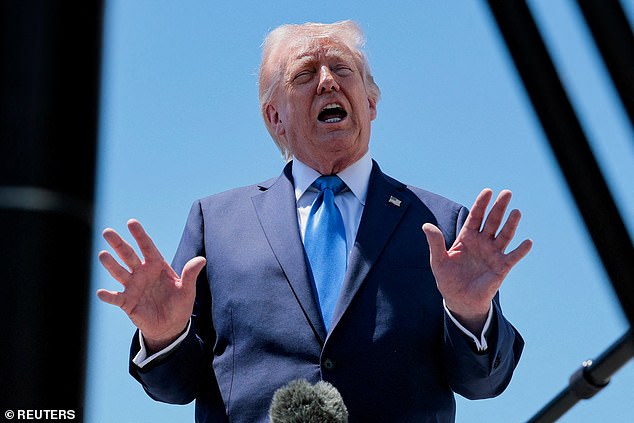
President Trump did not take the criticism lightly. In a series of sharp rebuttals on Truth Social and during a high-profile Oval Office event on Thursday, the President dismissed Merz’s concerns, claiming the Chancellor “doesn’t know what he’s talking about.”
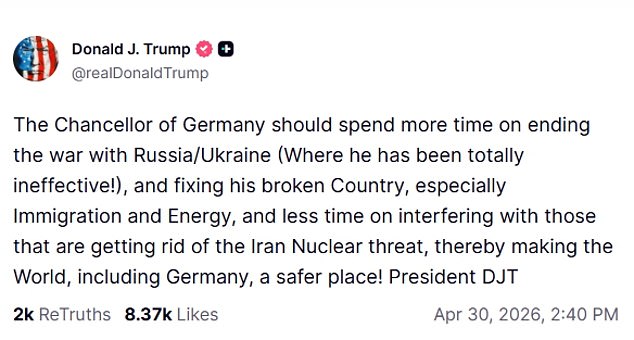
Trump’s critique quickly expanded beyond the Iran conflict, morphing into a broad condemnation of Merz’s domestic policies. The President specifically highlighted:
Energy and Immigration: Trump claimed that Germany is struggling under the weight of its current energy transition and border management policies.
The Ukraine War: The President accused the Chancellor of failing to provide adequate leadership to resolve the protracted conflict with Russia.
- Interference: Trump explicitly demanded that Merz spend more time focusing on his “broken country” and less time interfering with U.S. strategy regarding the Iranian nuclear threat.
“He’s doing a terrible job,” Trump stated during his Oval Office briefing, effectively questioning the viability of the current German administration.
The Threat to U.S. Troop Presence in Europe
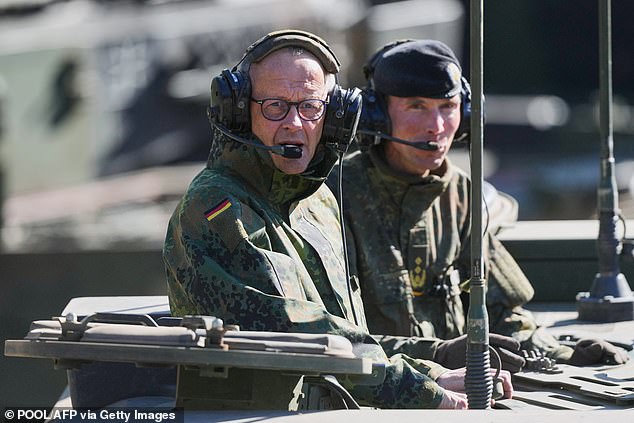
Perhaps the most tangible consequence of this diplomatic breakdown is the potential restructuring of U.S. military posture in Europe. President Trump has signaled that the lack of German support for U.S. objectives could lead to a significant drawdown of American forces.
The Numbers at Stake
As of December 2025, the U.S. maintains approximately 68,000 active-duty personnel in Europe, with over 36,000 stationed in Germany. Trump’s administration is currently reviewing these numbers, citing a “lack of support” from Berlin. The President has even extended his frustration to Italy and Spain, suggesting that their lack of cooperation could lead to similar troop reductions in those nations.
For many security analysts, this is a dangerous game of brinkmanship. Reducing the U.S. footprint in Germany—a country that has hosted American forces since the Cold War—would represent a historic shift in the transatlantic security architecture.
Can the Alliance Weather the Storm?
Despite the public sparring, Chancellor Merz has attempted to de-escalate the situation. In a recent press conference, he insisted that his personal relationship with President Trump remains “as good as ever” and that the two leaders are still on “good speaking terms.” Merz characterized his criticism as a reaction to economic necessity rather than a challenge to Trump’s authority.
However, the reality on the ground suggests a deepening divide. While Germany initially supported the war effort, the government’s stance has hardened. Berlin has maintained that the current conflict “is not NATO’s war,” offering only limited logistical support such as minesweepers for the Strait of Hormuz rather than direct military participation.
The Military Outlook: Escalation on the Horizon
While the political rhetoric heats up, the military situation remains volatile. President Trump is reportedly reviewing a new plan from CENTCOM chief Admiral Brad Cooper for a “short and powerful” wave of strikes against Iranian infrastructure.
The Pentagon is considering the deployment of the Dark Eagle hypersonic missile system to the Middle East. With a range of over 1,700 miles, this weapon is designed for precision strikes against heavily defended targets. If deployed, it would signal a major escalation in the U.S. capability to strike deep within Iranian territory.
Conversely, the Iranian Revolutionary Guards have issued a chilling warning. Aerospace Force Commander Majid Mousavi stated that any U.S. attack would trigger “long and painful strikes” on American regional positions, signaling that the deadlock is far from over.
Conclusion: A Turning Point for Transatlantic Ties
The clash between Donald Trump and Friedrich Merz is more than just a personality conflict; it is a symptom of a shifting world order. As the U.S. pushes for decisive action in the Middle East, its European allies are increasingly wary of the economic and political costs.
Whether this rift is merely a temporary political spat or the beginning of a fundamental decoupling between the U.S. and Germany remains to be seen. One thing is certain: as long as the Iran conflict continues to dominate the global agenda, the pressure on the U.S.-Germany partnership will only intensify.