Neither Norway nor Singapore: Decoding the Canada Strong Fund and the Future of Canadian Wealth

The year 2026 has marked a pivotal shift in the Canadian economic landscape. With the official launch of the Canada Strong Fund, Prime Minister Mark Carney has fulfilled a cornerstone campaign promise, signaling a new era of state-led investment. However, as the dust settles on the initial $25 billion announcement, economists, investors, and citizens are asking the same question: What exactly is this fund?
While the Prime Minister frequently draws parallels to the world-renowned Norwegian model, a closer look at the mechanics of the Canada Strong Fund reveals a vehicle that is fundamentally different from its international peers. It is neither the global equity giant of Norway nor the state-enterprise manager of Singapore. Instead, it is a uniquely Canadian experiment in debt-funded nation-building.
The $25 Billion Pitch: What is the Canada Strong Fund?
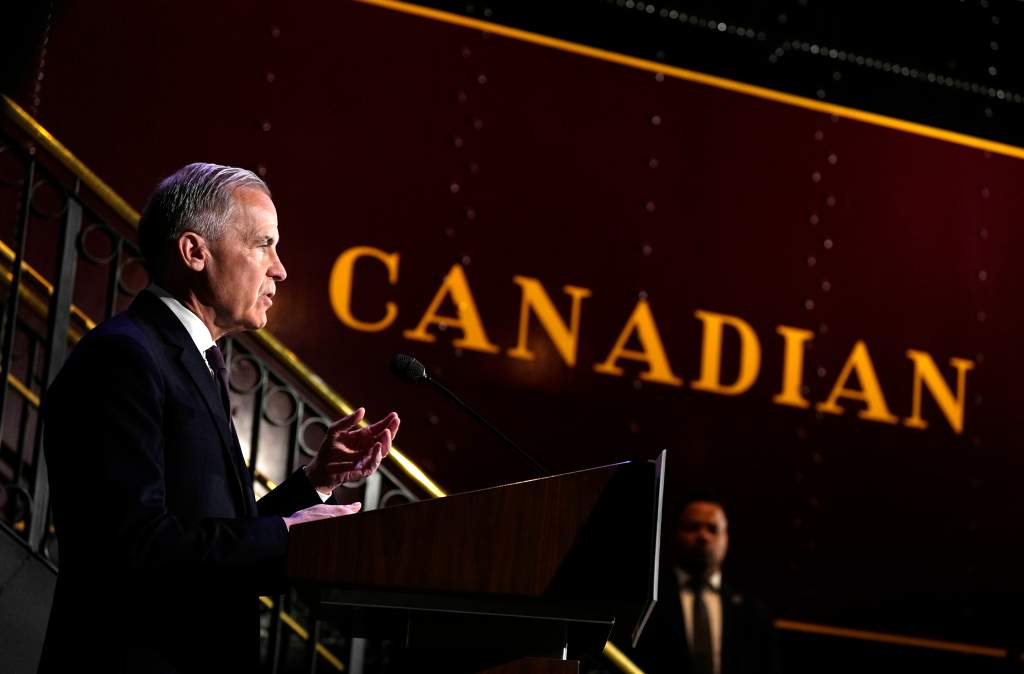
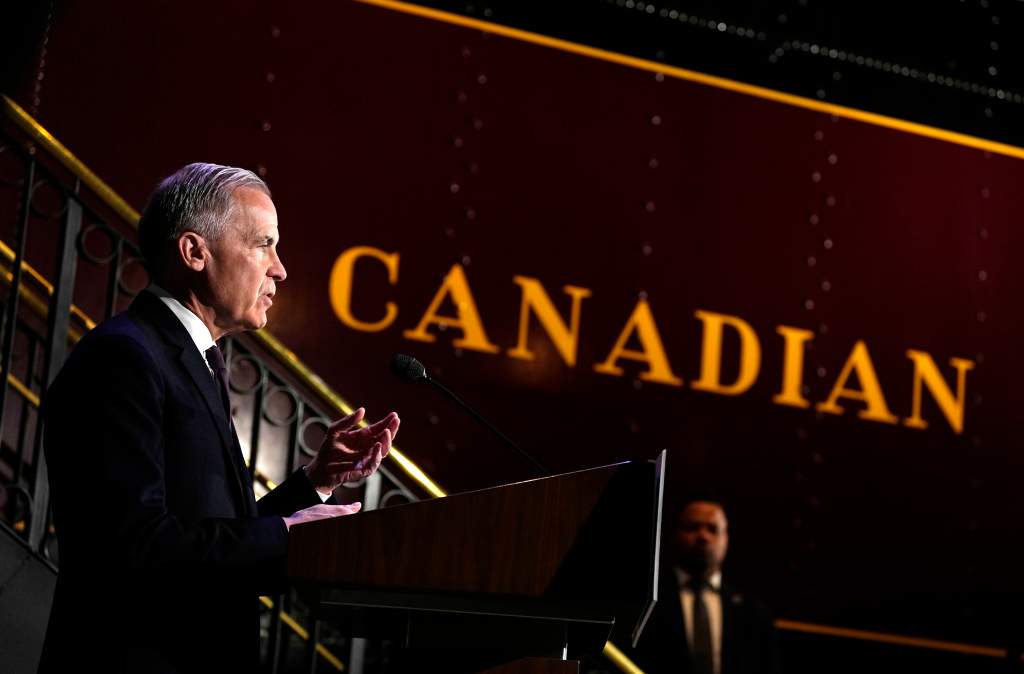
In April 2026, standing before a backdrop of industrial innovation at the Canada Science and Technology Museum, Prime Minister Mark Carney unveiled the Canada Strong Fund (CSF). With an initial federal commitment of $25 billion over three years, the fund is designed to give Canadians a “direct stake” in the country’s economic transformation.
The CSF is structured as a professionally managed Crown corporation, operating at arm’s length from the federal government. Its primary mandate is to invest in large-scale infrastructure, clean energy, and trade corridors—projects that Carney describes as the “modern-day equivalent of the Canadian Pacific Railway.”
A Domestic Focus with Global Ambitions
Unlike traditional sovereign wealth funds (SWFs) that seek to diversify national wealth by investing in foreign markets, the Canada Strong Fund is starting at home. The goal is to unlock private capital by having the government act as a lead investor in high-risk, high-reward domestic projects. While Carney has hinted at a future global expansion, the immediate priority is clear: building Canada from the inside out.
The Norway Comparison: Why the Analogy Limps
The most common comparison used by the Prime Minister is the Government Pension Fund Global (GPFG) of Norway. On the surface, the logic holds: both nations are stable, resource-rich Western democracies. However, the similarities largely end there.
1. Diversification vs. Development
The Norwegian fund was created specifically to prevent “Dutch Disease”—an economic phenomenon where a booming resource sector hurts other parts of the economy. To combat this, Norway prohibits its fund from investing domestically. It funnels oil and gas revenues into global stocks, bonds, and real estate, currently owning roughly 1.5% of all publicly listed companies worldwide.
In contrast, the Canada Strong Fund is an economic development vehicle. Its purpose is not to shield the Canadian dollar from oil volatility, but to actively inject capital into the Canadian economy. As Sebastien Betermier of McGill University notes, the CSF functions more like a development bank than a traditional wealth-preservation fund.
2. Surplus vs. Debt
The most striking difference lies in the source of the capital. Norway’s fund is built on budget surpluses generated by state-owned oil interests. Canada, facing a projected federal deficit of over $60 billion in 2026, does not have a surplus to invest.
This means the Canada Strong Fund is debt-funded. To be successful, the fund’s return on investment (ROI) must consistently exceed the government’s cost of borrowing. This places immense pressure on the fund’s managers to select projects that are not only socially beneficial but also highly profitable in the long term.
The Singapore Model: A Different Type of Governance
When the Norway comparison fails to land, observers often look toward Singapore’s Temasek Holdings. Founded in 1974, Temasek initially focused on domestic industrialization before becoming a global powerhouse.
Managing State Assets
Temasek’s core strength is its role in managing state-owned enterprises (SOEs) like Singtel and Singapore Airlines. It operates with a fierce commercial discipline, ensuring these companies remain competitive on a global stage.
The Canada Strong Fund, however, isn’t looking to manage existing state companies. Instead, it aims to catalyze new projects. While Carney pointed to Temasek’s evolution from domestic to global as a roadmap, the CSF’s current mandate is much closer to the development funds found in the Persian Gulf, such as those in Qatar or the UAE, which prioritize internal industrial diversification.
The “Million-Dollar Question”: Overlap and Redundancy
One of the sharpest criticisms of the Canada Strong Fund is the potential for “institutional clutter.” Canada already possesses several vehicles designed to spur domestic investment:
The Canada Infrastructure Bank (CIB): Tasked with attracting private investment to revenue-generating infrastructure.
The Canada Growth Fund (CGF): Focused on decarbonization and clean-tech scaling.
- CDPQ and CPP Investments: While these are pension funds, they are already massive players in the Canadian infrastructure space.
Policy analysts, including those at the C.D. Howe Institute, have raised concerns about how the CSF will differentiate itself. If the Canada Strong Fund ends up bidding on the same projects as the CIB or the Growth Fund, it could inadvertently drive up costs or create bureaucratic inefficiencies.
The Retail Revolution: Can Canadians Truly “Own” the Fund?
Perhaps the most unique—and controversial—aspect of the Canada Strong Fund is the promise to allow everyday Canadians to invest. Prime Minister Carney has suggested that citizens could hold a stake in the fund through specialized bonds or investment portfolios.
The Patience Problem
While the idea of “democratizing wealth” is politically attractive, it presents significant financial hurdles. Sovereign wealth funds typically deal in illiquid, long-term assets like bridges, power grids, and transit lines. These projects can take a decade or more to generate significant cash flows.
Retail investors are notoriously less patient than institutional ones. If the fund’s value fluctuates or if returns take too long to materialize, “mom-and-pop” investors might withdraw their support. Furthermore, the fund will be competing for the average Canadian’s RRSP and TFSA contributions against high-growth U.S. tech stocks and global equities.
The Federal-Provincial Friction
In Norway, the central government maintains tight control over resource revenues. Canada’s federalist structure makes this impossible. Provinces like Alberta and Newfoundland & Labrador have constitutional jurisdiction over their natural resources.
Any attempt by the federal government to use oil and gas royalties to fund a national sovereign wealth vehicle would be met with immediate legal and political warfare. This is why the CSF must rely on federal debt rather than resource rents. Without the ability to capture the “windfall” of high energy prices at a national level, the Canada Strong Fund lacks the “automatic” growth engine that fueled Norway’s trillion-dollar success.
Conclusion: A High-Stakes Gamble for 2026
The Canada Strong Fund represents a bold, if risky, vision for the country’s future. By branding it as a sovereign wealth fund, the Carney government is attempting to tap into the prestige of the Nordic model while pursuing a strategy of aggressive domestic industrial policy.
Success will depend on three factors:
- Fiscal Discipline: Can the fund generate returns that outpace the cost of the debt used to create it?
- Strategic Clarity: Will it find a niche that the Canada Infrastructure Bank and the private sector have missed?
- Public Trust: Can it convince skeptical Canadians to treat “nation-building” as a viable part of their personal retirement portfolios?
As Canada navigates the complexities of the mid-2020s, the Canada Strong Fund stands as a testament to a government betting big on the idea that the state can—and should—be a primary architect of economic growth. It is not Norway, and it is not Singapore. It is a uniquely Canadian experiment, and the world is watching to see if it pays off.