From Hacienda Nápoles to Gujarat: Anant Ambani’s Bold Plan to Save Escobar’s ‘Cocaine Hippos’ from Execution

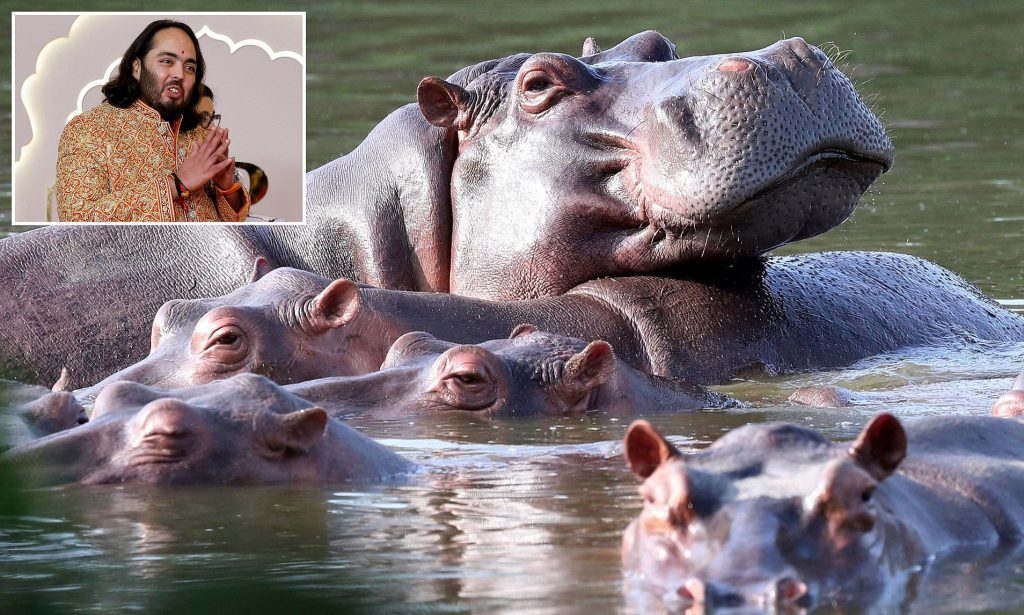
In a dramatic turn of events that feels more like a Hollywood script than a conservation report, the fate of Colombia’s infamous “cocaine hippos” has taken a global detour. As of mid-2026, the Colombian government’s controversial plan to cull the descendants of Pablo Escobar’s private zoo has met an unexpected challenger: Anant Ambani, the son of Asia’s wealthiest man, Mukesh Ambani.
The heir to the Reliance Industries empire has stepped forward with a formal proposal to relocate 80 of these massive mammals to his state-of-the-art wildlife sanctuary, Vantara, located in India’s western state of Gujarat. This move aims to prevent what animal rights activists have called a “senseless slaughter” of sentient beings who are merely victims of their historical circumstances.

The Legacy of a Drug Lord: How the Crisis Began
To understand the weight of Ambani’s offer, one must look back to the 1980s. At the height of his power, drug kingpin Pablo Escobar illegally imported four hippopotamuses—one male and three females—to his sprawling estate, Hacienda Nápoles. Following Escobar’s death in 1993, the Colombian government seized his assets, but the hippos were deemed too difficult to move and were left to roam the lush wetlands of the Magdalena River.

With no natural predators and a climate that mimics their native African habitat, the population exploded. By 2026, experts estimate the herd has grown to over 160 individuals, with projections suggesting they could number in the thousands within decades if left unchecked.
Why They Are a Threat to Colombia’s Ecosystem
While these “cocaine hippos” have become a quirky tourist attraction, they pose a severe ecological threat:
- Displacement of Native Species: They compete with manatees and otters for food and territory.
- Water Quality Alteration: Hippo waste changes the oxygen levels in rivers, leading to toxic algae blooms and fish kills.
- Human-Wildlife Conflict: There have been increasing reports of hippos wandering into towns and attacking local fishermen.
The 2026 Culling Decree: A Desperate Measure
In April 2026, the Colombian Ministry of Environment, led by Minister Irene Vélez, announced a definitive plan to curb the population through a combination of sterilization and selective culling. The decision came after years of failed attempts to manage the herd through expensive and dangerous surgical procedures.

“If we don’t do this, we will not be able to control the population,” Vélez stated. “We have to take this action to preserve our ecosystems.” The announcement sparked international outrage among animal welfare groups, who argue that the hippos are “sentient beings” that should not pay the price for human negligence.
Enter Vantara: Anant Ambani’s “Noah’s Ark”
Anant Ambani’s intervention has shifted the conversation from execution to translocation. His wildlife project, Vantara (meaning ‘Star of the Forest’), is a 3,000-acre sanctuary nestled within the Reliance Jamnagar Refinery Complex.

What is Vantara?
Vantara is not a traditional zoo; it bills itself as a global conservation and rescue hub. As of 2026, it houses:
- Over 200 elephants rescued from abusive situations.
- More than 150 tigers and 200 lions.
- A state-of-the-art veterinary hospital equipped with MRI machines and specialized surgical suites.
- A dedicated staff of over 2,000 animal care experts.
Ambani’s proposal involves a veterinary-led capture and transport operation. He has offered to cover the entire cost of moving 80 hippos from Colombia to India, ensuring they live out their lives in a “purpose-designed naturalistic setting.”
The Logistics of Moving 80 Giants
Moving a single hippo is a logistical nightmare; moving 80 is an unprecedented feat of engineering and animal husbandry. The plan requires:
- Chemical Immobilization: Expert vets must tranquilize the hippos in the wild—a high-risk task given their size and aggression.
- Customized Crates: Each hippo requires a reinforced steel crate with climate control.
- Heavy-Lift Aircraft: Multiple flights using specialized cargo planes like the Boeing 747-8F would be necessary to bridge the 15,000-kilometer distance.
- Quarantine and Integration: Upon arrival in Gujarat, the hippos would undergo rigorous health checks to ensure they don’t introduce foreign pathogens to the Indian ecosystem.
Why Not Return Them to Africa?
Many ask why the hippos aren’t simply sent back to their ancestral home. Conservationists explain that because the Colombian herd stems from a limited gene pool, they could carry diseases to which African populations have no immunity. Furthermore, they are considered an “invasive lineage” that could disrupt the social structures of existing African pods.

Challenges and Criticisms of the Vantara Plan
While the offer is generous, it is not without its detractors. Critics of the Vantara project point to several concerns:
1. The Gujarat Climate
Jamnagar is known for its blistering summers, where temperatures frequently exceed 40°C (104°F). While hippos are heat-tolerant, maintaining the massive water bodies required to keep 80 hippos cool in a semi-arid region is an enormous resource drain.
2. The “Mega-Zoo” Controversy
Some wildlife experts argue that Vantara is becoming a “collection” rather than a conservation effort. They question the ethics of importing non-native, invasive species to India, even if it is for their protection.
3. Sustainability
The long-term cost of feeding and caring for 80 hippos—which can each consume 35-40kg of grass daily—is astronomical. While the Ambani family has the resources, the question remains whether this is the most effective use of conservation funds globally.
The Ethical Crossroads: Culling vs. Compassion
The debate over Escobar’s hippos highlights a fundamental tension in modern conservation: The rights of the individual versus the health of the ecosystem.
Anant Ambani’s stance is clear: “These 80 hippos did not choose where they were born, nor did they create the circumstances they now face. They are living, sentient beings, and if we have the ability to save them through a safe and humane solution, we have a responsibility to try.”
In contrast, the Colombian government views the hippos as an environmental “cancer” that must be excised to save native biodiversity. The 2026 decision to cull was a last resort after years of searching for alternatives.
What Happens Next?
As of late 2026, the Colombian government is reviewing Ambani’s detailed proposal. The world is watching to see if this “billionaire’s rescue” will set a new precedent for how invasive species are managed globally.
If successful, the relocation would be the largest of its kind in history. It would transform the “cocaine hippos” from symbols of a drug lord’s excess into ambassadors for a new era of private-sector-led wildlife conservation.
Key Takeaways for 2026:
- The Conflict: 160+ hippos in Colombia are threatening local biodiversity.
- The Plan: The Colombian government has decreed a cull of up to 80 animals.
- The Offer: Anant Ambani wants to move 80 hippos to his Vantara sanctuary in India.
- The Cost: Estimated in the tens of millions of dollars, fully funded by Reliance Industries.
Whether they stay in the rivers of the Magdalena or find a new home in the plains of Gujarat, the story of Escobar’s hippos remains one of the most bizarre and compelling chapters in modern natural history.