Redrawing the Future: How the Supreme Court’s 2026 Ruling Reshapes Minority Voting Power

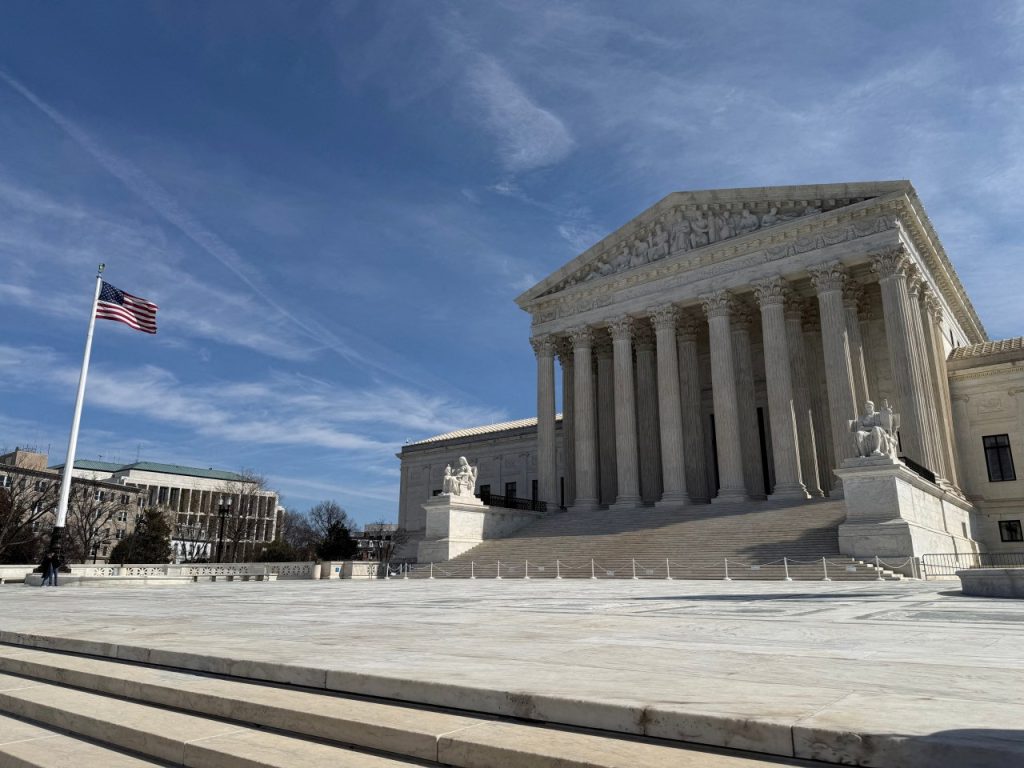
The American electoral landscape underwent a seismic shift this week as the Supreme Court of the United States issued a landmark 6-3 decision that fundamentally alters the interpretation of the Voting Rights Act (VRA). In a move that legal scholars are calling the “final brick in the wall” of VRA deconstruction, the conservative majority sharply restricted the ability of states to use race as a factor in drawing congressional maps—even when those maps are intended to protect the representation of minority communities.
This ruling, handed down in the heat of the 2026 midterm election cycle, marks a pivotal moment in constitutional law. It effectively signals a transition from protecting minority “results” to a much narrower focus on “intentional” discrimination, a change that could redefine the makeup of the U.S. House of Representatives for decades to come.
The 6-3 Divide: A Narrowed Path for Section 2
Writing for the majority, Justice Samuel Alito adopted a stringent interpretation of Section 2 of the Voting Rights Act. This provision, a cornerstone of the 1965 landmark legislation, was originally designed to prohibit any voting practice or procedure that “results in a denial or abridgement of the right of any citizen… to vote on account of race or color.”
However, the 2026 ruling shifts the goalposts. The Court now holds that Section 2 applies primarily to redistricting practices that intentionally discriminate against voters. Justice Alito argued that the nation, particularly the South, has undergone “vast social change” since the 1960s. He noted that Black voters now participate in elections at rates comparable to, and sometimes exceeding, white voters.

Partisan Advantage vs. Racial Bias
One of the most controversial aspects of the ruling is the Court’s distinction between partisan gerrymandering and racial discrimination. Justice Alito wrote that the Constitution does not prevent states from pursuing a “partisan advantage,” even if those efforts inadvertently reduce the voting power of geographically compact minority communities.
This creates a significant legal loophole:
- Legislatures can claim “politics” as the primary driver for redrawing maps.
- Minority communities may find it nearly impossible to prove “intent” when maps are defended as strategic partisan maneuvers.
- Safe Democratic seats that were reinforced by minority populations are now vulnerable to being dismantled and converted into Republican-leaning districts.
The Louisiana Catalyst: Louisiana v. Callais
The case that triggered this national upheaval centered on Louisiana’s congressional map. Following years of litigation and federal court orders, Louisiana had recently drawn a map featuring two majority-Black districts out of its six total seats. Civil rights advocates argued this was a necessary step to reflect the state’s population, which is roughly one-third Black.
However, a group of “non-African American” voters challenged the map, claiming it constituted an unconstitutional racial gerrymander. They argued that prioritizing race to comply with the VRA violated the 14th Amendment’s Equal Protection Clause.
The Supreme Court’s 2026 ruling sided with these challengers, effectively striking down Louisiana’s second majority-Black district. The decision voids the map just weeks before the state’s scheduled primaries on May 16, leaving election officials and voters in a state of unprecedented chaos.
The “Demolition” of the Voting Rights Act: The Dissenting Voice
The Court’s liberal wing issued a blistering dissent. Justice Elena Kagan described the ruling as the “now-completed demolition of the Voting Rights Act.” She argued that the conservative majority has systematically stripped away the tools used to ensure fair representation in a diverse democracy.
According to the dissent, this ruling allows states to:
- “Crack” cohesive minority communities, splitting them across multiple districts to ensure their preferred candidates cannot win.
- “Pack” minority voters into a single district to limit their influence across a broader region.
- Dilute voting power without legal consequence, as long as they provide a veneer of partisan motivation.
Justice Kagan warned that this decision invites a return to an era where minority voices are effectively silenced through the clinical precision of modern map-making software.
A Historic Decline in Congressional Diversity?
The implications of this ruling extend far beyond the borders of Louisiana. Legal experts, including Harvard Law Professor Nicholas Stephanopoulos, suggest that we are witnessing a “grand historical development” that could result in the largest drop in minority representation in Congress since the end of the Reconstruction era.

Projected Impacts on National Representation
If states across the South and the Midwest follow Louisiana’s lead, the diversity of the U.S. House of Representatives could plummet:
- Majority-Black Districts: Dozens of districts in states like Alabama, Georgia, and North Carolina may be redrawn.
- Hispanic and Asian Representation: Maps in Texas and California, which have long relied on race-conscious drawing to ensure fair representation for growing Hispanic and Asian communities, are now under threat.
- Legislative Priorities: A decrease in minority lawmakers could lead to a shift in federal policy regarding civil rights, economic equity, and social justice.
The 2026 Midterm Scramble
The timing of the decision has sent shockwaves through the 2026 election cycle. While Louisiana faces immediate pressure to adopt a “constitutionally compliant” map, other states are already moving to capitalize on the ruling.
In Florida, Republican legislators approved a new map hours after the Supreme Court decision, potentially adding up to four Republican seats. Meanwhile, in states like Virginia and Utah, where recent maps had favored Democratic gains or neutral outcomes, new legal challenges are expected to emerge almost immediately.
Looking Ahead to 2028
While the 2026 primaries are already underway, the real “redistricting wars” are expected to peak during the 2028 election cycle. Legal firms representing both parties are preparing for a wave of litigation as states revisit their maps with the Supreme Court’s new “intent-based” standard in mind.
Abha Khanna, a partner at Elias Law Group, noted that this opinion is an open invitation for states to “take a look at their maps” and prioritize partisan gains over demographic representation.
Conclusion: A New Chapter in American Democracy
The Supreme Court’s 2026 decision represents a fundamental shift in how the United States balances equal protection with minority representation. By narrowing the scope of the Voting Rights Act, the Court has placed the power of redistricting firmly back into the hands of partisan legislatures, with fewer federal safeguards than at any point in the last sixty years.
As the nation moves toward the 2026 midterms, the consequences of this ruling will be measured not just in legal briefs, but in the diversity of the faces seen in the halls of Congress and the strength of the voices representing America’s minority communities. The “vast social change” cited by Justice Alito is now being met with a vast legal change—one that may redefine the meaning of “one person, one vote” for the modern era.